
A STARVIS USB camera is a low-light visible camera module used when industrial equipment, machine monitoring systems, edge terminals or OEM devices need a clearer image in dim, uneven or night-shift lighting.
In many industrial projects, the problem is not that the host system cannot process video. The real problem is that the camera image is already too dark, noisy, overexposed or unstable before the software receives it.
Goobuy supplies Sony STARVIS and STARVIS2 USB camera platforms for OEMs, system integrators and equipment builders that already have a host device and need practical low-light camera input for machine interiors, protected harsh equipment, conveyors, energy facilities, robots, inspection tools and industrial monitoring systems.
A STARVIS USB camera is a USB camera module built around Sony STARVIS or STARVIS2 image sensor technology. These sensors are widely used in low-light camera applications because they can provide better visible image quality under weak lighting than many ordinary small-sensor USB cameras.
For industrial use, a STARVIS USB camera is normally connected to an existing host device such as:
The camera provides video input through USB / UVC, while the customer’s host system handles display, recording, AI processing, inspection software, remote monitoring or operator workflow.
This makes STARVIS USB cameras useful when customers need fast integration without starting from a raw sensor, MIPI driver or from-zero camera development project.
Industrial lighting is rarely perfect.
A camera may need to see inside a machine enclosure, conveyor gallery, control cabinet, equipment room, inspection bench or remote monitoring box. These places often have weak light, uneven light, shadows, reflective metal, LED flicker or strong contrast.
A normal USB camera may produce:
A STARVIS USB camera can help improve visible image input before the video reaches the host system.
This is important for applications such as:
For many projects, better low-light image quality is more useful than simply increasing resolution.
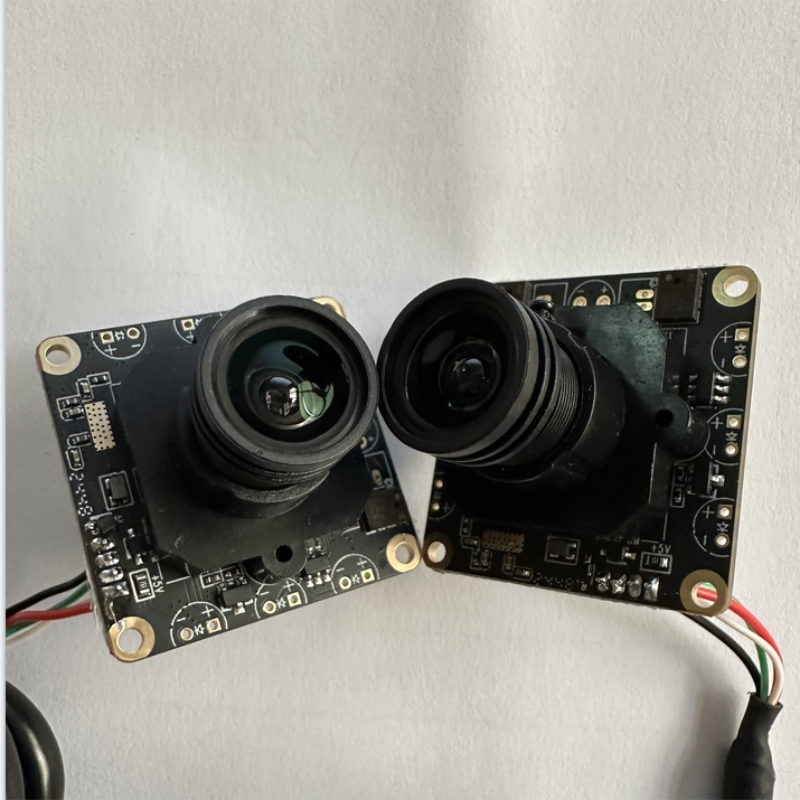
Many machines have internal areas that are difficult to see from outside. Operators may need to observe moving parts, tool positions, material flow, process chambers, covers, transfer points or hidden mechanical areas.
A STARVIS USB camera can be installed inside a protected machine enclosure and connected to an industrial PC, embedded host or local monitoring device.
Typical uses include:
In these applications, the camera usually does not need to be directly exposed to rain or washdown. It needs to provide a stable low-light image inside a protected machine structure.
Conveyors often operate in weak or uneven lighting, especially in mining, ports, recycling plants, cement plants, steel plants and bulk material handling sites.
A STARVIS USB camera can help provide visible confirmation of:
For conveyor systems, STARVIS visible cameras are especially useful when combined with other monitoring layers. A thermal camera may detect a roller or bearing hotspot, while a STARVIS camera provides visible scene confirmation.
The key point is that the low-light camera helps the operator answer a practical question:
“What is actually happening at that conveyor point?”
Many harsh industrial sites need cameras, but the camera is not always directly exposed to the environment. It may be installed inside a protected enclosure, monitoring box, service terminal, machine cabinet or customer-designed housing.
Typical protected harsh equipment applications include:
This is one of the best application directions for STARVIS USB cameras.
The camera provides low-light visible video.
The customer’s enclosure provides dust, water, vibration or weather protection.
This distinction is important. A board-level or housed STARVIS USB camera should not be described as a direct IP69K outdoor camera unless the final mechanical design supports that level of protection.
Energy facilities, substations, pump stations, compressor rooms, utility yards and remote equipment shelters often need visual confirmation under weak light or night operation.
A STARVIS USB camera can support:
For heat-risk detection, thermal imaging may be required. A STARVIS USB camera is not a thermal camera. Its strength is visible low-light confirmation.
A practical system may use thermal modules for temperature abnormality detection and STARVIS cameras for visible scene evidence.
Robots and mobile equipment often need cameras for operator view, teleoperation, scene confirmation, local inspection or AI model input.
STARVIS USB cameras can be useful for:
For motion-critical robot perception, global shutter cameras may be required. But for low-light contextual view, operator review, VLM data capture, non-motion-critical AI input or dark-enclosure imaging, STARVIS USB cameras can be practical.
Some customers already have a portable video encoder, field streaming box, mobile command system or remote observation enclosure. They do not need a complete camera system from zero. They need a low-light USB camera head that can connect to their existing host.
This is where higher-value STARVIS2 camera heads such as IMX585 can be useful.
A field video system may need:
For these projects, camera-head quality, lens configuration and housing design may matter more than the smallest PCB size.
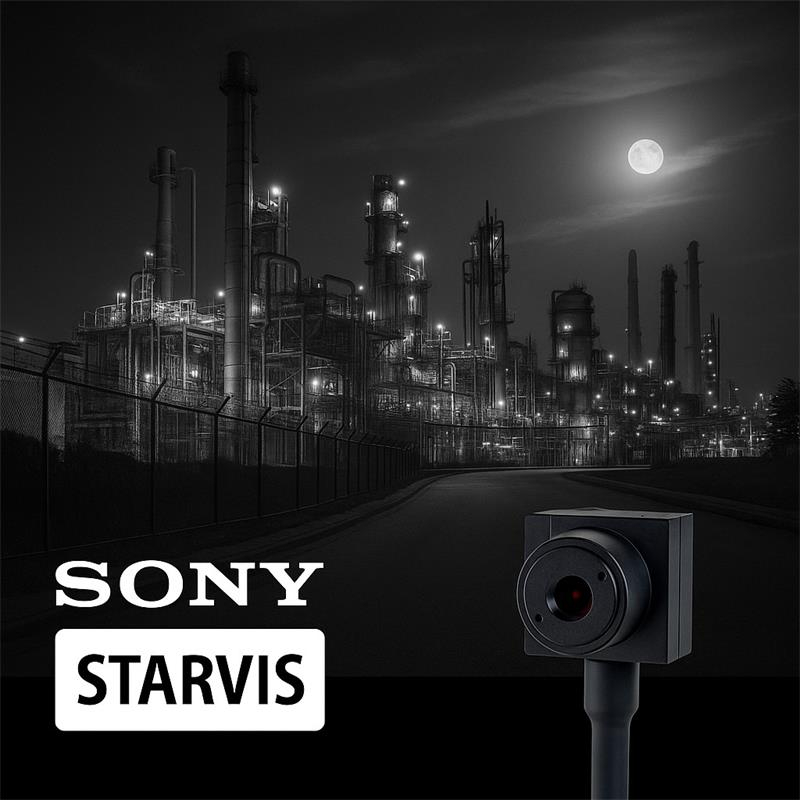
Goobuy mainly recommends IMX678 and IMX585 for different types of 4K STARVIS2 USB camera projects.
They are both strong low-light directions, but they solve different engineering problems.
Choose an IMX678 USB camera when the project needs a flexible 4K STARVIS2 camera platform for embedded hosts, robots, industrial machines or edge vision terminals.
IMX678 is a strong starting point when the buyer says:
Goobuy’s IMX678 USB2.0 Vision Core for Robotics and Industrial Machines is suitable for low-light robot vision, dark enclosure imaging, machine interior monitoring, energy equipment and embedded host projects that need a configurable 4K STARVIS2 UVC camera platform.
IMX678 is especially useful when camera format flexibility and host integration are more important than building a larger external camera head.
Choose an IMX585 USB camera when the project needs a stronger larger-sensor 4K low-light camera head with USB3.0, lens configuration, metal housing and more field-ready integration.
IMX585 is a strong starting point when the buyer says:
Goobuy’s IMX585 USB3 Low-Light Camera Platform is designed for OEMs and system integrators that already have host devices and need project-configured lens, USB-C cable, device name, housing, waterproofing or repeatable camera-head options.
For fixed-FOV projects that need CS-mount lens selection, Goobuy also offers the IMX585 USB3 CS-Lens Box Camera with metal enclosure, replaceable CS lenses, manual focus and iris adjustment for protected industrial low-light applications.
|
Project Requirement |
Better STARVIS Direction |
|
Compact 4K low-light UVC input |
IMX678 |
|
Multiple platform options: USB2.0 / USB3.0 / HDMI / AF / CS lens |
IMX678 |
|
Embedded host, Jetson, Linux or Android terminal |
IMX678 |
|
Dark machine enclosure imaging |
IMX678 or IMX585 |
|
Larger-sensor low-light camera head |
IMX585 |
|
USB3.0 field video encoder input |
IMX585 |
|
Metal housing and CS lens selection |
IMX585 CS-lens box camera |
|
Protected observation enclosure |
IMX585 |
|
Remote site video input |
IMX585 |
|
Lowest bandwidth 1080P low-light monitoring |
IMX385 |
|
Direct outdoor waterproof or washdown use |
Rugged IP67 / IP69K platform |
|
Heat-risk detection |
Thermal camera module |
|
Fast motion / motion distortion control |
Global shutter camera |
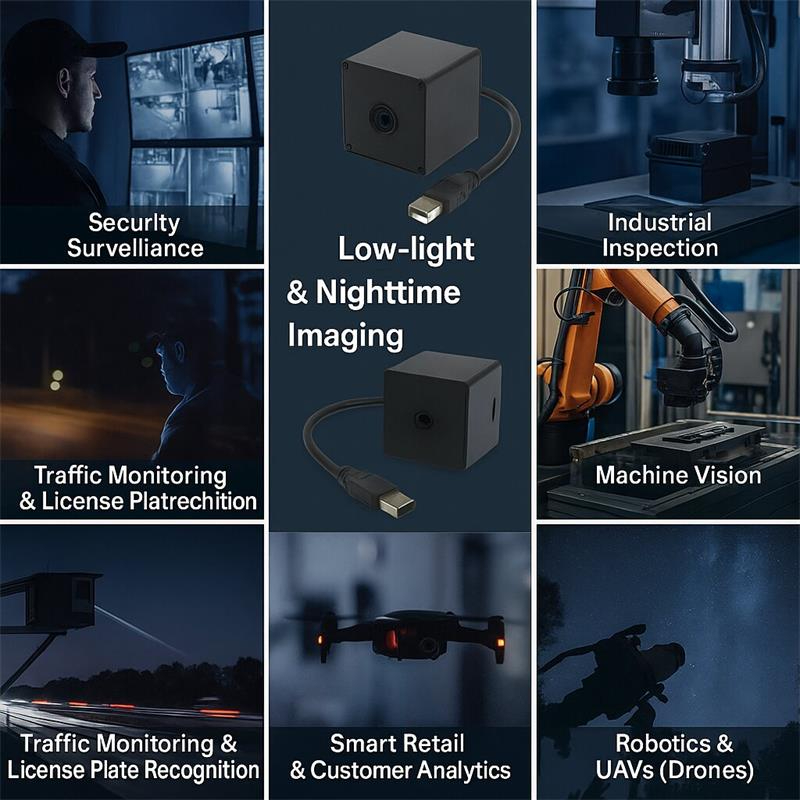
STARVIS and thermal cameras solve different problems.
A STARVIS USB camera captures visible light. It helps operators and AI systems see the actual scene under weak light.
A thermal camera detects heat patterns. It is useful for hotspot detection, bearing overheating, electrical cabinet risks, BESS temperature abnormality, motor issues and early fire-risk monitoring.
Choose STARVIS when you need:
Choose thermal when you need:
For many harsh industrial systems, the best solution is not STARVIS or thermal alone. It is thermal detection plus STARVIS visible confirmation.
An ordinary USB camera may work in a bright office or lab. It may fail in real industrial environments.
A STARVIS USB camera is worth considering when the project has:
A standard camera may still be acceptable when the scene is bright, the image is used only for simple monitoring, and cost is the main concern.
The decision should be based on the real lighting condition, not the product name.
IP cameras are useful for network surveillance and remote video systems. However, many OEM devices and industrial terminals need USB input instead.
A STARVIS USB camera is often better when the customer already has:
USB can simplify device integration when the camera is part of the customer’s own equipment. It avoids IP address setup, network camera firmware, ONVIF configuration and extra NVR architecture.
For long-distance network surveillance, IP cameras may be better. For embedded host integration and camera-side OEM projects, USB is often easier.
A STARVIS USB camera can be used in harsh industrial systems, but the installation method matters.
Before selecting the camera, confirm:
If the camera will be directly exposed to rain, mud, high-pressure cleaning or heavy dust, a rugged camera platform should be considered instead of a standard board-level or housed STARVIS USB camera.
If the camera is protected inside equipment, a cabinet, terminal or enclosure, STARVIS USB cameras can be a very practical low-light visible input layer.
Use a STARVIS USB camera when the machine interior is dim and the host system needs visible video for operators, maintenance or recording.
Use a STARVIS USB camera to provide visible confirmation of material flow, blockage, spillage or night-shift operation. Add thermal imaging if the project needs heat-risk detection.
Use STARVIS for low-light visible evidence around cabinets, pump rooms, compressor areas, utility panels or service points. Use thermal for temperature anomalies.
Use STARVIS cameras for operator-view, teleoperation video, dark-enclosure imaging and low-light context capture. Use global shutter when motion distortion matters.
Use IMX585 when the project needs a larger-sensor low-light camera head for USB3 field video encoders, mobile observation boxes or protected remote monitoring devices.
Use STARVIS USB cameras inside protected enclosures, cabinets or terminals when the surrounding site is harsh but the camera itself is mechanically protected.
Choose IMX678 when your project needs a flexible 4K STARVIS2 USB camera platform for embedded industrial vision.
IMX678 is a good fit for:
IMX678 is not automatically the best choice for every low-light project. It is best when format flexibility, compact integration and 4K UVC validation matter.
Choose IMX585 when your project needs a stronger 4K low-light camera head with larger-sensor image quality, USB3.0 workflow, metal housing, lens flexibility and possible field-ready configuration.
IMX585 is a good fit for:
IMX585 usually requires more mechanical planning than a smaller camera module, but it may provide a stronger image foundation for high-value low-light projects.
IMX385 remains useful when 1080P is enough and the customer wants a mature, stable, cost-balanced low-light USB camera.
Choose IMX385 when:
For many protected industrial monitoring systems, IMX385 can still be more practical than a higher-cost 4K camera.
STARVIS USB cameras are practical low-light camera modules for industrial systems that need usable visible video under dim lighting, night-shift operation or protected harsh equipment conditions.
For compact 4K low-light embedded projects, IMX678 is usually the better starting point because it offers flexible USB, HDMI, autofocus, CS lens and camera-format options.
For larger-sensor 4K low-light camera-head projects, IMX585 is usually the better direction because it supports stronger low-light capture, USB3.0 workflow, metal housing, CS lens options and field-ready configuration.
For cost-balanced 1080P low-light monitoring, IMX385 may still be the most practical choice.
The best camera is not always the newest sensor. The best camera is the one that fits the host device, lighting condition, field of view, cable route, enclosure, environment and deployment plan.
If your industrial project needs a STARVIS USB camera for machine monitoring, conveyors, robots, energy equipment, field video systems or protected harsh environments, send us your host platform, lighting problem, working distance, FOV, interface, mechanical space and sample plan.
Goobuy can help evaluate whether IMX678, IMX585, IMX385 or another STARVIS-based camera platform is the right starting point for your project.
this Artilce is updated by Mr Art huang from shenzhen novel electronics limited in july 13th, 2026
Follow Me
Address:A615, 6F, Huachuangda Building, No107 Xinghua 1st Road, 43 District, Xinan street, Baoan, shenzhen, China 518101