

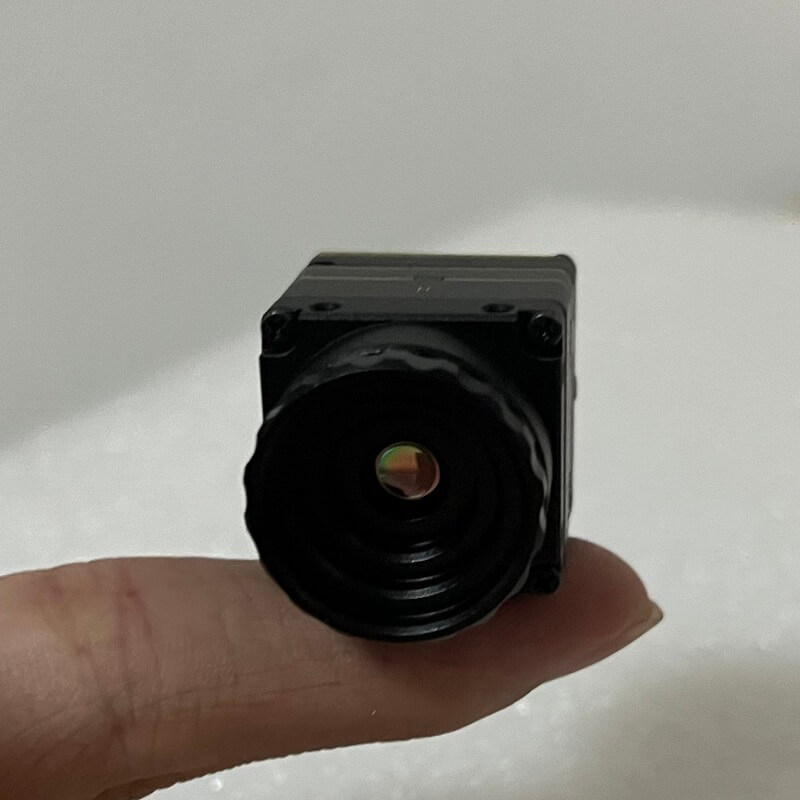
Built for OEM projects that need compact thermal sensing, radiometric data, and fast USB integration. Suitable for battery systems, utilities, rail monitoring, robotics, and fixed industrial nodes
This Goobuy UC-541 21x21mm USB-C thermal imaging module is a compact OEM thermal core designed for early hotspot detection, embedded industrial monitoring, and fixed thermal sensing in space-constrained systems. It helps system integrators add radiometric thermal capability to battery equipment, electrical cabinets, rail infrastructure, inspection robots, and other high-value industrial platforms. it is designed for OEMs, system integrators, and industrial equipment manufacturers who need a compact thermal core inside their own systems. it is one compact thermal core for early hotspot detection, fixed monitoring, and embedded industrial systems. It is suitable for projects where space is limited, continuous temperature awareness matters, and a standard visible camera is not enough. With its miniature footprint, radiometric capability, and USB integration, this module helps customers build embedded thermal monitoring devices for early hotspot detection, predictive maintenance, remote asset protection, and inspection robotics. This product is intended for industrial integration, not for hobby use, phone plug-in accessories, or consumer DIY projects.
This product is a compact USB-C thermal imaging module for industrial and embedded integration. It is built for customers who want to add thermal sensing to their own equipment, such as monitoring nodes, industrial boxes, rail and tunnel systems, inspection robots, battery test equipment, and remote utility devices.
Unlike bulky finished thermal cameras, this module is designed as an OEM thermal core that can be integrated into a custom housing, sensor pod, fixed enclosure, robotic payload, or edge monitoring platform.
In many industrial environments, abnormal heat appears before smoke, flame, or visible failure.
A compact thermal module helps system builders detect:
By integrating thermal sensing directly into the customer’s own device, this module supports faster alarms, better diagnostics, and more reliable unattended monitoring.
Our 21×21mm USB-C thermal imaging module combines a compact form factor with practical OEM integration value.
It is especially suitable for:
This module supports radiometric thermal data and real-time thermal video output, making it useful not only for visualization but also for measurement, analytics, and system-level decision making.
It is a good fit for customers who need a thermal core that is:
In many industrial sites, heat buildup appears before smoke, flame, or visible mechanical breakdown. This module helps OEM systems detect abnormal thermal behavior earlier.
Many customers cannot use a bulky finished thermal camera because the installation space is too small. The 21×21mm format is easier to integrate into compact housings and embedded devices.
Remote cabinets, substations, tunnels, industrial corridors, battery rooms, and infrastructure nodes often require continuous thermal awareness without human presence.
Overheating motors, bearings, drives, power electronics, and electrical connections can be identified before failure, supporting maintenance planning and reducing downtime.
Inspection robots and mobile monitoring systems need a small thermal sensor that can fit within strict SWaP limits.
Industrial customers often need thermal data to feed into their own software, alarm logic, edge AI, or industrial control system. This module supports that embedded workflow.
Many industrial customers do not need a ready-made consumer-style thermal camera.
They need a thermal module they can integrate into their own product.
This 21×21mm USB-C thermal core is suitable for customers who want to:
For many OEM projects, a compact thermal core provides more flexibility than a finished handheld or boxed thermal camera.
The miniature module size is suitable for industrial boxes, robotics payloads, cabinet nodes, and sensor arrays where internal space is limited.
The module can be integrated with embedded Linux systems, edge AI devices, industrial PCs, Jetson platforms, and other custom monitoring hardware.
It can be used together with visible cameras, industrial sensors, environmental sensors, or edge analytics processors in a single customer device.
Suitable for both stationary monitoring systems and moving inspection platforms.
Customers can use the module as a core sensing component inside their own branded industrial equipment.
To support industrial integration, SDK support is available for customers who need to develop their own software, analytics, or control logic.
This is useful for projects involving:
If you are developing an embedded system and need thermal data integration rather than just standalone viewing, this product is designed for that workflow.
Industrial customers rarely need a one-size-fits-all thermal camera.
They usually need a thermal core that fits their own:
Customization support may include:
If you are building a compact thermal monitoring device, robotic system, industrial node, or application-specific enclosure, we can discuss a suitable integration structure for your project.
|
Feature |
Key Benefit & Value Proposition |
|
21×21mm Size |
Compact module fits into small devices and embedded systems |
|
384×288 IR Resolution |
High thermal clarity for precise diagnostics and analysis |
|
USB-C Plug & Play |
Instant connection to Android, Windows, Linux (no drivers) |
|
Real-Time Thermal Video |
Live IR visualization ideal for inspections & mobile apps |
|
Lightweight (18.6g) |
Drone & wearable-ready design reduces system burden |
|
OEM Integration-Ready |
Supports SDKs, app development, and custom module design |
|
Low Power Consumption |
Efficient for portable, mobile, or long-duration operations |
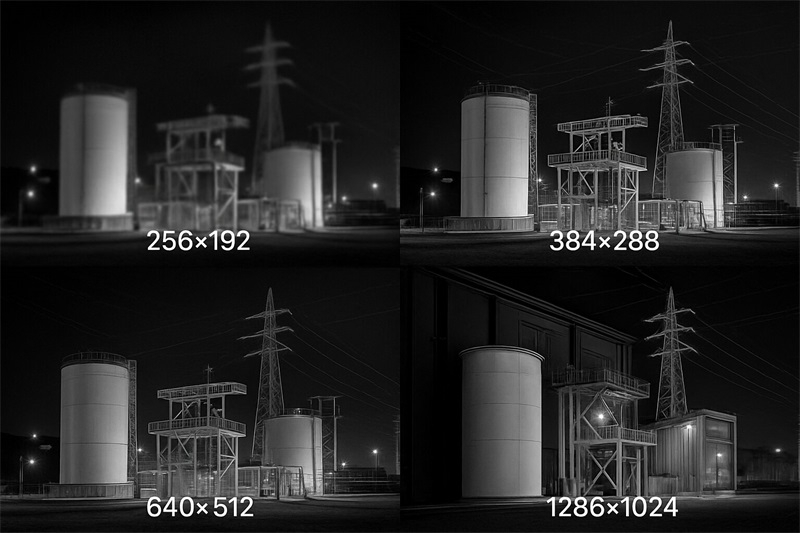
Product Application Examples
This product is mainly intended for:
It is not primarily intended for:
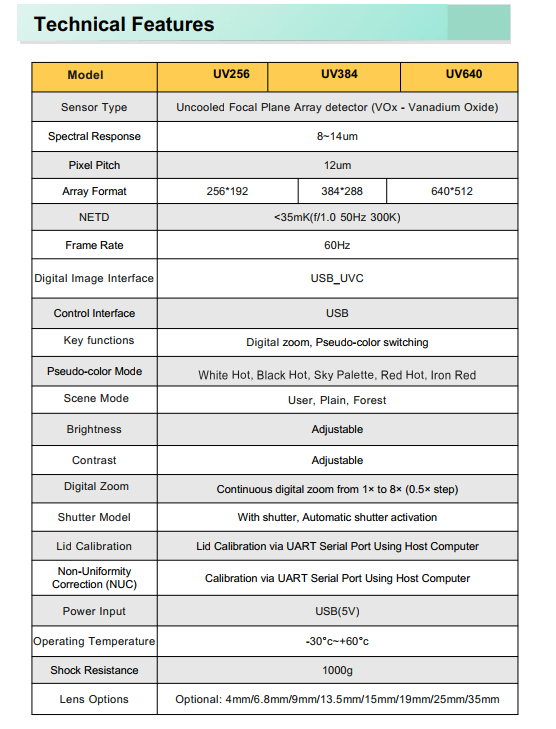
Keying parameter
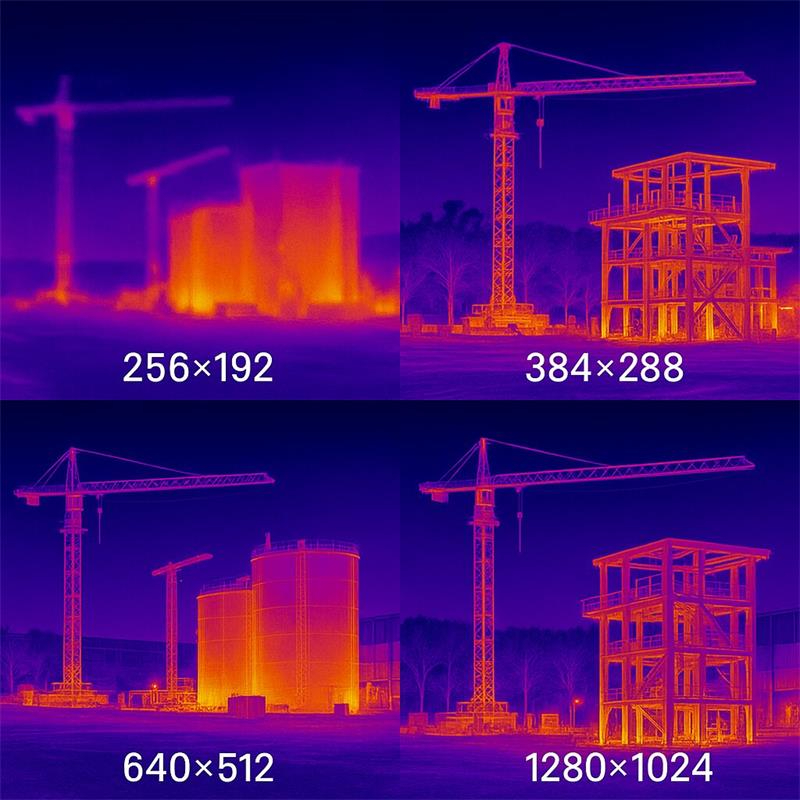
Suitable for OEM systems used in:
In these environments, early thermal awareness can help detect hot spots before visible flame appears.
Typical customer types:
fire safety system integrators, industrial monitoring OEMs, thermal analytics platform developers
Suitable for integration into systems that monitor:
Thermal sensing helps identify overheating risk, abnormal load behavior, and maintenance issues in critical electrical infrastructure.
Typical customer types:
utility monitoring integrators, industrial IoT device manufacturers, electrical equipment OEMs
A practical fit for:
The small size makes the module easier to install inside compact industrial cabinets, automation equipment, and thermal monitoring enclosures.
Typical customer types:
battery automation companies, energy storage safety integrators, industrial test equipment manufacturers
Suitable for use in:
This is especially relevant where compact installation, rugged customer housing design, and fixed long-term deployment are required.
Typical customer types:
rail automation integrators, tunnel safety suppliers, infrastructure monitoring OEMs
Well suited for thermal payload integration in:
The compact size supports robotics applications where payload size, weight, and integration flexibility matter.
Typical customer types:
inspection robotics startups, industrial robot OEMs, utility robotics integrators
Suitable for platforms monitoring:
Customers in heavy industry often prefer a compact thermal core that can be integrated into their own sealed or ruggedized housing.
Typical customer types:
mining equipment integrators, industrial condition-monitoring vendors, heavy-industry automation suppliers
7. Enclosed Space Thermal Safety (BESS & Data Centers)
The risk of thermal runaway in gigafactories and energy storage requires internal, node-level monitoring.
BESS & UPS Cabinets: Mount directly onto battery racks or edge computing gateways to detect micro-fluctuations in cell temperatures long before smoke alarms trigger.
High-Density Data Centers: Embed within smart PDUs or server chassis for localized, continuous monitoring of power chains and cooling system efficacy.
High-Voltage Switchgears: A compact, non-contact temperature monitoring node that fits inside closed electrical cabinets to identify degrading contacts and prevent catastrophic arc faults.
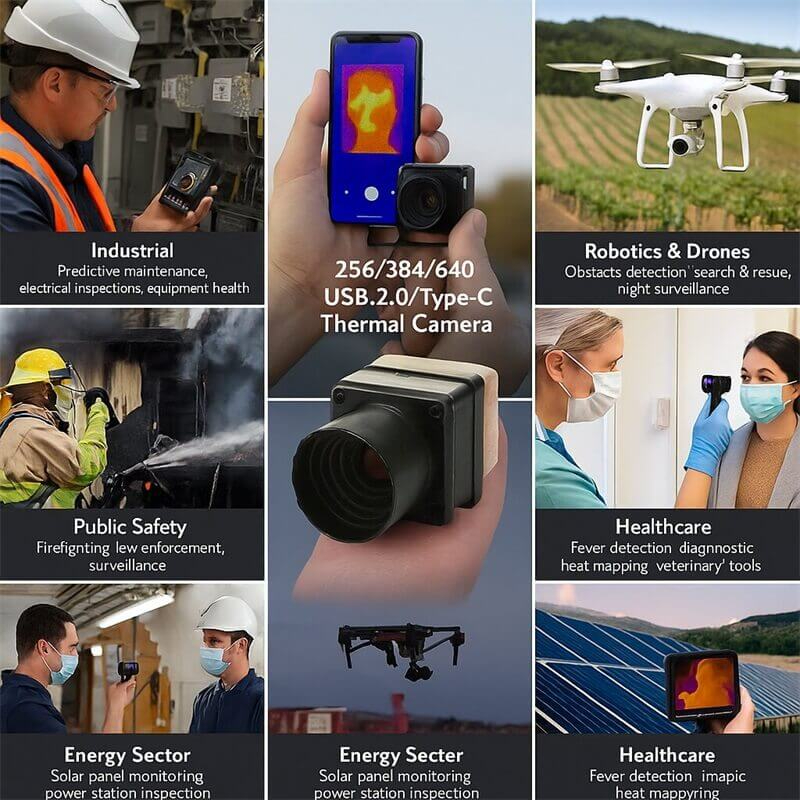
This module is designed for embedded thermal monitoring and temperature-aware OEM systems, not only for visual heat display.
It is suitable for projects where the customer needs thermal data for hotspot detection, abnormal temperature rise analysis, alarm logic, or fixed monitoring, such as battery cabinets, electrical equipment, tunnel infrastructure, utility nodes, or inspection devices. If your project only needs a general-purpose handheld viewer, a finished thermal camera may be more suitable. If your project needs a compact thermal core inside your own equipment, this module is the better fit.
This product is designed primarily for OEM equipment manufacturers, industrial system integrators, robotics developers, rail and utility monitoring suppliers, and embedded device builders.
It is not primarily designed for hobby users, phone accessory buyers, or one-off consumer applications. The best-fit customer is usually building a finished industrial product or monitoring system and needs a compact thermal core that can be integrated into their own enclosure, computing platform, and software workflow.
A compact thermal module makes more sense when the customer has strict space, weight, enclosure, or system-integration constraints.
Typical examples include battery test cabinets, electrical monitoring boxes, tunnel or rail monitoring nodes, confined-space robots, compact payloads, and fixed industrial devices. In these cases, customers often do not want a large standalone thermal camera with its own housing, display, or mounting logic. They want a small thermal core that fits their own product architecture.
This module is suitable for fixed embedded deployment when it is integrated into the right customer-side housing, thermal design, and system architecture.
Many industrial projects use thermal modules inside fixed installations such as utility cabinets, remote monitoring nodes, energy storage systems, tunnel equipment, and industrial safety boxes. The key point is that the module itself is a core component, while the final long-term reliability of the complete system also depends on the customer’s enclosure design, environmental sealing, cable routing, power stability, and thermal management.
The intended value of this module is not only thermal imaging, but also usable thermal data for system logic and software integration.
That means it is suitable for customers who want to build functions such as hotspot alarms, temperature thresholds, trend monitoring, image-based diagnostics, thermal event logging, or edge analytics. In most serious industrial projects, the customer is not buying thermal video alone. They are evaluating whether the module can become part of a larger monitoring workflow, and that is exactly the type of project this product is designed for.
USB-C is useful both for rapid evaluation and for many real embedded projects, especially when the target system uses an industrial IPC, embedded Linux platform, Jetson, or other edge computing device.
For OEMs, USB integration reduces development complexity and speeds up prototyping compared with more specialized interfaces. In many fixed monitoring and robotics projects, this is a practical advantage. The important question is not whether USB-C sounds “consumer-like”, but whether it matches the customer’s internal system architecture. For many compact industrial systems, it does
Yes. In fact, this is one of the main reasons OEM customers choose a module instead of a finished thermal camera.
Many European industrial customers want to build their own enclosure because they need specific protection levels, mounting geometry, cable direction, thermal window design, anti-corrosion materials, or platform-specific dimensions. A compact thermal module gives them more freedom to design the final device around the real operating environment rather than around the limitations of a standard boxed camera.
8, Is this module subject to US export controls (ITAR/EAR)?
No. The NOVEL 21x21mm thermal module is engineered and manufactured independently in Shenzhen, China. It is completely ITAR-free and not subject to US EAR regulations, ensuring a secure and uninterrupted supply chain for our clients in Europe, Russia, and worldwide.
Shenzhen Novel Electronics Limited supports OEM customers who need compact camera and imaging modules for embedded industrial applications.
For projects involving thermal integration, we can support:
We understand that industrial buyers and system integrators are not simply buying a component.
They are building a complete system that must fit a real enclosure, workflow, and use case.
That is why we focus on practical integration value rather than generic retail-style selling
If you are developing a thermal monitoring node, compact industrial sensor box, inspection device, edge AI platform, or embedded safety system, this 21×21mm USB-C thermal imaging module can be evaluated as a compact OEM thermal core.
When contacting us, please share:
This helps us recommend a more suitable version for your project.
Looking for a compact thermal core for industrial monitoring, battery safety, rail or tunnel systems, robotics, utilities, or remote infrastructure?
Send us your project requirements and expected volume.
We will help you evaluate whether this 21×21mm USB-C thermal imaging module is a suitable fit for your system design.
Email Us: office@okgoobuy.com WhatsApp / WeChat / mobile: +86 13510914939
Engineering FAQ for OEM Thermal Integration Projects (2)
Yes. These are among the strongest commercial application directions for this module.
The product is especially relevant when the customer needs a compact thermal sensing node inside battery test equipment, BESS auxiliary monitoring systems, UPS rooms, switchgear cabinets, electrical panels, or distributed energy infrastructure. In these projects, the value is not “thermal imaging” by itself. The value is early awareness of abnormal temperature rise inside a compact system where standard visible cameras or ambient sensors are not sufficient.
Yes, but usually as an embedded thermal component inside a larger project-specific system, not as a universal replacement for every finished railway or tunnel camera product.
It is well suited for customers building compact auxiliary monitoring boxes, fixed thermal watch points, rail-side inspection devices, tunnel monitoring systems, or infrastructure condition-monitoring nodes. These customers typically care about small size, integration flexibility, and long-term deployment architecture. That is why a compact thermal core can be more valuable than a bulky finished camera in these applications.
Yes. This is one of the most natural application directions for a compact thermal module.
Inspection robots, quadruped systems, confined-space crawlers, and utility survey platforms usually operate under strict SWaP constraints. They often need thermal sensing together with RGB cameras, lighting, gas sensors, LiDAR, or edge computing hardware in the same payload. A 21×21mm thermal core is easier to integrate into that kind of multi-sensor package than a large standalone thermal camera.
The correct evaluation is not only about thermal resolution. It should start with the customer’s actual system requirements.
The most important questions are:
Customers who can answer those questions usually move faster from evaluation to a realistic integration decision.
The most useful project inquiries include both the application scenario and the integration constraints.
A strong inquiry usually tells us:
This allows us to respond like a technical partner rather than like a generic parts seller.
Because many industrial projects do not need a branded finished camera. They need a thermal sensing component that becomes part of their own branded system.
A finished thermal camera can be a good tool for handheld inspection. But it is often too large, too closed, or too inflexible for OEM equipment development. A compact module is usually a better option when the customer needs to control the final enclosure, data workflow, mounting method, and product-level integration strategy.、
This product is intended for serious OEM use cases, including projects that move from evaluation into repeat deployment.
The commercial value of the module is strongest when it becomes part of a customer’s repeatable product architecture, such as a monitoring node, equipment platform, robotics payload, or embedded industrial device. That is why the most relevant discussions are not about one-off curiosity purchases, but about project fit, customization, and expected deployment logic over time.
Its strongest value is the combination of compact size, OEM flexibility, and practical thermal integration potential.
For many European industrial customers, the challenge is not finding “a thermal camera”. The challenge is finding a thermal sensing solution that can fit inside a constrained enclosure, connect to an embedded platform, support real monitoring logic, and align with a serious industrial product roadmap. That is the gap this module is designed to address.
 office@okgoobuy.com
Follow Me
Address:A615, 6F, Huachuangda Building, No107 Xinghua 1st Road, 43 District, Xinan street, Baoan, shenzhen, China 518101