
Thermal Vision: Unlocking Hidden Insights for Predictive Maintenance & Efficiency
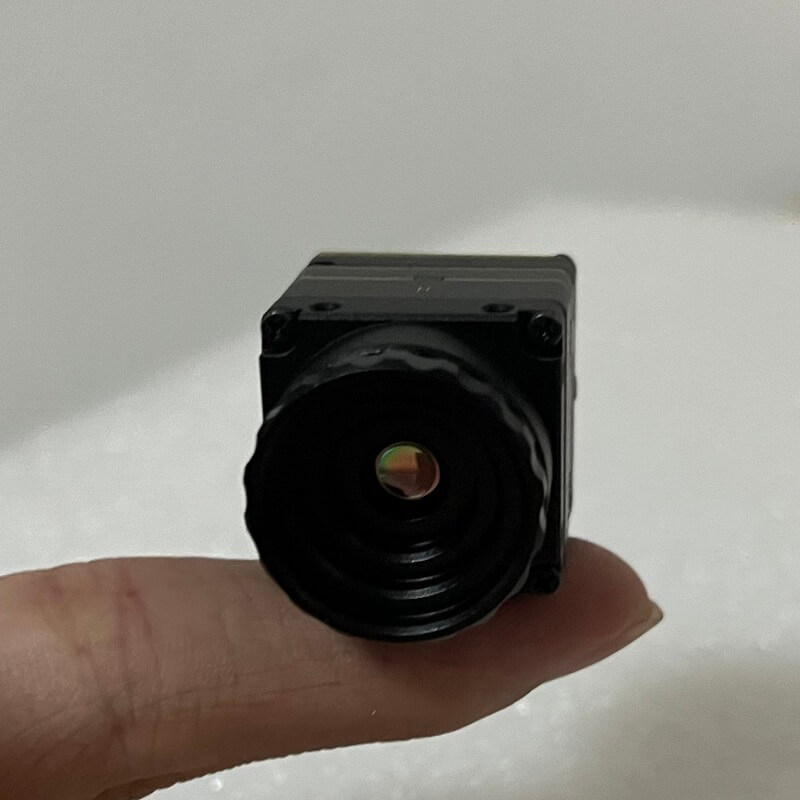
A USB mini thermal camera module is a compact radiometric infrared camera core used by OEMs and system integrators to add heat-aware sensing into energy equipment, electrical cabinets, battery systems, substations, utility monitoring nodes, rail and tunnel platforms, inspection robots and remote industrial devices. It connects to a host through USB or USB-C, provides thermal video and temperature data, and is best used as an embedded thermal sensing component inside a customer’s own enclosure or monitoring platform
A USB mini thermal camera is not only a small infrared camera.
For energy equipment manufacturers, utility integrators, industrial monitoring companies and harsh-site system builders, it is a compact thermal sensing core that can be integrated into a customer’s own device, cabinet, inspection tool, edge AI box, robotic platform, fixed monitoring node or remote infrastructure system.
In 2025 and beyond, many industrial customers no longer ask only for visible cameras.
They need to see heat.
They need to know whether a cabinet, connector, motor, inverter, battery rack, cable tunnel, pump, compressor or remote industrial node is developing abnormal thermal behavior before smoke, flame or visible failure appears.
This is where a compact USB-C thermal camera module becomes useful.
Goobuy does not provide a complete energy safety platform, SCADA system, fire certification system, predictive maintenance software or cloud monitoring service.
Goobuy provides camera-side thermal hardware for OEMs and system integrators who already have a host system, enclosure, gateway, edge computer, monitoring platform or field device and need a compact thermal core for sample validation and project integration.
Recommended product direction:
<a href="https://www.okgoobuy.com/china-USB-thermal-camera-module.html">21×21mm USB-C Radiometric Thermal Camera Module with SDK</a>
| Application Need | USB Mini Thermal Camera Fit |
|---|---|
| Electrical cabinet hot-spot awareness | Strong fit |
| BESS battery rack or battery test equipment | Strong fit |
| Solar inverter or power electronics monitoring | Strong fit |
| Remote utility cabinet monitoring | Strong fit |
| Industrial edge AI thermal input | Strong fit |
| Compact monitoring node inside customer enclosure | Strong fit |
| Rail, tunnel or cable corridor thermal node | Good fit |
| Inspection robot thermal payload | Good fit |
| Wind turbine nacelle thermal awareness | Good fit if mounted in a protected location |
| Compressor or pump room thermal monitoring | Good fit with correct FOV and enclosure |
| Waste, recycling or biomass early hot-spot detection | Good fit with system-level alarm design |
| Long-distance perimeter surveillance | Not the right starting point |
| Certified fire detection system | Requires system-level certification |
| ATEX / IECEx hazardous-area installation | Requires certified enclosure and project-level compliance |
| Methane or gas leak imaging | Needs dedicated OGI / gas imaging technology |
| Consumer phone thermal accessory | Not the target customer |
Europe and global energy countries are investing heavily in electrification, renewable energy, battery storage, grid infrastructure, remote monitoring and industrial safety.
This creates a new kind of camera demand.
Many systems do not need a large handheld thermal camera.
They need a compact thermal core inside their own equipment.
Typical systems include:
The camera is only one part of the final system.
The customer usually provides:
Goobuy provides the thermal imaging core and integration discussion.
USB-C is practical for compact thermal integration because many customers already use a host device.
Typical hosts include:
A USB mini thermal camera can help the customer reduce the first-stage integration burden.
Instead of building a full thermal camera from the sensor level, the customer can start with a compact thermal module and validate:
This is especially useful for energy and infrastructure customers who want to build their own branded monitoring device.
Europe has strong demand for thermal monitoring because of:
European customers often prefer practical, compact, integration-ready modules rather than oversized finished devices.
They usually ask detailed engineering questions:
This makes a compact USB thermal module a natural fit for OEM and system integration projects.
Germany is a strong market for automation, machinery, industrial cabinets, energy equipment and system integration.
A USB mini thermal camera can be useful in:
For German OEMs, the key value is not “thermal camera gadget”.
The value is embedded thermal sensing inside a controlled industrial product.
For visible low-light monitoring in the same industrial equipment, a STARVIS camera may also be useful:
<a href="https://www.okgoobuy.com/Industrial-Starvis-imx385-USB-Camera.html">Goobuy UC-535-2MP Housed Sony IMX385 STARVIS Low-Light USB Camera</a>
When both visible context and heat information are required, the customer may consider a dual-sensor design or system-level visible + thermal configuration.
France and Italy both have strong industrial, transport, energy and utility infrastructure.
A mini thermal module can support:
In these markets, the customer may not want a finished handheld thermal camera.
They may need a small thermal core to embed into their own monitoring product or service equipment.
Goobuy’s 21×21mm USB-C thermal module direction is suitable when the customer already has the host and needs radiometric thermal data inside a compact device.
Spain and Portugal are important markets for solar energy, energy storage, industrial sites and remote infrastructure.
Thermal camera modules can be considered for:
A visible camera can show whether a cabinet door is open or whether an operator is present.
A thermal camera shows whether a component is heating abnormally.
For energy OEMs, this distinction matters.
If the system needs heat-aware data, a USB-C thermal module is the correct camera-side direction.
Nordic energy countries such as Sweden, Finland, Norway and Denmark often deal with wind power, remote substations, cold weather, marine energy environments and distributed infrastructure.
A compact thermal module can be used in:
Cold climate does not automatically make a standard module suitable for outdoor exposure.
The final system must consider:
The thermal core can provide heat-aware sensing, but environmental protection must be handled by the final device design.
The UK and Ireland have strong use cases around:
A compact USB thermal module may be used inside:
For higher thermal detail, customers may evaluate a higher-resolution module:
<a href="https://www.okgoobuy.com/1280-HD-thermal-module.html">1280×1024 HD Micro USB Thermal Module for Industrial OEMs</a>
This direction is more suitable when the customer needs more thermal image detail and the host platform can support the data and integration requirements.
Outside Europe, compact thermal camera modules can be relevant in global energy countries such as:
The application logic is similar:
The customer has distributed industrial assets and wants heat-aware visibility.
Typical assets include:
The right product depends on target distance, FOV, thermal resolution, output interface, host platform and final enclosure.
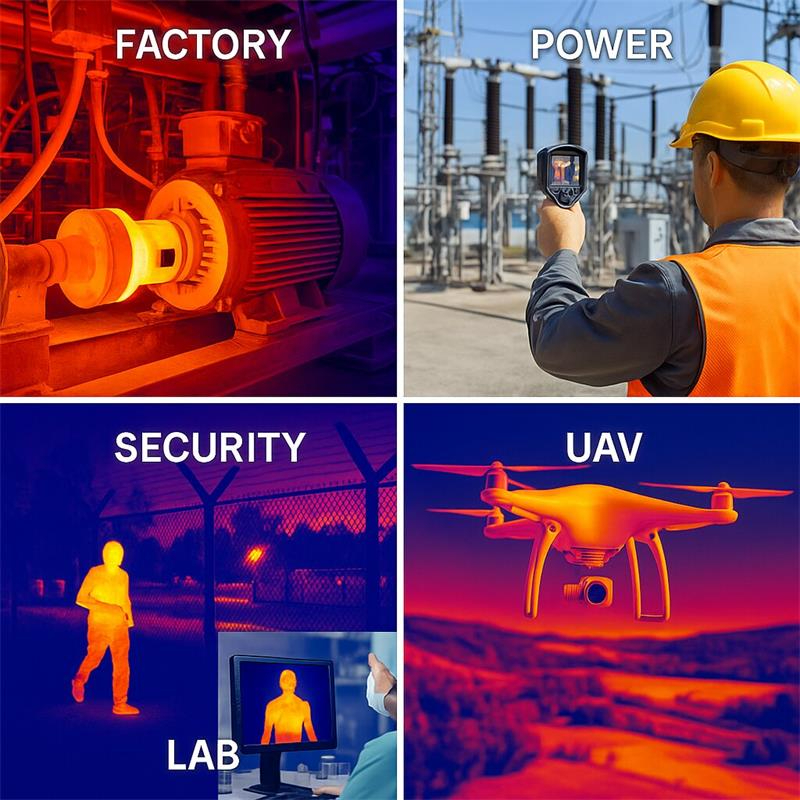
Electrical cabinets are one of the most realistic applications for compact thermal modules.
A thermal module can help the customer observe:
The module should be mounted with a defined viewing angle and distance.
The customer must also consider:
A USB-C thermal module is a good starting point when the customer wants radiometric data inside their own cabinet monitoring device.
Product link:
<a href="https://www.okgoobuy.com/china-USB-thermal-camera-module.html">21×21mm USB-C Radiometric Thermal Camera Module with SDK</a>
Battery energy storage systems need more than ordinary video.
Thermal monitoring can support:
A compact thermal camera module is not a complete BESS safety system.
It is one sensing layer inside the final system.
The complete solution may include:
Goobuy’s role is the thermal imaging module, not the complete BESS safety platform.
Solar power systems contain many thermal risk points:
A USB mini thermal camera can be integrated into a monitoring node for fixed thermal observation of these areas.
For solar farm drones or long-distance aerial inspection, another thermal product direction may be required.
For fixed cabinet or inverter monitoring, a compact USB-C thermal core can be more practical.
Wind turbine nacelles contain mechanical, electrical and power conversion components.
Thermal monitoring may help observe:
The final system must handle vibration, temperature, condensation, enclosure protection and remote maintenance.
A compact USB thermal module can fit into a customer’s own nacelle monitoring device if the mechanical and environmental design is handled properly.
Rail systems, tunnels and cable corridors often need unattended thermal awareness.
Potential use cases include:
For these applications, a compact USB thermal module can be built into fixed nodes or mobile inspection robots.
If the customer needs analog low-latency thermal video for a monitor or vehicle system, a CVBS thermal core may be more suitable:
<a href="https://www.okgoobuy.com/640-wide-cvbs-thermal-core.html">640×512 Ultra-Wide Micro CVBS Thermal Core with 90.3° HFOV</a>
Waste, recycling and biomass facilities often face early hot-spot risks.
Thermal cameras can help observe:
However, a thermal module alone is not a certified fire detection system.
The final system must include:
For fixed monitoring devices in protected positions, a compact USB thermal module can be a practical sensing core.
For larger outdoor or vehicle platforms, a different rugged thermal design may be required.
In global energy countries, compressor stations, oilfield sites and pipeline stations can benefit from thermal monitoring.
Typical targets include:
Thermal modules should be positioned as heat-aware sensing components.
They should not be described as methane gas leak cameras or certified hazardous-area cameras.
If the project requires hazardous-area installation, the customer must define ATEX, IECEx or local certification requirements and design the final enclosure accordingly.
Inspection robots are a natural fit for mini thermal modules.
Robotic platforms often have limited space, limited payload and an existing embedded host.
A compact USB thermal module can help robots inspect:
If the robot also needs visible scene context, a visible USB camera or dual-spectrum configuration may be considered.
Relevant harsh-site product direction:
<a href="https://www.okgoobuy.com/harsh-site-camera-modules.html">Goobuy Rugged Cameras for Harsh Environments</a>
A mini thermal module is a better fit when the customer wants to:
A finished thermal camera may be better when the customer wants a complete ready-to-use standalone product.
Goobuy’s 21×21mm USB-C thermal camera is mainly for OEM and system integration customers, not for consumer phone accessories or hobby thermal gadgets.
A compact 21×21mm thermal module is useful for space-limited integration.
But some projects need higher thermal image detail.
Higher-resolution thermal may be more suitable when:
Recommended high-resolution direction:
<a href="https://www.okgoobuy.com/1280-HD-thermal-module.html">1280×1024 HD Micro USB Thermal Module for Industrial OEMs</a>
The decision should be based on target distance, FOV, object size, alarm logic, thermal resolution, host capability and project budget.
A USB thermal module is useful when the host needs thermal data and software integration.
But some industrial systems need simple analog thermal video for local display, vehicle monitor or low-latency viewing.
For wide-area thermal view on platforms that use analog video, a CVBS thermal core may be better.
Recommended direction:
<a href="https://www.okgoobuy.com/640-wide-cvbs-thermal-core.html">640×512 Ultra-Wide Micro CVBS Thermal Core with 90.3° HFOV</a>
This direction is especially useful for:
Thermal cameras and STARVIS visible cameras solve different problems.
Choose thermal when the system needs to see:
Choose STARVIS visible cameras when the system needs to see:
For some energy and industrial projects, both are useful.
A visible camera gives context.
A thermal camera gives heat information.
Related visible low-light direction:
<a href="https://www.okgoobuy.com/Industrial-Starvis-imx385-USB-Camera.html">Goobuy UC-535-2MP Housed Sony IMX385 STARVIS Low-Light USB Camera</a>
Before requesting a sample, define:
A thermal camera module should be selected around the final system, not only around the sensor specification.
Goobuy supports OEMs and system integrators with camera-side thermal hardware.
Project discussion may include:
Goobuy is a good fit when the customer already has:
Goobuy is not the best fit when the customer needs:
A USB mini thermal camera module is a compact infrared camera core that connects to a host through USB or USB-C and provides thermal video and temperature-related data. It is mainly used by OEMs and system integrators to build embedded thermal monitoring devices, inspection tools, robots or industrial sensing nodes.
A 21×21mm USB-C thermal module is most useful in space-limited systems such as electrical cabinet monitors, battery monitoring nodes, utility boxes, inspection robots, compact industrial devices, edge AI systems, rail and tunnel platforms, and remote infrastructure monitoring equipment.
Yes, it can be suitable for European energy applications when the customer needs compact thermal sensing inside their own equipment. Common uses include electrical cabinets, BESS, substations, wind turbine nacelles, solar inverter stations, rail systems, tunnel corridors and remote utility monitoring nodes.
A USB mini thermal camera can provide heat-aware visibility and radiometric data that help the customer’s system identify abnormal temperature patterns or hot spots. It should be treated as one sensing layer inside a complete monitoring and alarm system, not as a standalone certified safety system.
No. A USB mini thermal camera module is not a complete certified fire detection system. Fire detection requires system-level design, alarm logic, site validation, certification, maintenance procedures and integration with the customer’s safety architecture.
It can be used as a thermal sensing component inside BESS monitoring devices, battery test equipment or cabinet-level thermal nodes. The complete BESS safety system should also include BMS, sensors, alarm logic, site response procedures and system-level validation.
No. A standard LWIR thermal module should not be described as a methane leak detection or OGI gas imaging camera. Methane detection usually requires dedicated optical gas imaging technology or gas sensors. A USB thermal module is for heat-aware visibility and temperature-related monitoring.
Choose a 1280×1024 thermal module when the project needs higher thermal image detail, larger target coverage, better diagnostic clarity or a premium monitoring platform. Choose the compact USB mini thermal module when size, weight, USB-C integration and embedded installation are more important.
Choose CVBS thermal when the system needs low-latency analog video for local display, vehicle monitor or simple thermal viewing. Choose USB thermal when the host needs thermal data, SDK integration, software analytics or computer-side processing.
Yes. A USB mini thermal camera can provide thermal input to an edge AI host, industrial PC, embedded Linux system, Jetson platform or monitoring gateway. The AI processing usually runs on the host, while the camera provides thermal video and data.
The module itself should be integrated into a suitable enclosure for outdoor use. Outdoor deployment requires protection against water, dust, condensation, temperature, vibration, UV exposure, cable strain and lens window contamination. The final system must be validated by the customer or integrator.
The customer should send the application, target object, distance, FOV, required thermal resolution, host type, operating system, SDK requirement, environment, enclosure plan, temperature range, cable requirement, sample schedule, pilot quantity and expected production quantity.
<a href="https://www.okgoobuy.com/china-USB-thermal-camera-module.html">21×21mm USB-C Radiometric Thermal Camera Module with SDK</a>
<a href="https://www.okgoobuy.com/1280-HD-thermal-module.html">1280×1024 HD Micro USB Thermal Module for Industrial OEMs</a>
<a href="https://www.okgoobuy.com/640-wide-cvbs-thermal-core.html">640×512 Ultra-Wide Micro CVBS Thermal Core with 90.3° HFOV</a>
<a href="https://www.okgoobuy.com/Industrial-Starvis-imx385-USB-Camera.html">Goobuy UC-535-2MP Housed Sony IMX385 STARVIS Low-Light USB Camera</a>
<a href="https://www.okgoobuy.com/harsh-site-camera-modules.html">Goobuy Rugged Cameras for Harsh Environments | STARVIS & Thermal Modules</a>
this article is updated in June 27th, 2026 by shenzhen novel electronics limited
Follow Me
Address:A615, 6F, Huachuangda Building, No107 Xinghua 1st Road, 43 District, Xinan street, Baoan, shenzhen, China 518101