
Traditional IoT systems can tell you that something happened. A compact camera can show what happened. For example, an RTLS system can locate an asset, while a USB camera can confirm its label, condition or surrounding environment. A smart cabinet can detect a door-open event, while a fisheye camera can show which item was removed.
Industrial applications—especially those involving machine vision and embedded systems—demand more than just a high-resolution image. Engineers require:
The 15×15mm USB Camera ticks all these boxes, making it an ideal candidate for applications ranging from robotic eyes to factory inspection units and drone-mounted systems.
For IoT product teams, UVC plug-and-play integration is often more important than complex camera SDK features. A UVC USB camera module can be tested quickly on Linux, Android, Windows and many embedded host platforms, reducing prototype risk for edge AI gateways, smart device controllers and industrial IoT terminals.
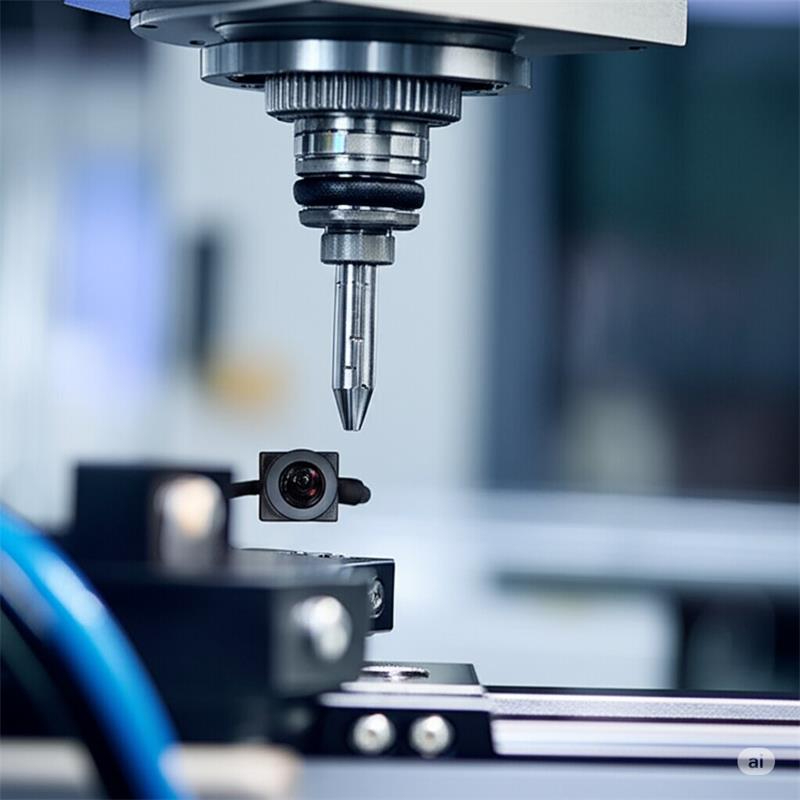
This micro camera module fits effortlessly into devices with tight space constraints, such as wearable instruments, robotic heads, and drone chassis.
With a maximum resolution of 1920×1080 at 30fps, it delivers full HD image quality powered by the proven GC2053 sensor—a low-light-capable CMOS chip with great dynamic range performance.
This gives engineers and product designers the freedom to choose the right interface based on their system design.
Choose from a range of M12 lenses with varying Effective Focal Lengths (EFL), Field of View (FOV), and Infrared (IR) cut filters. This is particularly beneficial in industrial imaging, where geometric accuracy is paramount.
Fully plug-and-play on Windows, Linux, and Android. No extra drivers or middleware needed—ideal for rapid development and testing.
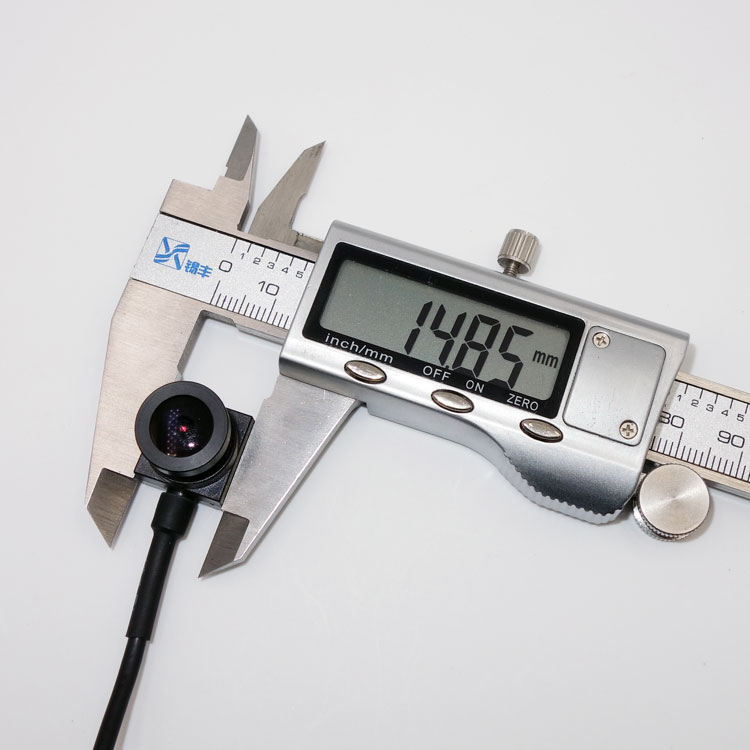
A 15×15mm USB camera module is no longer only a small camera for traditional machine vision. In many 2026 IoT and smart device projects, it works as a compact visual verification camera module that helps the system capture what sensors alone cannot explain.
A temperature sensor can report a value.
An RTLS tag can report a location.
A door sensor can report an opening event.
But a compact camera can show what actually happened.
For OEM teams building IoT edge devices, smart factory terminals, RTLS systems, smart cabinets, smart hospital devices and embedded Linux / Android hardware, a micro UVC camera can provide visual proof of assets, labels, QR codes, cabinet interiors, equipment status and abnormal events without requiring a complex camera subsystem.
In smart factory projects, many devices need simple image capture rather than a full industrial machine vision camera. A compact UVC USB camera module can be built into an edge gateway, equipment terminal, inspection device or production-side controller to capture visual status.
Typical use cases include:
A 15×15mm USB camera for IoT edge vision is useful when the hardware team needs a small, driver-friendly image source that can connect to Linux, Android, Windows or embedded host platforms through standard UVC.
For many smart manufacturing systems, the camera is not used to replace a high-end industrial camera. It is used to give the IoT system a visual record that supports maintenance, traceability and operational decisions.
RTLS and asset tracking systems can locate an asset, but they cannot always confirm what the asset looks like, whether the label is correct, or whether the object is still in the expected condition.
A compact USB camera for RTLS visual verification can add image evidence to location data.
Typical applications include:
For example, an RTLS platform may know that a tool, cart, device or medical asset is inside a certain room or storage zone. A micro USB camera module can capture the asset label, shelf position or surrounding condition to make the record more reliable.
In simple terms:
RTLS tells the system where the asset is. A camera helps show what is actually there.
This is one of the most practical uses of a 15×15mm USB camera module for IoT hardware.
Smart cabinets and asset lockers often need a camera that is small enough to fit inside a limited enclosure, but flexible enough to capture stored objects, labels, user actions or cabinet interiors.
A camera module for smart cabinet applications can support:
For these projects, different UC-501 versions may be selected depending on the capture task.
A fisheye USB camera module is useful when the cabinet needs a wide interior view.
An autofocus USB camera module is better when the device must capture asset labels, QR codes, barcodes or serial numbers.
A WDR USB camera module may help when the cabinet door opens and creates strong lighting contrast.
This makes a compact 15×15mm UVC camera module suitable for smart lockers, industrial cabinets, medical supply cabinets, asset cabinets and other smart storage devices where space is limited.
In healthcare IoT systems, a small USB camera module is not necessarily used for diagnosis. More often, it supports workflow, asset management, identity confirmation, label capture and visual documentation.
A compact USB camera for smart hospital devices can be integrated into:
For example, a hospital IoT system may track equipment by RTLS or barcode, while a camera captures an asset label, item condition or cabinet interior for visual confirmation.
The UC-501 autofocus version can help capture close-range labels, documents, ID cards or QR codes.
The UC-501 fisheye version can provide wider coverage inside cabinets or compact storage spaces.
The UC-501 WDR version can help in high-contrast environments such as corridors, windows, reception areas or cabinet door openings.
This application should be understood as healthcare workflow imaging, not certified medical diagnostic imaging.
Smart warehouse systems often need more than location data. They may also need visual confirmation of shelves, bins, labels, packages or asset positions.
A USB camera for smart warehouse applications can support:
For warehouse automation and industrial IoT projects, a compact camera module for edge AI device can provide low-cost image input to a local gateway or embedded controller.
If the camera needs to see a wide storage area, a fisheye version may be suitable. If it needs to capture labels or QR codes at close range, an autofocus version is more practical. If the warehouse entrance or loading area has strong sunlight and shadows, a WDR version may be useful.
Many OEM teams are building edge AI gateways, IoT controllers and smart devices that need a simple camera input during prototype and pilot production.
A UVC camera for IoT gateway can reduce software integration difficulty because many embedded Linux, Android and Windows platforms can recognize it as a standard USB video device.
Typical applications include:
For these projects, the UC-501 series allows engineers to test different optical configurations—standard 2MP, WDR, autofocus, fisheye or H.264—before selecting the final design for pilot or batch production.
Some smart devices and machines only need a small camera to show what is happening inside an enclosure or equipment space.
A small USB camera for embedded devices can be used for:
This type of application does not always require a large industrial camera. A compact 15×15mm USB camera module can provide enough image input for status confirmation, service documentation or local operator display, especially when space is limited.
The right UC-501 version depends on what the smart device needs to see.
| UC-501 Version | Best-Fit IoT / Smart Device Use |
|---|---|
| 2MP Standard Version | General IoT image capture, equipment status snapshots, low-cost UVC integration |
| WDR Version | High-contrast lighting such as warehouse doors, factory windows, hospital corridors and cabinet openings |
| Autofocus Version | QR codes, barcodes, asset labels, equipment nameplates, ID cards and documents |
| Fisheye Version | Smart cabinets, lockers, storage compartments, small rooms and wide-angle interior viewing |
For OEM projects, sample testing should be based on the real installation environment, not only the datasheet. The most important factors are working distance, lighting condition, field of view, host system, cable length, enclosure space and the exact object the camera needs to capture.
For many IoT and smart device products, a camera is becoming the missing sensor that explains what other sensors cannot show.
A smart cabinet may know that the door opened.
A camera can show which item was removed.
An RTLS system may know where an asset is.
A camera can show the label, condition and surrounding context.
A machine may report an error code.
A camera can show what the operator or technician should inspect next.
That is why a 15×15mm USB camera for IoT edge vision is useful: it brings visual proof into smart devices without forcing the product team to design a complex camera system from scratch.
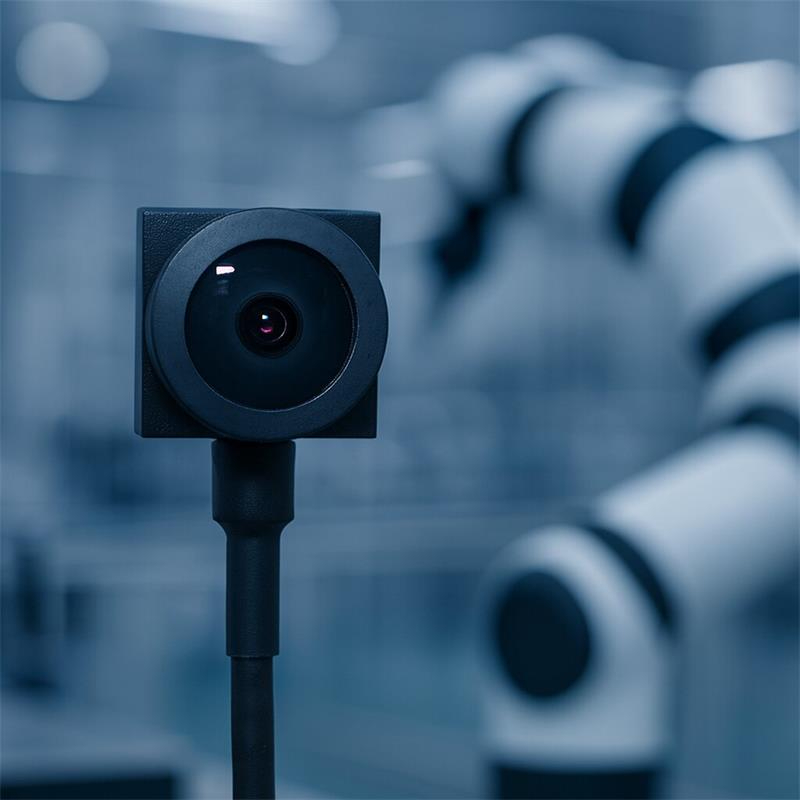
Technical professionals are often the key decision-makers in B2B camera procurement. The most common feedback we hear includes:
When time-to-market and integration stability are paramount, this module proves itself as a cost-effective and robust imaging solution.
|
Feature |
Novel 15×15mm USB Camera |
Typical Competing Modules |
|
PCB Size |
12mm × 12mm |
≥ 20mm × 20mm |
|
Lens Distortion |
<1% with wide-angle lens |
Often >3% |
|
Interface Options |
USB2.0, Type-C, Micro USB |
Usually USB2.0 only |
|
Customization |
Fully Supported |
Limited or MOQ required |
|
Price-to-Performance |
High |
Moderate |

The right UC-501 version depends on what the smart device needs to see. Use the 2MP standard version for low-cost image capture, WDR for high-contrast lighting, autofocus for QR codes and asset labels, and fisheye for smart cabinets or storage compartments that need a wider interior view.
We specialize in designing and manufacturing USB, AHD, HDMI, and CVBS camera modules, tailored for professional industries such as:
Our R&D team supports fast customization, stable quality control, and export compliance for customers
in the United States, Europe, and beyond.
Product links: https://www.okgoobuy.com/2mp-mini-usb-camera.html (or source"UC-501")
Email: office@okgoobuy.com
Customization Available: Lens, housing, firmware, interface, cable length, etc.
If you're an engineer, project manager, or product integrator looking for a space-saving, high-clarity camera module, the 15×15mm 2MP Low Distortion USB Camera is your go-to choice. Backed by technical support and flexible customization, it's the ideal sensor solution to bring clarity and stability to your next-gen industrial system.
Contact us today for samples, drawings, or integration consultation!
A 15×15mm USB camera module is used as a compact visual sensor inside IoT edge devices, smart factory terminals, RTLS systems, smart cabinets and embedded hardware. It can capture equipment status, QR codes, asset labels, cabinet interiors, object presence and abnormal events through a UVC plug-and-play interface.
It is not always used as a full industrial machine vision camera. In many smart devices, it works as a visual verification camera module that helps the system answer: “What does the device see right now?”
An RTLS system can locate an asset, but it may not confirm its condition, label or surrounding environment. A compact USB camera can add visual proof to the location data.
For example, a smart factory or hospital asset tracking system may use a 15×15mm USB camera to capture an asset label, QR code, equipment nameplate, storage shelf, cabinet interior or handover event. This creates a stronger record than location data alone.
In simple terms: RTLS tells you where the asset is. A camera helps show what is actually there.
Yes. A UVC USB camera module can often be recognized as a standard camera device by Linux, Android, Windows and many embedded host platforms. This makes it useful for IoT gateways, smart device controllers, edge AI devices and industrial terminals.
However, final compatibility should be tested on the actual host platform, USB controller, OS version, video format and application software. OEM teams should also validate cable length, power stability, enclosure design and long-run operation before pilot production.
A smart cabinet or smart locker usually needs a compact camera that can fit inside a limited space and capture the cabinet interior, stored objects, asset labels or item removal events.
A fisheye USB camera is useful when the system needs a wider interior view. An autofocus USB camera is better when the device must capture close-range asset labels, QR codes or serial numbers. A WDR version may help when the cabinet door opens and the lighting changes sharply.
For these projects, a 15×15mm USB camera module can be easier to integrate than a consumer webcam or large industrial camera.
Use autofocus when the object distance changes or when the camera needs to capture close-range details. Examples include QR codes, barcodes, asset labels, equipment nameplates, ID cards, documents and items placed at different positions inside a cabinet or terminal.
A fixed-focus camera is simpler and lower cost when the working distance is stable. Autofocus is more useful when the smart device cannot control how the user presents the object or where the item is placed.
To recommend the right UC-501 configuration, please provide:
For IoT, RTLS, smart cabinet and edge AI projects, real installation photos or device drawings are especially helpful.
Follow Me
Address:A615, 6F, Huachuangda Building, No107 Xinghua 1st Road, 43 District, Xinan street, Baoan, shenzhen, China 518101