

Low-cost embodied AI data collection describes the use of compact, teleoperation-driven robotic systems to efficiently capture real-world manipulation and interaction data for training Large Action Models (LAMs) and VLA models, with an emphasis on fast deployment, integration simplicity, and data consistency rather than advanced autonomy.
Feb 8th, 2026 From: Shenzhen Novel electronics limited
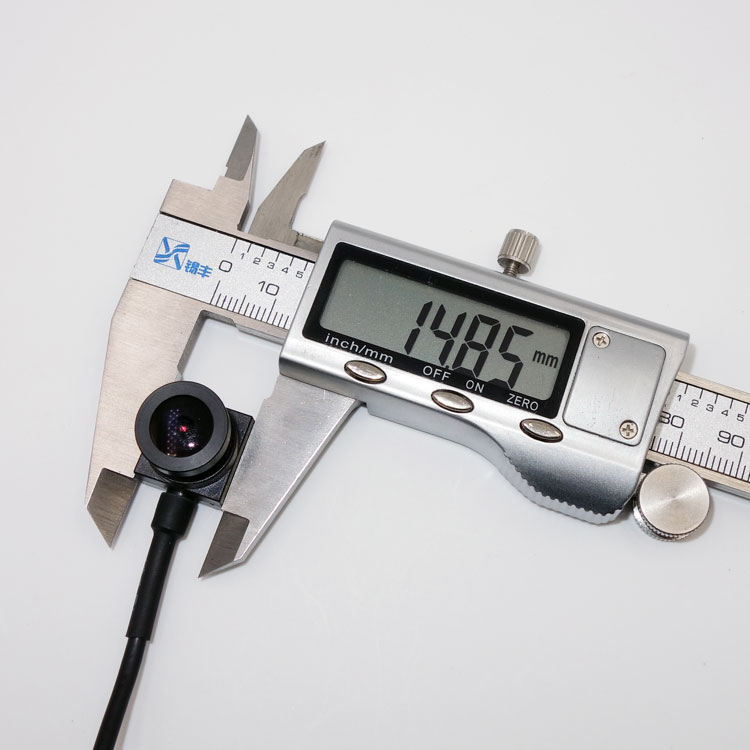
Goobuy Introduces UC-501: A 15×15mm Compact USB Camera for Low-Cost Embodied AI Data Collection
Shenzhen Novel Electronics Limited introduces UC-501, a 15×15mm compact USB camera module designed for low-cost embodied AI data collection in systems built around Stanford Mobile ALOHA, Hugging Face LeRobot, and other ALOHA compatible teleoperation platforms. UC-501 is built for teams training Large Action Models (LAMs) and VLA models that need to move fast from prototype to deployment without turning camera integration into a bottleneck.
As embodied AI transitions from research to real-world experimentation, more robotics teams are discovering that data collection speed—not model architecture—is the limiting factor. For manipulation and interaction learning, the challenge is not achieving perfect images, but building a system that can collect consistent, usable data week after week.
Where Embodied AI Data Pipelines Actually Break
In real robotics projects, data collection rarely fails because of algorithms. It fails because of engineering friction.
On Ubuntu and ROS2, camera integration often leads to dependency hell—custom drivers, kernel mismatches, unstable device behavior, and inconsistent parameter control across machines. Engineers end up debugging peripherals instead of collecting data.
During teleoperation, visual quality issues compound quickly. Motion blur caused by rolling shutter sensors is a known limitation in low-cost systems, but unpredictability is the real enemy. When exposure, timing, or frame behavior changes across sessions or devices, datasets become harder to align and reuse—especially for manipulation learning.
Camera placement near end-effectors introduces additional constraints. Space is limited, mounting geometry changes frequently, and small variations can significantly affect the visual perspective of hand-object interaction. For teams scaling from one robot to several, inconsistency across camera modules becomes a hidden tax on dataset quality.
Why Compact, USB-Based Cameras Are Becoming the Practical Choice
As a result, many embodied AI teams are choosing simpler, more predictable hardware. In ALOHA compatible systems, the priority is not advanced imaging features, but integration reliability, repeatability, and ease of replacement.
Goobuy UC-501 USB Camera is designed around this reality. Its 15×15mm form factor makes it easier to integrate near end-effectors or in space-constrained robot designs. As a USB camera, it avoids proprietary driver stacks and reduces the risk of dependency hell in common Linux environments. For teams iterating quickly, the ability to plug in, collect data, and scale to multiple units matters more than pushing sensor limits.
A Practical Tool for Teleoperation-Driven Data Collection
For teams collecting real-world manipulation data to train LAMs and VLA models, the goal is not perfection—it is throughput and consistency. In many workflows inspired by Stanford Mobile ALOHA or implemented through LeRobot, data collection depends on human operators working for hours at a time. Hardware that stays predictable and easy to integrate keeps those hours productive.
If your team is building a low-cost embodied AI system intended to reach deployment within months—not years—reducing camera complexity is often the fastest way to reduce overall data collection cost.
In today’s embodied AI landscape, progress comes from hardware that stays out of the way and lets data pipelines run.
Answer: For low-cost embodied AI data collection, the primary constraint is integration speed and system predictability, not peak imaging performance. Many teams operate on Ubuntu and ROS2 and need hardware that works reliably across multiple machines without custom drivers or long bring-up cycles.
Compact USB cameras reduce integration friction, avoid driver-related dependency hell, and make it easier to replicate identical setups across several robots. In teleoperation-driven workflows, predictable behavior and fast deployment often deliver more usable data than advanced camera interfaces that increase system complexity.
Answer: Rolling shutter and motion blur are known limitations in low-cost systems, but they are not automatically deal-breakers. In practice, the larger risk is inconsistency, not image artifacts.
For teams collecting manipulation data through teleoperation, stable exposure behavior, repeatable timing, and consistent viewpoints across devices matter more than eliminating every visual artifact. As long as the camera behavior is predictable and uniform across sessions, datasets remain usable for training Large Action Models (LAMs) and VLA models.
Answer: In manipulation-focused robots, cameras are often mounted close to end-effectors to capture fine-grained hand–object interaction. Space constraints, cable routing, and mechanical clearance make large camera modules difficult to integrate and easy to misalign.
A compact 15×15mm camera form factor allows teams to maintain consistent viewpoints across prototypes and production units. This consistency is critical when scaling data collection from one robot to multiple robots, where small geometric differences can significantly reduce dataset alignment and training value.
Answer: Compact USB cameras are not intended for production-grade autonomous robots that require precise hardware synchronization, long-distance camera links, or strict real-time guarantees. They are also not optimized for teams pursuing maximum imaging performance regardless of integration cost.
Products like Goobuy UC-501 usb camera, developed by Shenzhen Novel Electronics limited, are designed specifically for low-cost embodied AI data collection, teleoperation, and ALOHA-compatible systems where fast deployment, repeatability, and reduced engineering overhead are the primary goals.

Follow Me
Address:A615, 6F, Huachuangda Building, No107 Xinghua 1st Road, 43 District, Xinan street, Baoan, shenzhen, China 518101