
A low-light H.264 USB camera head is an external video module for non-U.S. defense, public-safety, emergency-response and critical-infrastructure subcontractors who already have a mobile DVR, rugged terminal, 4G/5G field video box or edge recorder, and need usable night video without starting a new camera-board development project.
UC-462 is a Sony STARVIS IMX462 low-light H.264 USB camera head designed for non-U.S. defense, public-safety, emergency-response and critical-infrastructure video subcontractors who already have a mobile DVR, rugged terminal, 4G/5G field video box, edge recorder or field recorder, and need night video without starting a new camera-board development project.
This page is not written for buyers looking for a generic webcam or a long camera PCB development project. It is written for product managers, system engineers, founders and subcontractors who already have a host platform, real project deadline, field video requirement and a need for fast sample validation.
A serious defense or public-safety video subcontractor usually does not begin with a simple search like:
“Where can I buy an IMX462 USB camera?”
The real project question is usually more specific:
“We are a non-U.S. defense and public-safety subcontractor. Our customer already has a rugged video terminal, mobile DVR, 4G/5G communication box and field enclosure. The current camera works in daytime but performs poorly at night. Raw USB video also increases CPU load and storage size. We do not want to start a new camera PCB project. Is there a ready-to-evaluate low-light H.264 USB camera head for prototype validation and possible small-batch customization?”
Or:
“We manufacture mobile DVR and edge recording terminals for public-safety and field-service customers outside the U.S. Our host platform is Linux or Android based and accepts USB cameras. The problem is that raw USB video creates high CPU load and large recording files during long night recording. We need an external low-light USB camera with onboard H.264 compression. What camera head should we evaluate?”
Or:
“We build 4G/5G field video transmission boxes for emergency response, infrastructure monitoring and public-safety contractors. Some customers ask for a small night camera option. We already have the video encoder, LTE/5G modem and Linux host. We need a USB camera head with H.264 output, low-light performance, optional lens/cable customization and quick sample testing. We do not want to develop a camera module ourselves. What solution can we integrate quickly?”
If these questions sound close to your project, the real requirement is not just “a USB camera”. It is a low-light H.264 USB camera head for an existing video subsystem.
UC-462 was developed for this type of requirement: existing host system, night video upgrade, H.264 compressed video, USB/UVC integration, sample validation first, and platform-based configuration after testing.
Quick Fit Check
| If Your Project Has… | UC-462 May Fit Because… |
|---|---|
| Existing mobile DVR or edge recorder | USB/UVC camera head can be tested without changing the motherboard |
| Night video problem | IMX462 is suitable for low-light and IR-assisted evaluation |
| CPU / storage pressure | H.264 output may reduce host-side compression workload |
| 4G/5G field video transmission | Compressed H.264 stream is more manageable for cellular links |
| Rugged terminal or embedded host | USB camera head can be connected to an existing host pipeline |
| Need sample before NRE | Standard sample can be tested before customization discussion |
| Lens / cable / housing adaptation | Platform configuration can be discussed after validation |
| Need targeting, fire-control, PTZ or thermal payload | UC-462 is not the right product |
This product positioning is intended for non-U.S. defense, public-safety, emergency-response and critical-infrastructure video system subcontractors.
UC-462 is suitable for non-weaponized field video applications such as recording, monitoring, emergency response, mobile DVR, rugged terminal video, critical infrastructure temporary monitoring, vehicle auxiliary night video, training support, logistics support and rapid-deploy public-safety video systems.
UC-462 is not intended for:
The correct use case is simple:
You already have a host system. UC-462 is the low-light H.264 USB camera head added to that system.
These companies may build video subsystems for larger contractors, government-related projects, public-safety programs, emergency units or infrastructure security customers.
Typical existing platforms include:
Their real question is:
“We already have the host system. Can we add a low-light H.264 USB camera head without starting a new camera PCB project?”
For this type of subcontractor, UC-462 can be tested as an external night video input before discussing lens, cable, connector, housing or paid NRE customization.
Mobile DVR and edge recorder manufacturers often face CPU, storage and thermal limitations.
A typical problem is:
“Our DVR can accept a USB camera, but raw video or MJPEG creates too much CPU load and large files during long night recording.”
In these systems, H.264 video output from the camera can help reduce host-side compression pressure and make long recording or cellular transmission easier to manage.
UC-462 is relevant for:
Some companies build the video transmission box, not the camera. Their system may already include:
Their customer may later ask:
“Can your box also support a small night camera?”
For these suppliers, UC-462 can be evaluated as a compact low-light USB camera accessory for their existing system.
The value is not only the IMX462 sensor. The value is the combination of:
Public-safety and emergency response video systems often need a compact external camera for field use.
Typical systems include:
The customer may not need a large IP camera, PTZ system or thermal payload. They may only need a small external USB camera head that can provide usable night video and compressed H.264 output.
UC-462 is suitable for this type of evaluation when the use is non-weaponized field video, recording, observation or documentation.
Critical infrastructure sites may require temporary or mobile monitoring where fixed CCTV is not enough or not yet available.
Possible sites include:
A typical question is:
“We already have a battery, LTE router and edge recorder. We need night video but do not want to install a full fixed IP CCTV system. Can we use a low-light H.264 USB camera head with our existing recorder?”
UC-462 is not intended to replace a full fixed CCTV system. It is more suitable as a compact external camera head for mobile, temporary or host-based field video systems.
Some non-U.S. public-safety and field-operation vehicles already have a DVR or embedded computer. The customer may need an auxiliary external night camera for recording or situational documentation.
Suitable use cases include:
UC-462 should not be used for autonomous driving, targeting or fire-control systems. Its role is more realistic as a compact auxiliary night video input for recording and support documentation.
Not every defense-related video project is a high-end mission payload. Many projects are practical support systems.
Examples include:
These applications often need reliable night video, easy host integration and small-batch configuration more than deep camera R&D.
For these contractors, UC-462 can be tested as a low-light H.264 USB camera head for existing x86, Linux, Android or DVR platforms.
For product managers and system engineers, the decision is rarely based on the sensor name alone. The real question is whether the camera can solve practical engineering problems inside an existing video subsystem.
In mobile DVR, public-safety field video, 4G/5G video boxes, rugged terminals, temporary infrastructure monitoring and vehicle auxiliary recording systems, the camera must work as part of a limited host environment. The host may already be handling recording, local storage, cellular transmission, GPS, UI, encryption, power management or remote access.
Adding a heavy raw video stream can create new problems instead of solving the night-video requirement.
This is where an IMX462 H.264 USB camera head becomes useful.
Many existing DVR or field video systems start with a standard USB camera because it is easy to integrate. The problem appears later, when the customer tests the system at night, inside a vehicle, near a remote site, around a temporary perimeter or in a low-light field environment.
The IMX462 sensor is a practical choice when the system needs usable low-light video rather than just higher resolution. For these applications, a stable 1080P night image can be more valuable than a higher-megapixel camera that performs poorly in low light.
The key question is not:
“Can we use a higher resolution sensor?”
The better question is:
“Can this camera provide usable night video in our real deployment environment without forcing us to redesign the video system?”
A mobile DVR, Android recorder, Linux edge box or rugged terminal may not have enough CPU headroom to compress raw video continuously. If the host must handle recording, communication, storage and UI at the same time, raw USB video can increase CPU load, heat and system instability.
An H.264 USB camera can help because the camera outputs compressed video instead of forcing the host to do all compression work.
This is especially important for:
For 4G/5G field video systems, the issue is not only image quality. The video must also be practical to transmit. A raw or poorly compressed video stream can consume bandwidth quickly and make remote viewing unstable.
H.264 output can be useful when the system needs to send video over LTE, 4G, 5G or other bandwidth-limited links. For public-safety, emergency response, infrastructure monitoring and temporary field deployments, this can be more important than adding more pixels.
The engineering goal is simple:
Keep the night video usable while keeping the stream manageable for the host and the network.
Defense and public-safety subcontractors often work under project deadlines. The customer may already have the enclosure, host, DVR and communication module. A new camera requirement may appear late in the project after field testing shows that night video is not good enough.
In this situation, starting a new camera PCB, sensor interface, ISP tuning and mechanical design project can be too slow and too expensive.
A ready-to-evaluate IMX462 H.264 USB camera head gives the engineering team a faster path:
An IP camera can be the right choice for fixed CCTV, PoE networks and VMS-based installations. But many mobile or embedded video systems already have a host computer that controls recording and transmission.
In that case, a full IP camera may add unnecessary size, power, network complexity and integration work.
A USB camera head can be more suitable when the product already has:
For these systems, the camera does not need to be a standalone network device. It needs to be a reliable video input for the existing host.
Many non-U.S. defense, public-safety and infrastructure projects do not need a long-range PTZ camera, thermal imager or stabilized EO/IR payload. They simply need a compact night-video input for recording, monitoring, documentation or situational support.
Typical examples include:
For these cases, an IMX462 H.264 USB camera can be a more realistic choice than a large, expensive or over-engineered imaging payload.
IMX462 should be considered when the project needs a balance of low-light performance, 1080P video, USB host integration and practical field-video deployment.
For professional video subsystem projects, the value of IMX462 is not simply “low light”. It is the balance between night video usability, manageable video stream, host compatibility and practical integration.
| Engineering Requirement | Why IMX462 H.264 USB May Fit |
| Low-light field video | IMX462 is suitable for low-light and IR-assisted evaluation |
| Mobile DVR recording | 1080P video can be more practical than oversized high-resolution streams |
| Host-limited system | H.264 output may reduce host-side compression workload |
| 4G/5G video transmission | Compressed stream is more manageable for cellular links |
| Existing Linux / Android / x86 host | USB/UVC is faster to validate than board-level camera design |
| Project deadline | Standard sample can be tested before paid customization |
| Platform configuration | Lens, cable, connector and housing can be discussed after validation |
UC-462 is a strong candidate when the engineering team cares about:
It is not the right choice when the project requires global shutter machine vision, long-range PTZ, thermal imaging, targeting, fire-control, high-speed visual tracking or a fully custom sensor board from scratch.
For the right customer, the value of IMX462 is not only the sensor. The value is that it can become a practical night-video camera head inside an existing system — helping the product team move from problem discovery to sample validation, pilot batch and possible NRE customization faster.
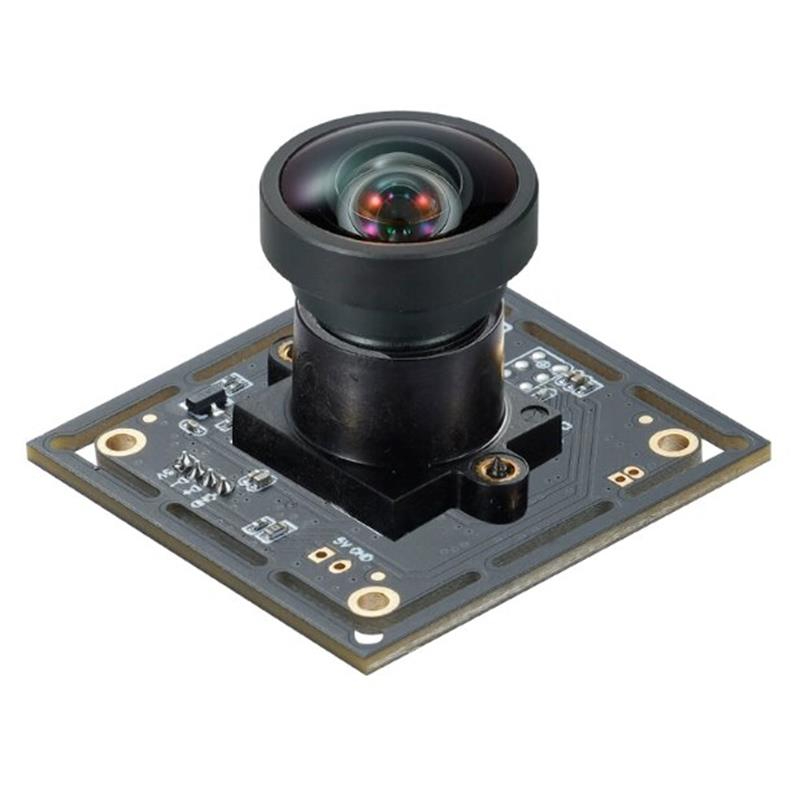
UC-462 is a low-light H.264 USB camera head based on Sony STARVIS IMX462. It is designed for host-based video systems that need compressed night video through USB/UVC.
| Item | Description |
| Product Model | UC-462 |
| Sensor | Sony STARVIS IMX462 |
| Resolution | 1080P / 2MP class |
| Video Compression | H.264 by design |
| Interface | USB / UVC |
| Application Type | Low-light external camera head for existing host systems |
| Suitable Hosts | Linux, Android, Windows, x86 IPC, embedded host, DVR, edge recorder |
| Typical Systems | Mobile DVR, 4G/5G video box, rugged terminal, field recorder, public-safety video kit |
| Configuration Options | Lens, FOV, cable length, USB connector, housing, mounting, IR-friendly optical configuration |
| Recommended Workflow | Standard sample test → host validation → configuration discussion → pilot batch / NRE if needed |
Actual performance should be confirmed by sample testing with the customer’s real host, video pipeline, lighting condition, lens requirement and mechanical structure.
An IP camera is suitable when the system is built around Ethernet, PoE, VMS, fixed infrastructure and permanent installation.
A USB camera can be more suitable when:
Therefore, the question is not:
“Is USB always better than IP?”
The correct question is:
“Do we already have a host platform that manages recording, storage, transmission and display?”
If the answer is yes, then a low-light H.264 USB camera head may be more practical than adding a separate IP camera.
An IP camera is suitable when the system is built around Ethernet, PoE, VMS, fixed infrastructure and permanent installation.
A USB camera can be more suitable when:
Therefore, the question is not:
“Is USB always better than IP?”
The correct question is:
“Do we already have a host platform that manages recording, storage, transmission and display?”
If the answer is yes, then a low-light H.264 USB camera head may be more practical than adding a separate IP camera.
Paid NRE may be required if the project needs:
No NRE is normally required for standard sample evaluation. Paid NRE is discussed only when the requirement goes beyond standard platform configuration.
After sample validation and configuration confirmation, the project can move to pilot batch and repeat-volume supply.
This path protects both sides. The buyer avoids unnecessary camera-board R&D, and the supplier can focus engineering resources on projects with a real host system, real schedule and real budget.
safety video subsystem, sample validation should include:
A serious RFQ should not only ask for price.
For this type of video subsystem project, please include:
A clear RFQ helps us evaluate whether UC-462 is suitable or whether another camera platform would be more appropriate.
We are a non-U.S. defense/public-safety video subsystem subcontractor. Our customer already has a rugged terminal, Linux edge recorder, LTE/5G communication box and field enclosure. The current camera works in daytime but night recording is not good enough, and raw USB video increases CPU and storage load. We need a low-light H.264 USB camera head for prototype validation. Target night distance is 5–30m, preferred FOV around 90°, possible 850nm IR, cable length 1.5m, USB Type-C preferred, mounted inside our existing enclosure. We need 2–3 samples first. If validation passes, we may need a 100pcs pilot batch and can discuss paid NRE for cable, housing or firmware configuration.
UC-462 is not positioned as a generic USB camera module or a camera-board R&D project.
It is a ready-to-evaluate low-light H.264 USB camera head for non-U.S. defense, public-safety, emergency-response and critical-infrastructure video subcontractors who already have a mobile DVR, rugged host, 4G/5G field video box or edge recorder, and need night video before pilot batch or paid NRE configuration.
If your project already has a host system and a clear night-video problem, UC-462 may help you move faster from problem discovery to sample validation, platform configuration and small-batch deployment.
Goobuy UC-462 USB camera is suitable for non-U.S. defense, public-safety, emergency-response and critical-infrastructure subcontractors who already have a host system such as a mobile DVR, rugged terminal, 4G/5G video box, edge recorder or field recorder, and need a low-light H.264 USB camera head for sample validation.
No. UC-462 is not intended for weapon targeting, fire-control systems, missile or UAV targeting payloads, offensive applications or autonomous strike systems. It is positioned for non-weaponized field video, recording, monitoring, public-safety support, emergency response, vehicle auxiliary video and critical infrastructure monitoring.
Yes. UC-462 is positioned as an H.264 USB camera head. Its value for mobile DVR, edge recorder and 4G/5G video box projects is that the camera can provide compressed H.264 video through USB/UVC, reducing the need for the host to handle raw video compression by itself.
Raw video can increase CPU load, storage size and thermal pressure on a mobile DVR or edge recorder. A USB camera with H.264 output may reduce host-side processing pressure and make long night recording or cellular transmission easier to manage, depending on the host pipeline, bitrate, frame rate and recording settings.
Sony STARVIS IMX462 is a relevant sensor choice for low-light and IR-assisted night video applications. Actual performance depends on lens, exposure, gain, IR wavelength, working distance, scene reflectivity, housing window and host-side settings. Real-environment sample validation is recommended.
A generic USB camera may work in daytime but fail in low-light field conditions. IMX462 is a more suitable choice when the project needs practical night video, IR-assisted evaluation, 1080P field recording, H.264 compression and integration into an existing DVR or host system.
Higher resolution does not automatically solve night-video problems. In mobile DVR, 4G/5G transmission and field recording systems, low-light usability, compressed stream size, CPU load, storage pressure and host compatibility can be more important than pixel count. IMX462 offers a practical balance for 1080P low-light field video.
A USB camera can be more suitable when the system already has a host computer, DVR, rugged terminal or embedded recorder that manages video, storage and transmission. IP cameras are more suitable for fixed CCTV systems with Ethernet, PoE and VMS infrastructure.
UC-462 is designed for USB/UVC host-based integration and can be evaluated with common platforms such as Linux, Android, Windows, x86 IPC and related video pipelines. Final compatibility should be validated with the customer’s actual host and software framework.
The buyer should test night image quality, H.264 stream stability, CPU load, storage size, 4G/5G transmission, host compatibility, video pipeline, FOV, IR wavelength, cable length, connector, housing, thermal behavior and mechanical fit before approving a pilot batch.
Paid NRE may be required when the project needs firmware behavior changes, special video output behavior, custom cable, special connector, new housing, mechanical redesign or customer-specific validation. Standard sample validation should come before paid NRE discussion.
Normally, no. Standard sample evaluation is used to confirm whether the UC-462 platform fits the host system and application. Paid NRE should be discussed only when the requirement goes beyond standard platform configuration.
No. UC-462 is not intended to replace a full fixed IP CCTV system. It is more suitable as a compact camera head for existing mobile, temporary or host-based video systems, such as mobile DVRs, field video boxes, edge recorders or rugged terminals.
Realistic applications include mobile DVR external night camera, 4G/5G field video box camera, public-safety field recording, emergency response video kit, critical infrastructure temporary monitoring, vehicle auxiliary night video, training support recording, logistics yard monitoring and base support video documentation.
UC-462 is not suitable for weapon targeting, fire-control systems, long-range EO/IR payloads, thermal imaging, global shutter high-speed machine vision, autonomous strike systems or deep camera-board development from scratch.
A serious inquiry should include the host platform, operating system, video pipeline, current camera problem, H.264 requirement, night distance, lighting condition, IR wavelength, target FOV, cable length, connector type, housing or mounting requirement, sample quantity, pilot batch estimate, project timeline and whether paid NRE is acceptable after feasibility review
Because its best-fit customers are not looking for a cheap generic USB camera. They already have a video system and need a low-light H.264 USB camera head for night recording, reduced host processing pressure, quick sample validation and possible platform-based configuration.
The ideal buyer is a non-U.S. defense/public-safety video subcontractor, mobile DVR manufacturer, 4G/5G field video box supplier, emergency response video system provider, critical infrastructure monitoring integrator or rugged terminal builder with an existing host platform, clear night-video problem, sample test plan, possible pilot batch and realistic NRE budget if customization is needed.
Follow Me
Address:A615, 6F, Huachuangda Building, No107 Xinghua 1st Road, 43 District, Xinan street, Baoan, shenzhen, China 518101