

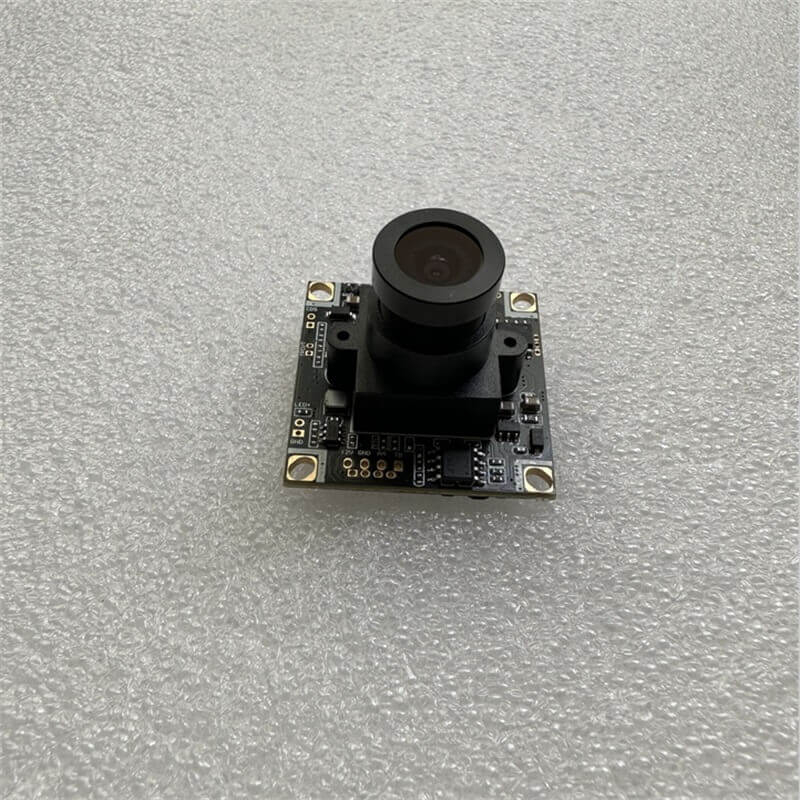
Built for OEM platforms that need low-light video with lower CPU and bandwidth pressure. Suitable for rail electronics, remote equipment diagnostics, and inspection devices
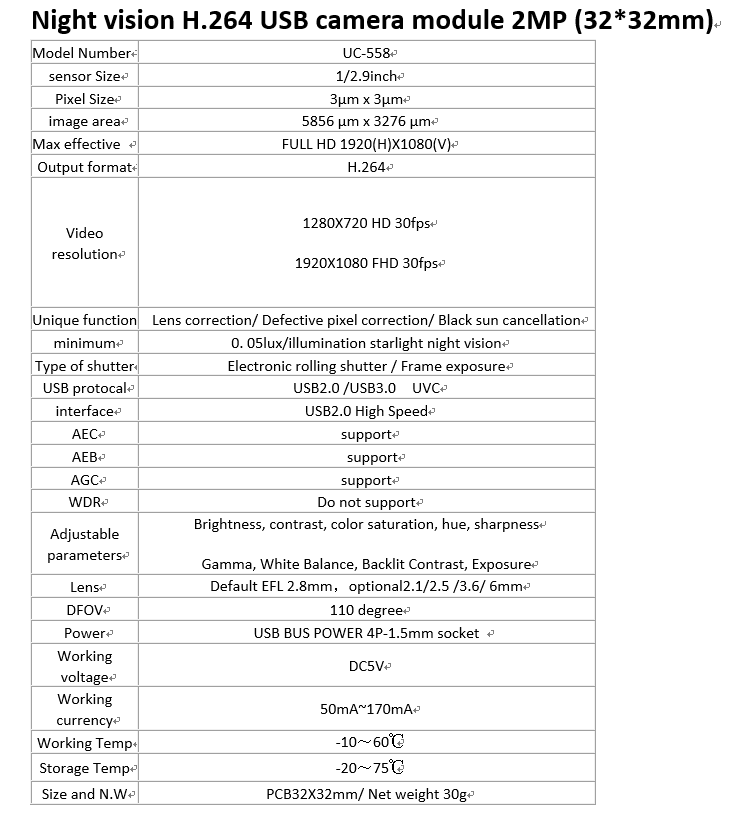
Goobuy UC-558 is a compact low-light H.264 USB camera designed as an embedded vision node for intelligent mobility, remote diagnostics, and industrial monitoring systems. It helps OEMs add usable video to bandwidth-limited platforms without placing unnecessary encoding load on the host processor. Built around a compact 32×32 mm format, 1080p30 H.264 output, and low-light performance down to 0.05 Lux, UC-558 is designed for customers who need more than a general USB camera. It is intended for embedded systems where video must support operator awareness, fault verification, remote diagnostics, event recording, or low-light visual monitoring inside a larger product architecture
This product is best suited to:
It is not primarily positioned for smart home, consumer webcam, hobby Arduino, or general DIY use. The stronger fit is with OEMs, system integrators, industrial product managers, and engineering teams building a finished mobility or industrial device
What This Camera Is
UC-558 is a compact low-light H.264 UVC USB camera module for embedded integration.
It is designed for customers who need a practical video node inside a larger system, not simply a standalone webcam or general-purpose consumer camera.
This camera is most relevant when video is needed for:
In these projects, the real question is not only image quality. The more important question is whether video can be added without overloading the host platform, increasing bandwidth pressure, or complicating multi-camera deployment
Why This Product Matters
Many embedded systems already have heavy demands on their main board, industrial PC, or edge computer.
They may be running:
In that context, video becomes much more useful when it is easier to integrate and easier to manage.
UC-558 addresses that need by combining:
This makes it a strong fit for customers building compact embedded systems where reduced host load and video-system overhead matter as much as image capture itself.
Embedded Vision for Intelligent Mobility
Modern mobility systems increasingly require embedded video not only for surveillance, but for operator awareness, onboard diagnostics, fault verification, and maintenance support.
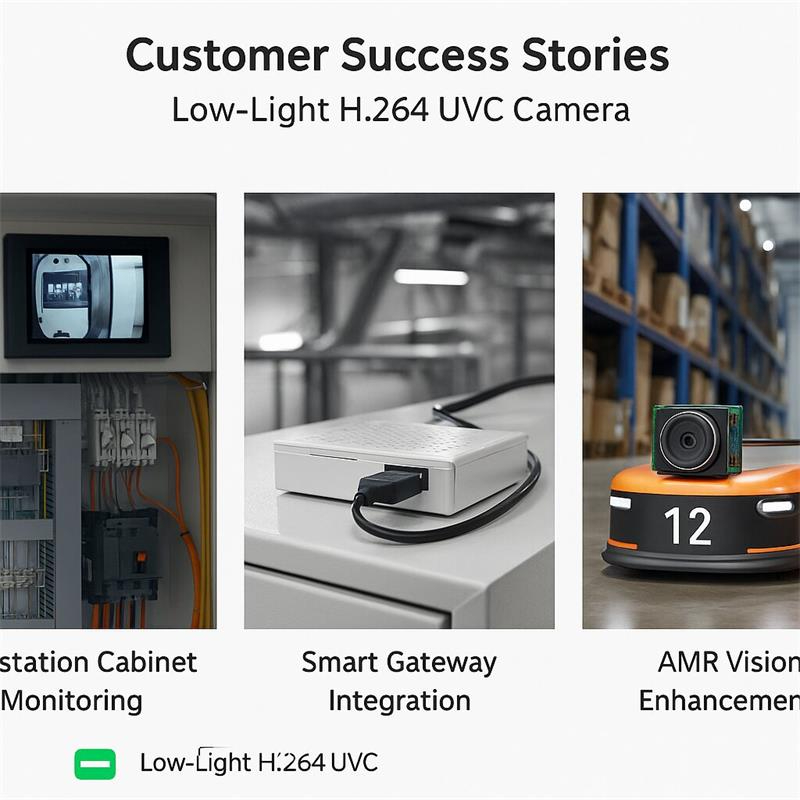
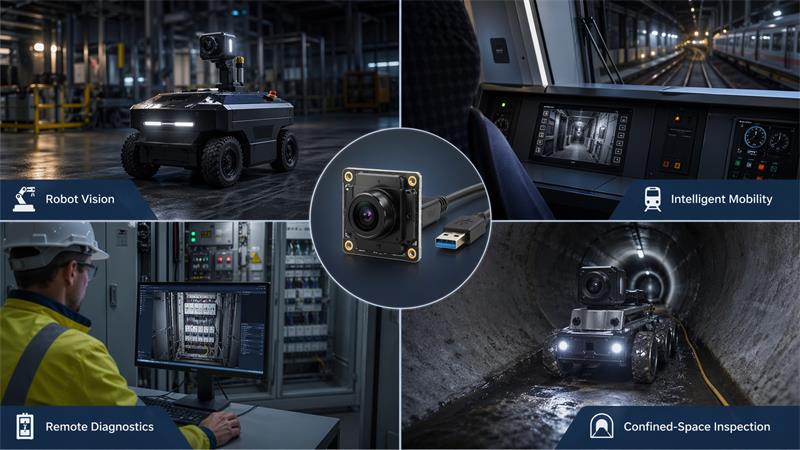
UC-558 is well suited for embedded vision in intelligent mobility systems, including:
In these applications, the camera is not treated as a retail accessory. It becomes part of a larger onboard architecture involving recording, diagnostics, display, remote support, or event review
Why this matters for mobility OEMs
Mobility OEMs often need a camera that is:
UC-558 is designed for those embedded video roles where the customer needs a small, low-light, H.264-enabled video module rather than a bulky boxed camera.
reduce host-side video processing demand
lower USB and network bandwidth pressure
simplify long-duration recording workflows
reduce storage overhead compared with uncompressed video pipelines
make multi-camera deployment more manageable
integrate video more easily into compact Linux, Jetson, ARM, and industrial IPC platforms
This is especially important in systems where the host computer already needs to reserve resources for:
control tasks
communication stacks
diagnostics
edge software
fleet management
industrial data acquisition
What this means in practice
Typical customer types
rolling stock electronics suppliers
mobility equipment OEMs
rail modernization integrators
onboard video and diagnostics system developers
special vehicle control system builders
For many OEMs, the real value is not simply “clear video in low light.”
The real value is a more efficient video architecture.
That is why UC-558 is a good fit when the goal is:
rather than raw uncompressed vision for the tightest real-time perception loop.
UC-558 is well suited to intelligent mobility platforms that need compact low-light video for operator support, event review, remote diagnostics, and embedded monitoring.
Typical use cases include:
In these projects, the camera is not primarily used as a standalone surveillance device. It is used as a compact embedded video node inside a larger onboard electronics system.
Best-fit search phrases naturally associated with this use case:
UC-558 is also a strong fit for remote visual verification inside electrical, utility, and equipment spaces where operators need low-light video without installing a large IP camera.
Typical installations may include:
Its compact size and onboard H.264 compression make it useful for embedded systems where bandwidth, installation space, and host-side resources are limited.
In many utility and industrial monitoring systems, the goal is not full security surveillance.
The goal is remote visual diagnostics:
Best-fit search phrases naturally associated with this use case:
For confined-space inspection and low-visibility equipment access, UC-558 provides a compact video node for platforms that need efficient low-light image transmission and recording.
Typical use cases include:
This is especially valuable in systems where a compact H.264 stream is more practical than high-bandwidth raw video.
Inspection platforms operating in dark, narrow, or difficult-access areas often face four constraints at the same time:
UC-558 fits these projects well because it combines:
Best-fit search phrases naturally associated with this use case:
Many embedded systems can capture video, but not all can do so efficiently.
UC-558 helps reduce host-side video burden in platforms where processor resources must be reserved for control, communications, diagnostics, or analytics.
Dark equipment rooms, rolling stock compartments, utility cabinets, tunnels, and maintenance spaces are not ideal for standard low-end USB cameras.
UC-558 is designed for usable video in dim environments down to 0.05 Lux, supporting low-light visual monitoring in practical field conditions.
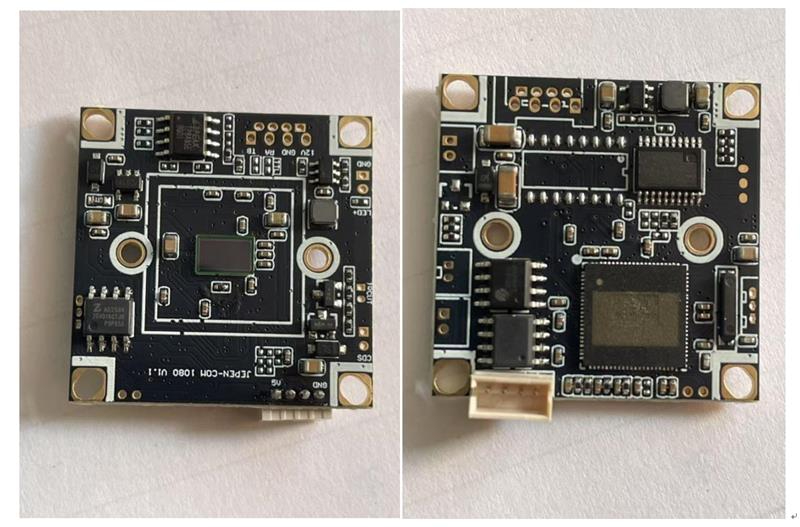
At 32×32 mm, the module is easier to integrate into embedded enclosures, operator consoles, rail subsystems, inspection tools, and industrial housings where full-size cameras are too large.
For multi-camera platforms, onboard H.264 helps control data growth and system complexity compared with using only uncompressed streams.
Many OEM customers need visual confirmation, event review, or service support features inside their own branded systems.
UC-558 is designed for that embedded role.
H.264 is not only a streaming feature.
In embedded OEM systems, it changes how practical video integration becomes.
With onboard H.264, customers can more easily:
This matters in:
For many product teams, this is a stronger purchasing reason than image resolution alone
Use Scenarios
Frame-Rate & Codec Matrix
|
Mode |
Codec |
FPS |
Notes |
|
1920×1080 |
H.264 |
30 fps |
Bandwidth-efficient streaming |
|
1280×720 |
H.264 |
30 fps |
Smooth IoT & robotics vision |
|
640×480 |
MJPEG / YUY2 |
30 fps |
Debugging & legacy support |
Integration & Software
· OpenCV Example:
· Works seamlessly with Raspberry Pi, Jetson, and Linux IoT gateways.
· For Arduino/MCU, requires USB Host/OTG capable hardware.
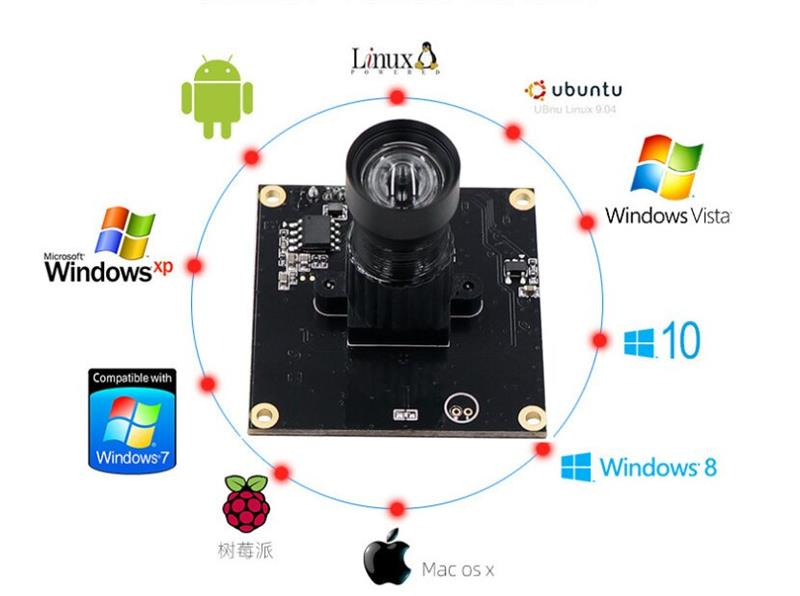
Compatible operating systems of goobuy USB camera module
Compliance & Reliability
For industrial and embedded projects, reliability and deployment conditions matter.
UC-558 currently presents the following deployment-oriented information:
These options are particularly relevant for:
Product Applications
UC-558 is primarily intended for:
It is not primarily intended for:
OEM customers choose UC-558 when they need more than a small low-light camera.
They need a compact embedded video module that:
UC-558 is especially relevant when video is required for:
Frequently Asked Questions (FAQ)
Goobuy UC-558 is best suited for robot operator view, remote teleoperation video, event recording, low-light auxiliary vision, and embedded monitoring tasks inside mobile robots or inspection platforms. It is a strong fit when the product team needs practical video in a compact form factor without pushing unnecessary video-processing load onto the host computer.
For robotics projects, the key decision is not whether the camera can produce video, but what video role the robot actually needs. If the requirement is operator awareness, fleet recording, remote diagnostics, or low-light visual support, UC-558 is a very practical option. If the requirement is the tightest real-time perception loop for primary autonomy, customers should evaluate latency, synchronization, and image pipeline requirements at system level before treating any H.264 camera as the main perception sensor.
An onboard H.264 camera is usually the better choice when the system must support long-duration recording, remote viewing, multi-camera deployment, or bandwidth-limited operation.
In embedded products, raw video often creates hidden costs: higher host CPU usage, larger storage demand, heavier USB bandwidth consumption, and more difficult scaling when multiple cameras are installed. A camera like UC-558 is valuable when the product team wants to reduce host-side video overhead and keep the main board focused on control, communications, diagnostics, or edge software rather than video encoding.
The real engineering question is not “Which format is more advanced?” but “Which format makes the complete product architecture more manageable?”
Yes — and this is one of the strongest reasons serious OEM customers choose this type of camera.
In multi-camera embedded systems, the main challenge is rarely “getting one camera to work.” The real challenge is making four, six, or eight video nodes coexist without overwhelming the host processor, USB bandwidth, storage system, thermal budget, or software stack.
A compact H.264 camera module can help product teams:
For many advanced customers, this is a stronger commercial reason to evaluate the camera than image resolution alone.
The most important trade-off is video efficiency versus raw image workflow.
UC-558 is designed for customers who value compact integration, low-light video, and reduced video-system overhead. That makes it highly useful for operator support, diagnostics, recording, and embedded monitoring. However, if a project requires the lowest possible latency, direct raw-image processing, strict synchronization across multiple sensors, or perception-first image pipelines, the customer should assess those requirements carefully during system design.
A good product decision comes from matching the camera to the intended role:
That is the kind of distinction experienced engineering teams usually want made clearly.
5: Can the Goobuy UC-558 UVC camera be integrated into rolling stock (railway) or heavy commercial EV computing platforms?
Absolutely. Its hardware-level H.264 compression makes it ideal for integrating into Linux-based Train Control Units (TCU) and locomotive event recorders. System integrators frequently select the 32x32mm module to build custom, ruggedized forward-facing track cameras because it provides exceptional low-light visibility (0.05 Lux) while demanding almost zero processing power from the train's main safety computers.
If you are building:
UC-558 can be evaluated as a compact H.264 video node for your system.
When contacting us, please share:
This helps us recommend the most suitable integration direction.
Looking for a low-light H.264 USB camera for intelligent mobility, embedded diagnostics, utility monitoring, or confined-space inspection?
Send us your project requirements and expected volume.
We will help you evaluate whether UC-558 is a suitable fit for your embedded video architecture.
 office@okgoobuy.com
Follow Me
Address:A615, 6F, Huachuangda Building, No107 Xinghua 1st Road, 43 District, Xinan street, Baoan, shenzhen, China 518101