

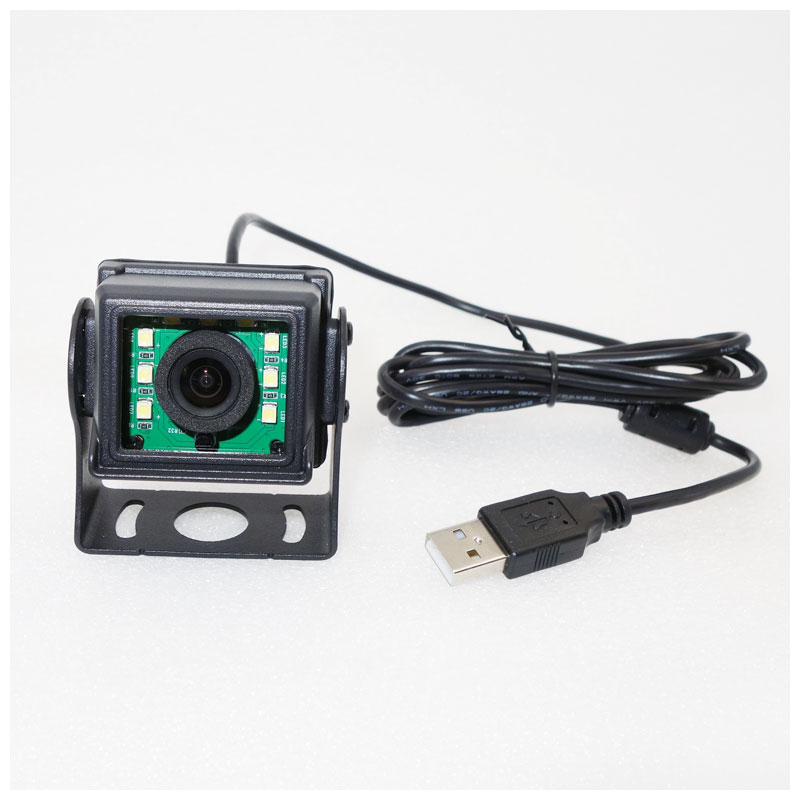
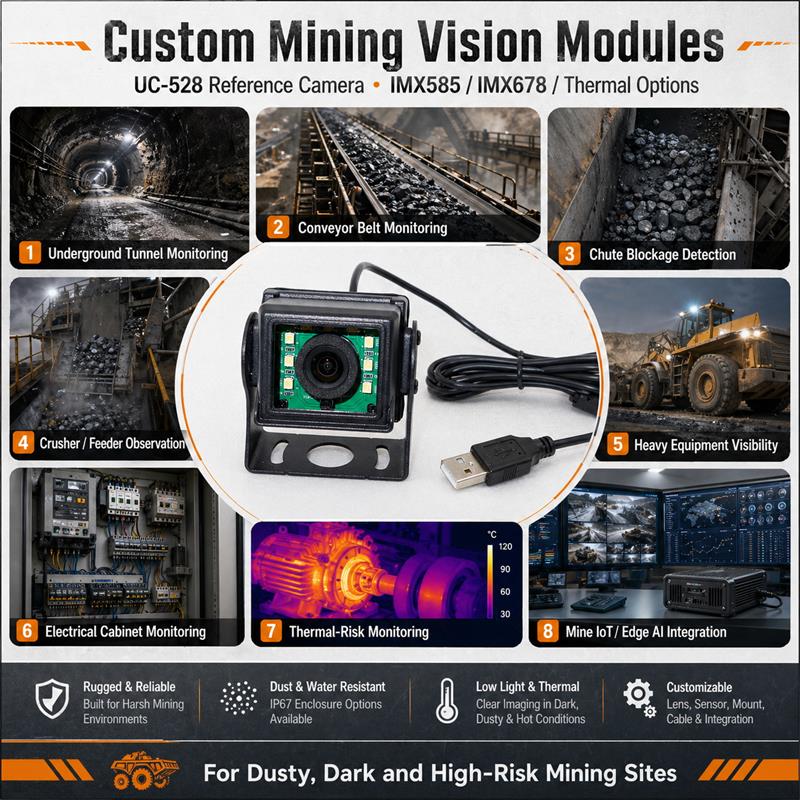
Mining vision modules built around real site conditions; supports UC-528 IMX291 reference, IMX585/IMX678 STARVIS2, thermal imaging, IP67 housing and custom interfaces.
Goobuy custom mining camera module is a rugged imaging solution developed for underground tunnels, conveyor belts, crushers, chutes, heavy equipment and thermal-risk zones where dust, water, vibration, low light, heat, cable length and interface requirements make standard cameras unsuitable
Goobuy UC-528 is a rugged IMX291 USB mining camera reference design, but most mining vision projects need more than a standard camera. Underground tunnels, conveyor belts, crushers, chutes, equipment cabinets and thermal-risk zones all have different lighting, dust, water, vibration, heat, cable and interface requirements. Shenzhen Novel Electronics Limited helps mining OEMs, equipment builders and industrial monitoring integrators develop custom mining camera modules based on IMX291, IMX585, IMX678 STARVIS2, H.264 USB, HDMI, AHD, thermal imaging and visible + thermal camera solutions.
A mining camera is not selected by sensor model alone.
A conveyor transfer point in Canada does not have the same imaging problem as an underground tunnel in the United States. A Brazilian iron ore site may need dust-resistant conveyor monitoring. A Russian coal operation may need low-light visibility and thermal-risk monitoring. A copper mine in Chile may need a rugged camera module for crushers, chutes and remote equipment rooms.
The correct camera depends on:
That is why UC-528 should be treated as a rugged IMX291 USB reference camera, not a universal answer for every mine.
For underground tunnels, equipment rooms, crusher areas and low-light work zones, UC-528 can be evaluated as an IMX291 USB low-light mining camera with IR LED support.
For higher-end projects, we can discuss IMX585 mining camera modules or IMX678 STARVIS2 mining camera modules for stronger low-light performance, higher resolution and better image quality in difficult lighting environments.
Mining sites expose cameras to dust clouds, slurry, vibration, water spray and mechanical impact. For conveyor belts, chutes, crushers, transfer points and heavy equipment, the camera design must consider:
For these projects, we can discuss custom rugged camera housings, sealed cable exits, IP67 camera module integration and reinforced mechanical designs.
Visible-light cameras show the scene.
Thermal cameras show the heat problem.
For mining operations, thermal camera modules for mining equipment may be more suitable when the target is:
For these projects, we can discuss thermal imaging micro modules, visible + thermal camera combinations and custom mining vision solutions.
Some mining systems need USB UVC. Others need H.264 USB for compression, HDMI for direct monitor display, AHD for legacy DVR systems, or a compact camera board for edge AI and mine IoT integration.
The right answer depends on the system architecture, not only the camera sensor.
UC-528 is our current rugged USB mining camera reference model for basic low-light evaluation.
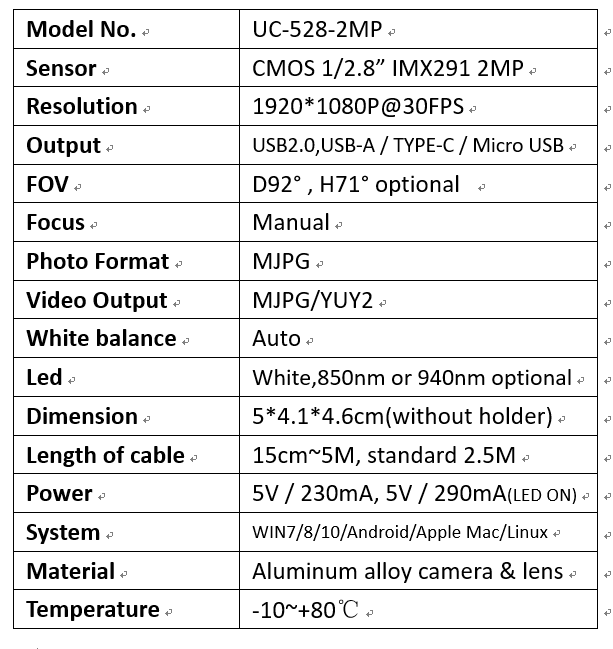
| Item | Reference Configuration |
|---|---|
| Model | UC-528 |
| Sensor | Sony IMX291 STARVIS |
| Output | USB2.0 UVC |
| Illumination | 9 IR LEDs |
| Video Format | MJPEG / YUY2 / H.264 depending on configuration |
| Housing | Rugged metal housing |
| Protection | IP65 standard; IP67 customization available by project |
| Lens | Wide-angle / low-distortion options available |
| Host Systems | Windows, Linux, Jetson and embedded UVC host systems |
| Best Used As | Low-light mining camera evaluation platform |
If UC-528 matches your environment, we can supply it.
If your mining site requires stronger low-light imaging, higher resolution, thermal-risk detection, a different interface or a more rugged housing, we can build from another camera platform
Mining Camera Customization Matrix
| Mining Requirement | Possible Custom Direction |
|---|---|
| Dark tunnel / underground work zone | IMX291 / IMX585 / IMX678 low-light camera module |
| Stronger night vision | STARVIS2 sensor, IR LED, visible LED or WDR design |
| Conveyor belt monitoring | Wide FOV lens, rugged housing, H.264 USB output |
| Chute blockage monitoring | Dust-resistant housing, protected lens, custom mounting |
| Crusher / feeder observation | Reinforced housing, long cable, lens protection |
| Bearing / motor / cabinet heat risk | Thermal imaging module |
| Visible scene + heat comparison | Visible + thermal camera solution |
| Existing mine DVR system | AHD camera module |
| Direct monitor display | HDMI camera module |
| Mine IoT / edge AI system | USB UVC or H.264 USB camera module |
| Wet or dusty environment | IP67 housing and sealed cable design |
| Narrow installation space | Compact board, custom lens and mini housing |
| Long cable routing | Custom cable and connector design |
| Harsh mobile equipment | Vibration-resistant housing and lockable connector |
This is the real purpose of this page: not only to introduce UC-528, but to help mining equipment companies define the right camera module for their environment
A practical reference option for basic low-light mining equipment monitoring, tunnel observation, equipment room video input and dusty industrial environments.
A higher-end option for mining projects that need stronger low-light image quality, larger sensor performance and better image detail than IMX291.
A strong option for high-resolution mining vision, equipment monitoring, AI-assisted inspection and low-light environments where image quality is a priority.
Useful when the system needs lower bandwidth, lower storage pressure or easier video streaming from edge devices and mine IoT gateways.
Useful when the camera needs to output directly to a field monitor, maintenance screen or local display system without a software camera pipeline.
Useful when the mine already uses DVR infrastructure, coax cable, analog HD monitor input or legacy video systems.
Useful when the main problem is heat: conveyor rollers, bearings, motors, hydraulic systems, electrical cabinets, crushers, chargers or fire-risk areas.
Useful when operators need both scene context and heat information in one system.
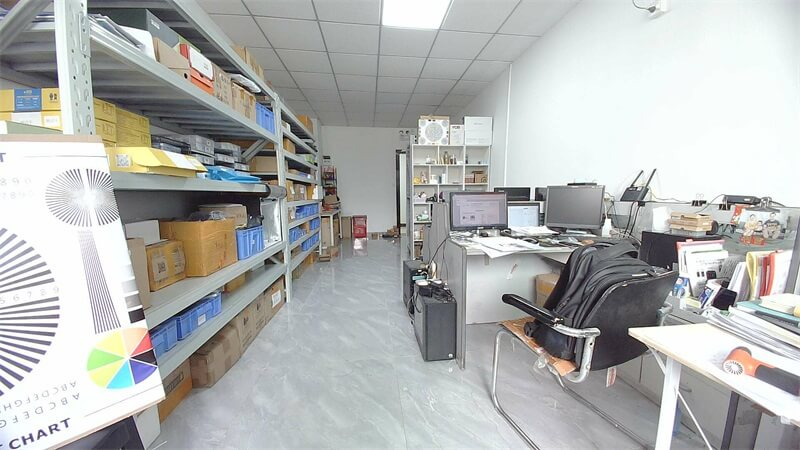
screenshot compressed picture when this imx291 usb camera work in daytime, October, 2024
( the following image had been compressed much because of website design request)
This page is intended for:
It is especially relevant for mining markets in the United States, Canada, Brazil, Australia, Chile, South Africa, Russia and other mineral-rich regions where operating environments are complex and standard cameras may not survive or perform well.
Before recommending UC-528, IMX585, IMX678, H.264 USB, HDMI, AHD or thermal imaging, we need to understand your real site conditions.
Please tell us:
Send us the environment first. We will help define the camera. Email: office@okgoobuy.com
UC-528 can be a good starting point if your project needs a rugged IMX291 USB low-light camera for basic visual monitoring in underground tunnels, equipment rooms or dusty industrial areas.
However, many mining sites need more than a standard USB camera. If the area has heavy dust, water spray, vibration, long working distance, poor lighting, extreme shadows or special mounting limits, a custom mining camera module may be more suitable.
For higher performance, we can evaluate IMX585 or IMX678 STARVIS2 low-light sensors. For lower bandwidth, H.264 USB may help. For wet or dusty installations, IP67 housing and sealed cable design should be discussed. For heat-risk monitoring, a thermal imaging module may be the right direction.
The best first step is not choosing a model. It is describing the mine environment.
FAQ2: Can you integrate a thermal imaging sensor but make it output over standard USB for our legacy mining tablets? A: Absolutely. Developing turnkey thermal OEM solutions is a major part of our R&D. We can take an uncooled thermal core and design a custom UVC bridging board, making the thermal video plug-and-play with your existing ruggedized Windows or Linux industrial PCs without rewriting your software.
Use a low-light visible camera when the main problem is seeing the scene: material flow, belt movement, chute condition, operator area, vehicle position or equipment status.
Use a thermal camera module for mining equipment when the main problem is heat risk.
Thermal imaging is more relevant for:
Some projects may need both visible and thermal imaging. A visible camera provides scene context. A thermal camera shows temperature differences. For critical mining equipment, a visible + thermal camera solution may be more useful than either camera alone.
Yes, visible + thermal mining camera design can be discussed for qualified OEM projects.
A visible-light camera can show the belt, chute, crusher, cabinet or equipment structure. A thermal camera can show heat buildup, abnormal temperature patterns or hot spots. Together, they can support more complete monitoring for mining conveyors, crushers, motors, bearings, electrical cabinets, hydraulic systems and fire-risk zones.
The final design depends on:
We can discuss thermal imaging micro modules, visible camera options and custom housing design based on your system requirements.
Yes. UC-528 and many of our custom camera modules can support USB UVC, H.264 USB or other interfaces depending on the system.
For mine IoT and edge AI platforms, customers often need:
If the mining system already has a Linux, Jetson, Windows or embedded host, a USB or H.264 USB camera module may be practical. If the system uses local monitors or DVRs, HDMI or AHD may be better. The camera interface should match the mining system architecture.
FAQ6: Standard USB cables fail at 5 meters. We need to route video from the front of the drill to the operator cabin 25 meters away. What are our options? A: USB is the wrong protocol for long underground vehicles. Describe your vehicle's architecture in an inquiry, and we will engineer a custom AHD or FPD-Link/GMSL vision board for you. This guarantees zero-latency, high-definition video over heavy-duty, crush-resistant coaxial cables up to 50 meters.
FAQ7: What is the typical NRE (Non-Recurring Engineering) timeline to get a custom prototype in our hands? A: We move significantly faster than traditional bureaucratic hardware vendors. From the moment we align on mechanical constraints and sensor selection, we typically deliver the first working custom prototype within 4 to 6 weeks.
FAQ8: Are your custom camera boards NDAA compliant for US critical resource infrastructure? A: Yes. When executing a Turnkey OEM for Ex-Proof Integration, we strictly source authorized components (such as Sony sensors and US/Taiwanese DSPs). We provide a locked, NDAA Section 889 compliant BOM to ensure your mining equipment meets all US federal and defense procurement standards.
UC-528 shows our starting capability: a rugged Sony IMX291 USB camera with low-light imaging, IR LEDs, UVC output and metal housing for mining-style environments.
But mining projects are too diverse for one standard camera. Some customers need IMX585 or IMX678 STARVIS2. Some need H.264 USB, HDMI or AHD. Some need thermal imaging. Some need IP67 housing, reinforced cable, special connectors, wide FOV lenses or compact board redesign.
That is why UC-528 is a reference starting point, not the final answer for every mine.
The real goal is to help mining OEMs and system integrators define the right camera module for their exact environment.
To recommend the right mining camera module, please send:
For custom IMX585, IMX678, thermal imaging or visible + thermal camera development, photos, drawings or videos of the installation environment are especially helpful.
 office@okgoobuy.com
Follow Me
Address:A615, 6F, Huachuangda Building, No107 Xinghua 1st Road, 43 District, Xinan street, Baoan, shenzhen, China 518101