Shenzhen Novel Electronics Limited

Top Applications of Miniature USB Cameras in Robotics/AMR/AGV/Cobots

Date:2025-07-29    View:683    

Goobuy Micro USB cameras UC-503-12MP enable navigation, object recognition, human detection, lab automation, and STEM kits for AMR/AGV/Cobots—compact, high-res, UVC plug-and-play modules


In the ever-evolving world of robotics, vision systems are no longer optional — they’re essential. Among these, mini USB cameras have emerged as a popular, compact, and high-performance solution for a wide range of robotic applications. Whether it’s a mobile robot navigating a warehouse or a collaborative robot performing precision tasks, compact USB camera modules deliver the visual intelligence that drives autonomy and safety.

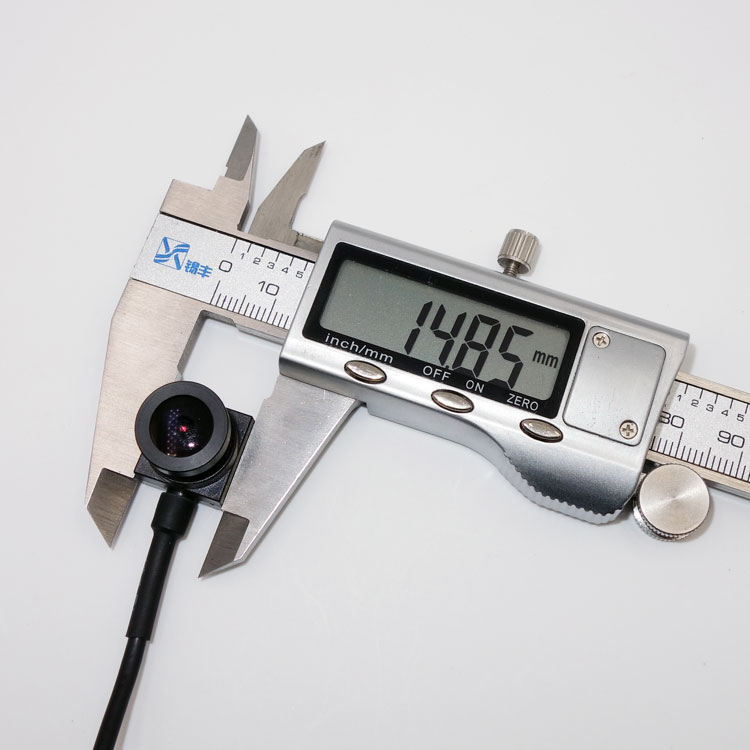
At Shenzhen Novel Electronics Limited, we specialize in designing and manufacturing miniature USB cameras, such as the 14×14mm 12MP USB Camera Module, tailored for embedded and robotic systems. In this article, we explore the top use cases where these modules add significant value.


1. Navigation and Obstacle Avoidance

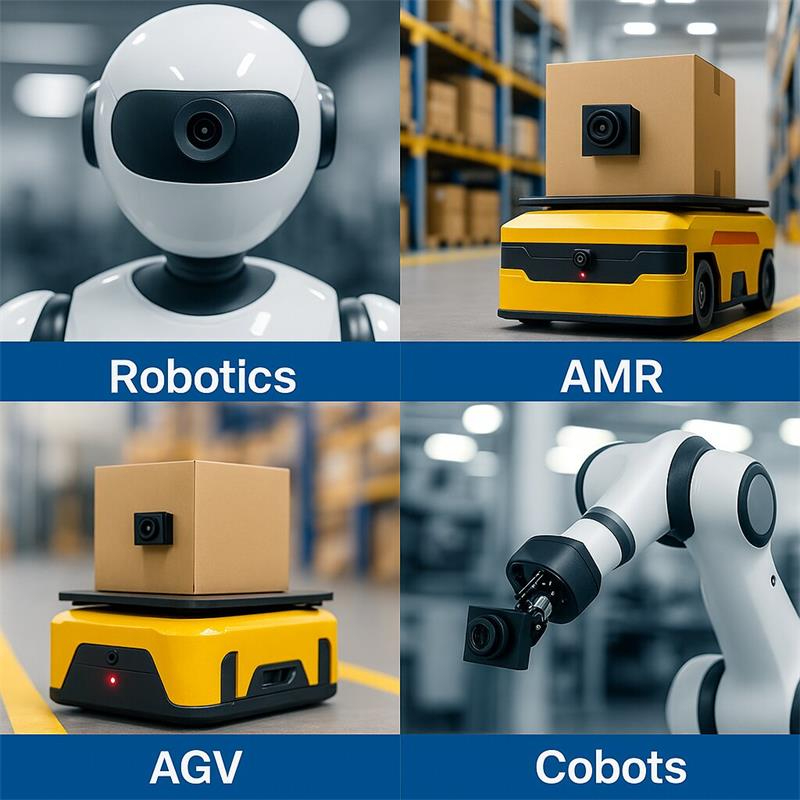
Autonomous Mobile Robots (AMRs) and delivery bots rely heavily on vision for SLAM (Simultaneous Localization and Mapping), obstacle detection, and route planning.

  • Why Mini USB Camera?
    Compact size, wide-angle field of view (up to 180°/230°), and plug-and-play USB integration make these cameras ideal for front-facing or side-mounted installation in limited space.
 

2. Object Recognition and Pick-and-Place

Vision-guided robotics in logistics, manufacturing, and warehouse operations need precise object detection and tracking.
  • What It Enables:
    Our high-resolution USB cameras (8MP/12MP) help robots:
    • Recognize barcodes, labels, or object types
    • Identify correct orientation for picking
    • Detect defects or quality issues
 

3. Facial and Human Detection in Service Robots

Service and companion robots, from retail assistants to healthcare aides, often require facial detection and recognition to interact with users.

  • Application:
    Integrate our mini USB camera with AI edge modules (e.g., Jetson Nano or Raspberry Pi) for:
    • Gesture or facial recognition
    • Emotion or presence tracking
    • Interactive response systems
 

4. Laboratory and Inspection Automation

Robotic arms used in scientific and lab automation must inspect, measure, and record precisely during tests.

  • Our Solution:
    Mini cameras with autofocus and excellent low-light performance (e.g., Sony IMX385 sensor) enable real-time image capture for:
    • Liquid level detection
    • Sample tracking
    • Visual documentation
 

5. Modular Vision Systems in Educational Robotics

STEM and university research robotics kits require vision systems that are plug-and-play, affordable, and customizable.

  • Perfect Fit:
    Novel’s custom micro USB cameras (as small as 12×12mm) can be easily embedded into DIY robot kits, 3D-printed frames, and educational development boards.
 

Why Choose Novel’s Mini USB Cameras for Robotics?

Feature

Benefit

Ultra-compact modules (15×15mm / 12×12mm)

 Fits tight embedded spaces

High resolution (8MP, 12MP)

 Enables detail-rich object recognition

USB UVC plug & play

 No driver installation needed

Auto / manual focus options

 Flexible for fixed or variable working distances

Excellent low-light vision (Sony sensors)

 Reliable in warehouse or outdoor night use

OEM/ODM Support

 Custom lens, housing, interface, and firmware


Looking to Integrate Mini USB Cameras into Your Robot?

At Shenzhen Novel Electronics Limited, we support custom projects for robotic companies worldwide — from prototyping to mass production. If you're building vision-enabled robotic systems, our engineering team is ready to help.

Submit Your Requirements
Or Contact: info@okgoobuy.com
 

Expert FAQ: Strategic Integration of 15x15mm Vision Modules

Q1: "I'm designing a humanoid robotic hand. What are the SWaP-C constraints for embedding a 1080p camera in a fingertip?"

A: Embedding vision in robotic end-effectors requires balancing SWaP-C (Size, Weight, Power, and Cost). The primary constraint is thermal management; a 1080p module must operate under 1.5W to prevent housing deformation and sensor noise. Architecturally, a 15x15mm PCBA is the industry standard, as it fits within the proximal phalanx of a 1:1 scale humanoid finger while leaving room for tactile sensors and actuators.


Q2: "Why do standard micro USB cameras often fail in high-vibration environments like delivery drones or AMRs?"

A: Failure in high-vibration settings is typically due to Lens Shift or Solder Fatigue. Standard consumer modules use friction-fit lenses that lose focus under resonance. Industrial-grade modules from goobuy solve this by utilizing Active Alignment (AA) technology and UV-cured structural adhesives to permanently lock the optical axis, ensuring the MTF (Modulation Transfer Function) remains stable despite constant G-forces.


Q3: "How does ISP tuning impact AI inference accuracy for object detection in low-light warehouse robotics?"

A: AI models like YOLO or Faster R-CNN are highly sensitive to Signal-to-Noise Ratio (SNR) and Auto-exposure (AE) stability. If the ISP (Image Signal Processor) is not tuned for specific robotic environments, excessive noise or "hunting" AE will cause the neural network to miss detections. Specialized tuning ensures the sensor preserves edge contrast and minimizes motion blur, which are critical for high-confidence AI inference in dynamic low-light settings.


Q4: "Can I use standard UVC drivers for 4K micro cameras in a ROS 2 (Robot Operating System) environment?"

A: Yes, UVC compliance ensures that 4K modules are recognized as standard /dev/video devices in Linux. In a ROS 2 ecosystem, you can utilize the standard v4l2_camera node to publish image topics directly. This eliminates the need for proprietary SDKs and allows for seamless integration into vision pipelines using OpenCV or GStreamer.


This Article is updated in March 16th, 2026