


Driverless 4K HDMI live view for OEM inspection devices; supports STARVIS 2 low-light imaging, 38×38mm integration and direct monitor output
If your system needs OpenCV, AI image processing or UVC video over USB, choose the IMX678 USB version.
If your system needs a sharp 4K image directly on an HDMI monitor, recorder or display device, this HDMI version is built for that job
Not every camera should become a software project. Many OEM systems need a real-time image on a screen, not a camera SDK.
A 4K HDMI camera module is useful when the device needs to connect directly to an HDMI monitor, recorder or capture device for live inspection. This includes microscope display systems, desktop lab imaging instruments, PCB inspection monitors, soldering support displays, dental imaging devices, field service tools and machine interior observation screens.
UC-678 outputs live video through HDMI, while the USB cable is used for 5V power only. No UVC driver, no IP camera configuration, no software video pipeline.
Power it. Connect HDMI. See the image
Choose UC-678 If You Are Searching For
| Customer Search Intent | Matching UC-678 Use Case |
|---|---|
| 4K HDMI camera module | Direct HDMI live view |
| IMX678 HDMI camera module | STARVIS 2 low-light HDMI output |
| Driverless HDMI camera module | No SDK, no UVC driver live display |
| Camera module with HDMI output | Embedded display and recorder input |
| HDMI camera for microscope monitor | Lab instrument and sample observation |
| 4K HDMI camera for PCB inspection | Electronics repair bench monitor |
| HDMI camera module for medical device | Dental, endoscope and medical display systems |
| HDMI camera for field service monitor | Machine interior and maintenance display |
| Low-light HDMI camera module | Dark enclosure and specialty video hardware |
IMX678 HDMI Camera Module vs IMX678 USB UVC Camera Module
| Requirement | UC-678 HDMI Version | IMX678 USB UVC Version |
|---|---|---|
| Direct HDMI monitor output | Yes | No |
| Driverless live view | Yes | Not the main purpose |
| USB cable for video data | No, power only | Yes |
| HDMI recorder input | Yes | No |
| Microscope or lab monitor | Strong fit | Possible, but software needed |
| PCB inspection monitor | Strong fit | Possible, but software needed |
| Medical / dental display device | Strong fit | Possible, but software needed |
| OpenCV or AI processing | Not ideal | Better fit |
| Embedded Linux UVC capture | Not ideal | Strong fit |
| Software-controlled imaging | Limited by HDMI capture workflow | Stronger |
| Best use | Live display and inspection monitor | Software capture and image processing |
Keying Feature
1, Low light performance is good for a 1/1.8" BSI STATVIS sensor.
2, The back-illuminated structure provides good basic light sensitivity and good near-infrared response.
3, Works with a large aperture lens (F1.4 or greater) and excellent ISP noise reduction algorithms to provide usable color images in scenes with low ambient light (0.1 lux or more).
4, Under active infrared supplementary light, it can provide good black and white night vision effect, meeting most of the general monitoring and industrial inspection needs.
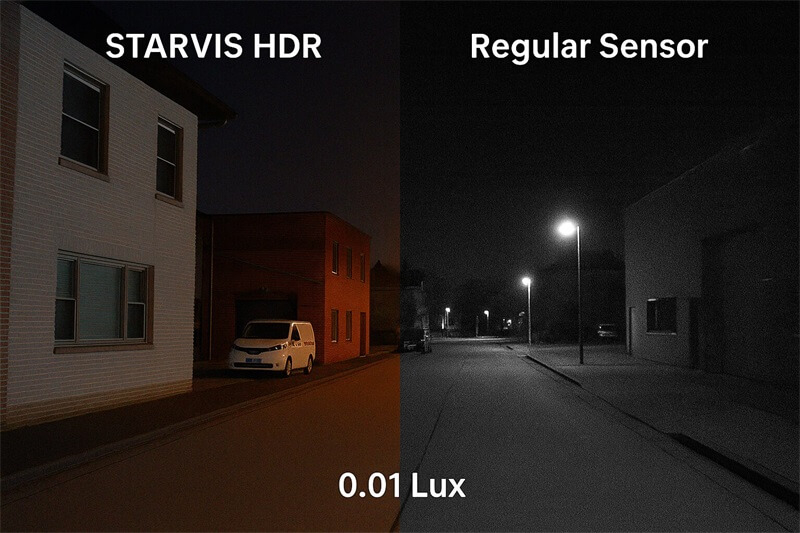
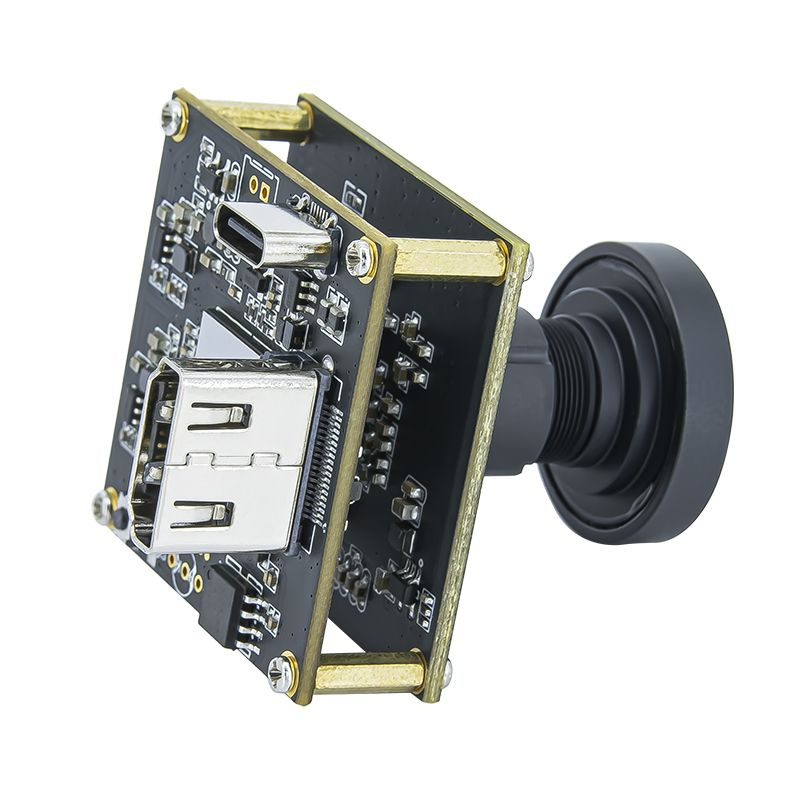
Product Specification of 4K low light HDMI camera module
| Item | Specification |
|---|---|
| Model | UC-678 |
| Sensor | Sony IMX678 STARVIS 2 |
| Sensor Class | 1/1.8-inch class |
| Resolution | 8MP / 4K UHD |
| HDMI Output Modes | 3840×2160@30fps, 2560×1440@30/60fps, 1920×1080@60fps, 1280×720@60fps |
| Video Output | HDMI |
| USB Function | 5V power only |
| PCB Size | 38×38mm |
| Lens | 4mm lens, approx. 95° FOV standard configuration |
| Low-Light Performance | STARVIS 2 low-light imaging |
| Accessories | HDMI cable, USB power cable, optional metal housing |
| Customization | Lens FOV, housing, cable, mounting, firmware / display parameters depending on project |
| Best-Fit Applications | Microscope monitors, lab instruments, PCB inspection benches, dental / medical displays, field service monitors, low-light HDMI video devices |
Sony IMX678-AAQR1-C is a diagonal 8.86 mm (Type 1/1.8) CMOS active pixel type solid-state image sensor with a square pixel array and 8.40 M effective pixels. This chip operates with analog 3.3 V, digital 1.1 V, and interface 1.8 V triple power supply, and has low power consumption. High sensitivity, low dark current and no smear are achieved through the adoption of R, G and B primary color mosaic filters. This chip features an electronic shutter with variable charge-integration time
Before choosing UC-678, please check:
If your device needs direct monitor output, UC-678 is the right product to evaluate.
If your device needs OpenCV, AI processing, UVC video capture or embedded Linux camera software, the IMX678 USB version may be a better fit.
For users requiring USB UVC output (MJPEG/YUY2), we also provide a separate USB version of IMX678.
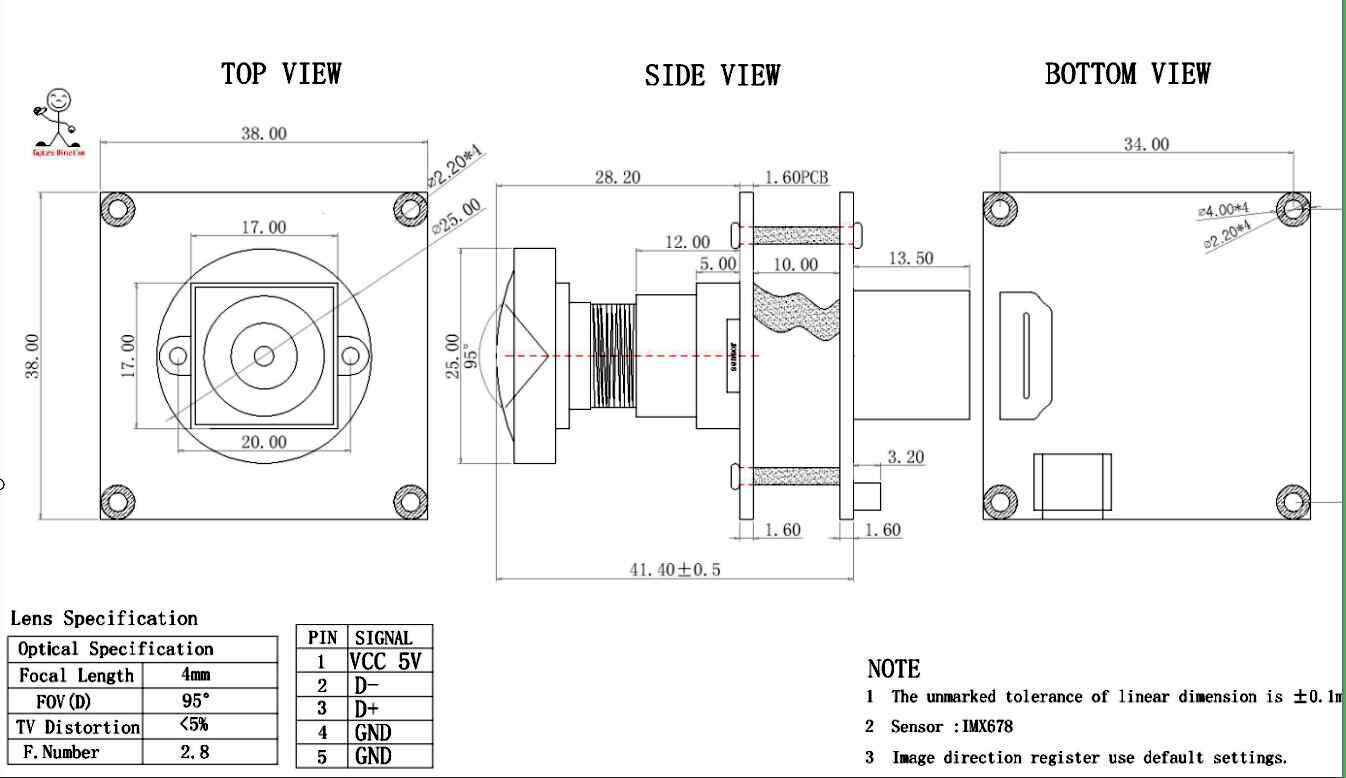
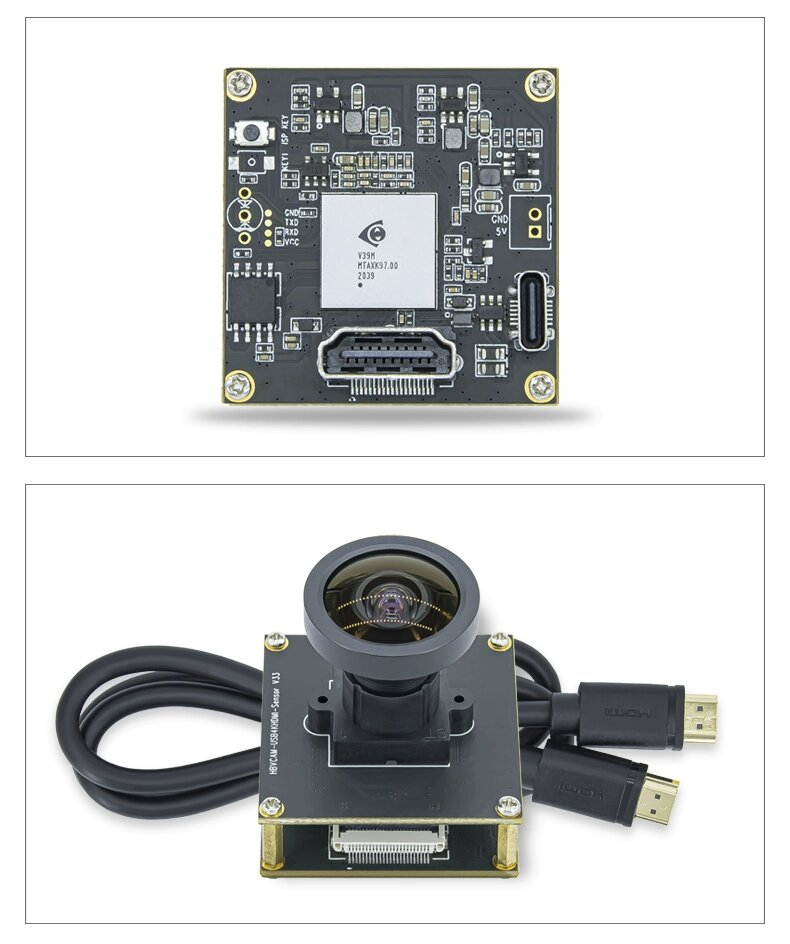
For OEM projects, Shenzhen Novel Electronics Limited can support:
Please provide your target application, monitor type, working distance, lighting condition, mechanical space, lens angle requirement and estimated annual quantity.
UC-678 can be used as a 4K HDMI camera for microscope monitor attachments, desktop lab imaging instruments, optical inspection devices and sample observation systems.
For OEM lab hardware, the key value is direct live view. Engineers can connect the camera to an HDMI monitor without developing a USB camera application first.
Best-fit applications include:
The Sony IMX678 STARVIS 2 sensor helps when the scene has weak light, mixed light or high contrast. HDMI output makes the device easier to use in lab and inspection environments where operators need to see the image immediately.
UC-678 works as an HDMI live-view camera for PCB inspection monitors, electronics repair benches, soldering support displays, component placement checking and engineering lab visual inspection setups.
The 4K image helps operators view:
This HDMI version is designed for live-view inspection and documentation, not as a replacement for high-speed AOI systems, global shutter machine vision cameras or calibrated measurement equipment.
For electronics repair stations and engineering benches, the value is simple: a sharp 4K live image on a large monitor without a PC camera software stack.
UC-678 can be evaluated as an OEM HDMI camera module for dental imaging devices, endoscope monitor systems, portable medical observation tools and clinical display hardware.
HDMI output is useful when the device needs a direct image on a medical monitor, dental display or embedded screen without building a USB camera software pipeline.
Possible applications include:
Important: UC-678 is an imaging module, not a certified medical diagnostic system by itself. The final device manufacturer must validate optics, illumination, safety design, image workflow and regulatory compliance.
For machine interior observation, equipment enclosure inspection, field service monitors and maintenance display tools, UC-678 provides direct HDMI live view in low-light or high-contrast environments.
It is useful when technicians need to see the scene immediately on a portable monitor or recorder without connecting a PC camera application.
Typical uses include:
For these use cases, HDMI output is often more practical than USB software capture because the operator needs live viewing first, not software processing.
UC-678 is also suitable for specialty low-light video devices, HDMI recorder inputs, night observation displays, security equipment prototypes and custom embedded live-view systems that need 4K STARVIS 2 imaging with direct HDMI output.
Best-fit applications include:
For projects where visible and near-infrared low-light performance matters, the Sony IMX678 STARVIS 2 sensor provides a strong imaging foundation. Final performance depends on lens choice, lighting, enclosure design and HDMI system integration.
[Core Target Applications - 2026-2028]
1. Digital Surgical Microscopy & Dental Loupes In the OR, reliability is everything. The UC-678-HDMI ensures the display never freezes due to a background OS update. The IMX678's Single-Exposure HDR (83 dB) perfectly balances the blinding glare of surgical lights while revealing deep tissue details in shadows, delivering artifact-free 4K video for live procedures and teaching.
2. High-End PCBA Rework & Micro-Soldering Clear off your workbench. You don't need a bulky PC for visual inspection. Simply connect the UC-678 to a 5V power source and an HDMI monitor. At 1080p 60fps or 4K 30fps, your hand movements with the soldering iron match the screen perfectly, preventing costly mistakes on densely packed SMD boards.
3. Gemological & Material Live Inspection Instantly display high-fidelity, color-accurate macroscopic structures to clients or QA teams on a large showroom display. The STARVIS 2 sensor captures the true brilliance of high-contrast materials without the complicated software setup.
Tell us whether your device is a lab instrument, microscope monitor attachment, PCB inspection bench, medical display system, dental imaging device, field service tool or custom low-light video hardware.
Send your monitor resolution, working distance, lighting condition, mechanical space, lens angle requirement and expected quantity.
We will help evaluate whether UC-678 HDMI is the right configuration. Email: office@okgoobuy.com
Yes. UC-678 can be evaluated as a 4K HDMI camera for microscope monitor attachments, desktop lab imaging instruments, optical inspection devices and sample observation systems.
Its advantage is that it can output a live 4K image directly to an HDMI monitor without building a USB camera application. This is useful for lab equipment where operators need immediate visual observation, training display, sample positioning or optical inspection.
Final image quality depends on lens selection, optical path, working distance, illumination, sample contrast and monitor compatibility.
The IMX678 HDMI camera module is for direct live display. The IMX678 USB UVC camera module is for software capture and image processing.
Choose UC-678 HDMI if your device needs:
Choose the IMX678 USB version if your device needs:
If your main goal is to see the image immediately on a monitor, choose HDMI. If your main goal is to process the image in software, choose USB.
Yes. UC-678 is suitable for PCB inspection monitors, soldering support displays, electronics repair benches and engineering lab visual inspection setups.
The 4K HDMI live image can help operators view board details, solder areas, component placement, labels and QR codes on a large screen.
However, UC-678 is designed for live-view inspection and documentation. It is not intended to replace high-speed AOI systems, global shutter machine vision cameras, hardware-trigger inspection systems or calibrated measurement equipment.
Yes, if the recorder or capture device supports the HDMI signal format output by UC-678.
UC-678 can be connected to compatible HDMI recorders, monitors with recording function or HDMI capture cards for live-view recording. Before production use, we recommend testing the required resolution, frame rate, cable length, display compatibility and recording workflow.
If your software needs direct UVC camera capture, the IMX678 USB version will usually be a better choice.
Yes. The Sony IMX678 STARVIS 2 sensor is useful for low-light and high-contrast live-view scenes, such as lab instruments, reflective PCB surfaces, dental display devices, machine interiors, field service tools and specialty low-light video hardware.
The final result still depends on lens FOV, aperture, lighting design, enclosure window material, HDMI display quality and camera settings. For very dark environments, controlled LED illumination may improve the image more than sensor sensitivity alone.
Before approving UC-678 for an OEM device, test the complete HDMI live-view workflow, not only the camera board.
Recommended validation points include:
For lab, medical, dental or endoscope display devices, also validate the optical path, illumination, color needs, safety design and regulatory requirements at the final system level.
FAQ7: Our surgeons complain about lag with our current USB cameras. What is the glass-to-glass latency of this HDMI module?
The Goobuy UC-678-HDMI bypasses operating system buffering entirely. The latency from the lens capturing the light to the HDMI signal hitting your monitor is sub-20 milliseconds. It provides perfect hand-eye coordination for delicate tasks like micro-soldering and surgical procedures.
 office@okgoobuy.com
Follow Me
Address:A615, 6F, Huachuangda Building, No107 Xinghua 1st Road, 43 District, Xinan street, Baoan, shenzhen, China 518101