
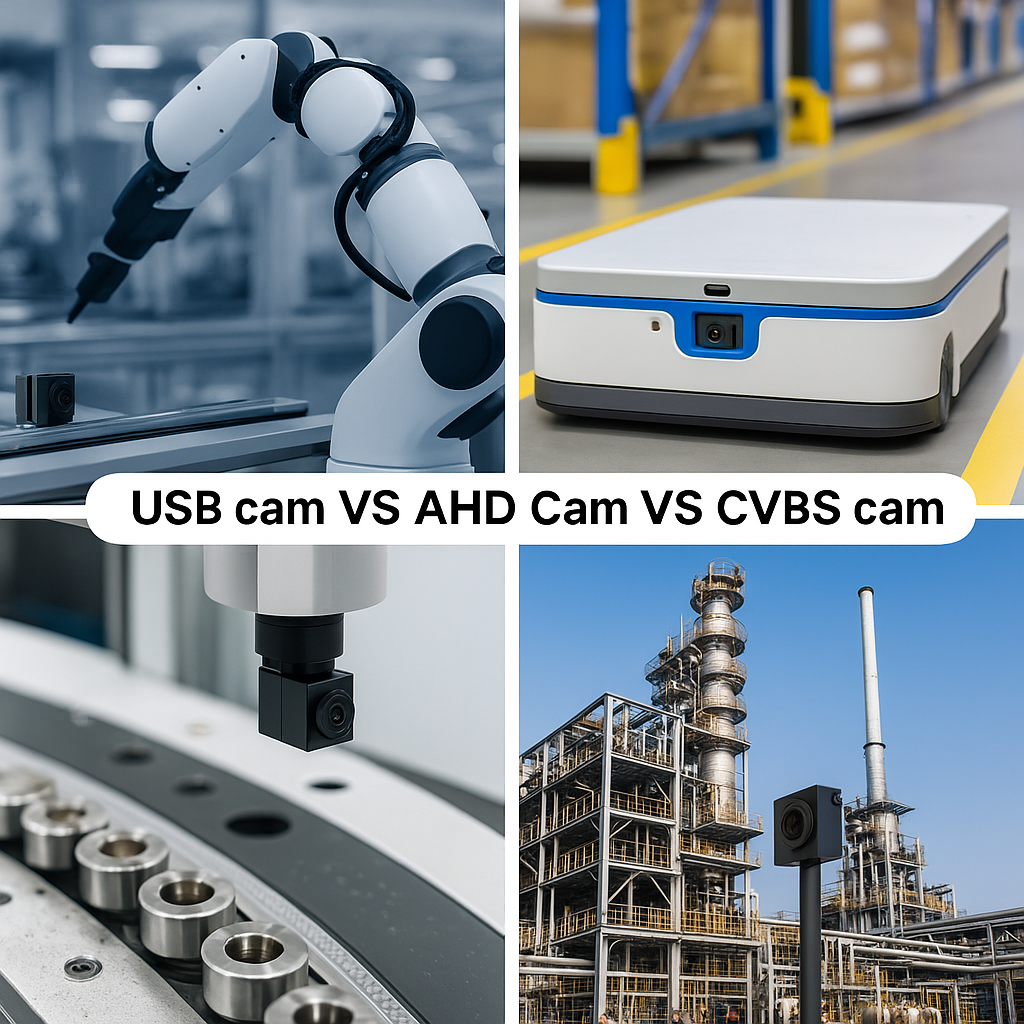
In the fast-evolving landscape of embedded vision systems, selecting the right camera module is crucial for ensuring optimal performance, reliability, and cost-efficiency. Whether you are developing robotics, industrial automation, drone applications, or machine vision solutions, the choice among USB, AHD (Analog High Definition), and CVBS (Composite Video Baseband Signal) camera modules can significantly impact your project's success.
This article aims to help engineers, integrators, and project managers understand the differences between these three technologies, their advantages and limitations, and how to select the most suitable camera module for your specific embedded vision needs.
USB cameras have become increasingly popular due to their ease of use and widespread compatibility. Typically, these cameras support UVC (USB Video Class) standard, allowing plug-and-play operation on Windows, Linux, macOS, and embedded platforms like Raspberry Pi or NVIDIA Jetson.
AHD technology transmits HD video over coaxial cables using analog signals. Originally developed for CCTV, AHD cameras have found new applications in industrial and embedded vision due to their low latency and stable signal over longer distances.
CVBS is an older analog video standard outputting standard definition video. Despite its age, CVBS remains relevant in applications requiring simple, low-cost, and robust video transmission.
|
Factor |
USB |
AHD |
CVBS |
|
Resolution |
Up to 4K and beyond |
Up to 1080p |
Standard Definition (480p-576p) |
|
Latency |
Medium (varies) |
Very low |
Very low |
|
Cable Length |
Up to 5 meters |
Up to 500 meters |
Up to 300 meters |
|
Power Supply |
USB bus-powered |
Separate 12V or 5V supply |
Separate 5V supply |
|
Integration Complexity |
Simple, driverless with UVC |
Requires DVR or capture device |
Requires DVR or capture device |
|
EMI Resistance |
Moderate |
High |
High |
|
Use Case Suitability |
PC-based, embedded Linux |
Industrial real-time monitoring |
Cost-sensitive, low-res applications |
At Shenzhen Novel Electronics, we provide a comprehensive range of high-quality camera modules across these technologies:
Our products are designed with industrial-grade components, customizable options, and low MOQ to meet diverse project needs.
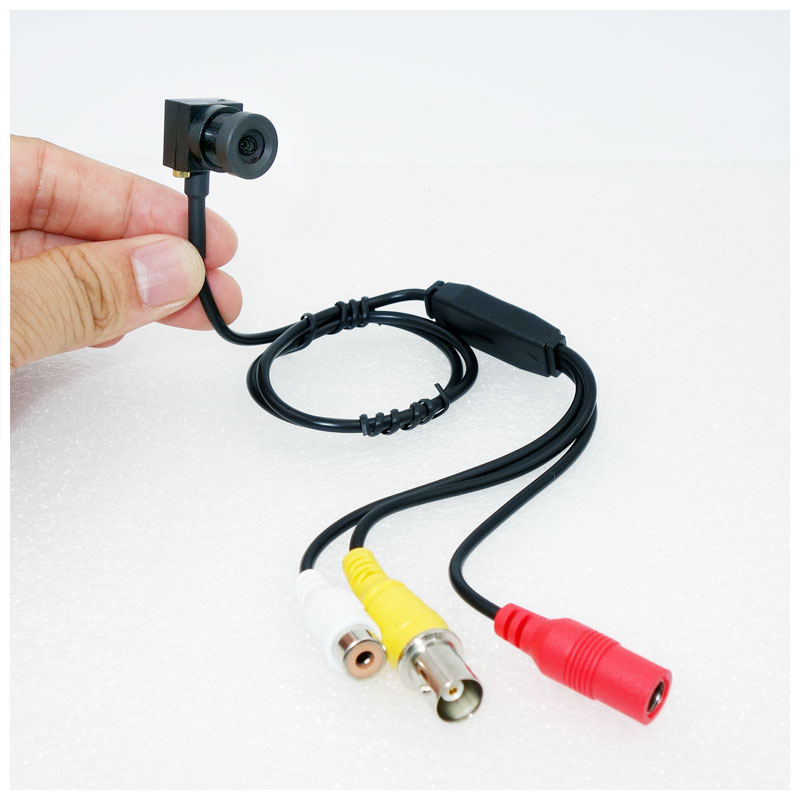
Choosing between USB, AHD, and CVBS camera modules depends on your embedded vision project's specific requirements, including resolution, latency, environmental factors, and integration complexity.
By understanding each technology’s strengths and limitations, you can select the ideal camera module that delivers reliable, high-quality imaging for your application.
Need help choosing the right camera module?
Contact Shenzhen Novel Electronics for expert consultation, samples, and tailored solutions.
office@okgoobuy.com
www.okgoobuy.com
2MP 15×15mm USB camera modules UC-501 www.okgoobuy.com/2mp-mini-usb-camera.html
0.001Lux CVBS micro camera modules CC-001 www.okgoobuy.com/0lux-CVBS-camera-module.html
Follow Me
Address:A615, 6F, Huachuangda Building, No107 Xinghua 1st Road, 43 District, Xinan street, Baoan, shenzhen, China 518101