

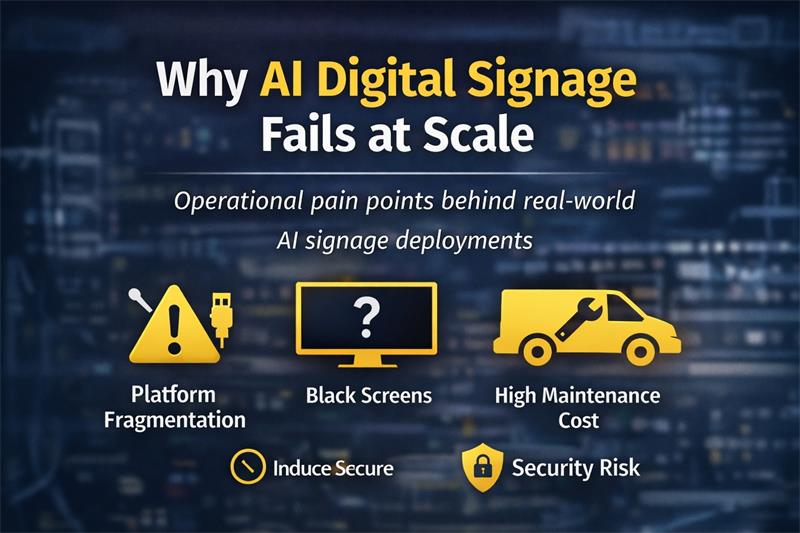
This article explains why AI digital signage systems fail at scale, focusing on operational reliability rather than algorithms. It examines platform fragmentation, maintenance blind spots, security constraints, and real deployment lessons exposed at ISE 2026.
More >>
Edge vision is becoming a practical deployment layer for safety, inspection and smart-operations. CES 2026 highlighted real OEM products, module supply chains and developer platforms enabling scale.
More >>
2026 will see pDOOH retrofit shift from experimentation to scalable deployment as acceptance criteria tighten, deployability requirements rise, and external UVC camera solutions become the de facto hardware path, enabling compliant, verifiable proof-of-display across legacy signage systems.
More >>This article explains why pDOOH retrofit is becoming the dominant upgrade path in 2026, focusing on verification, deployment risk, and edge privacy. It analyzes retrofit economics, camera readiness, and real-world rollout constraints.
More >>
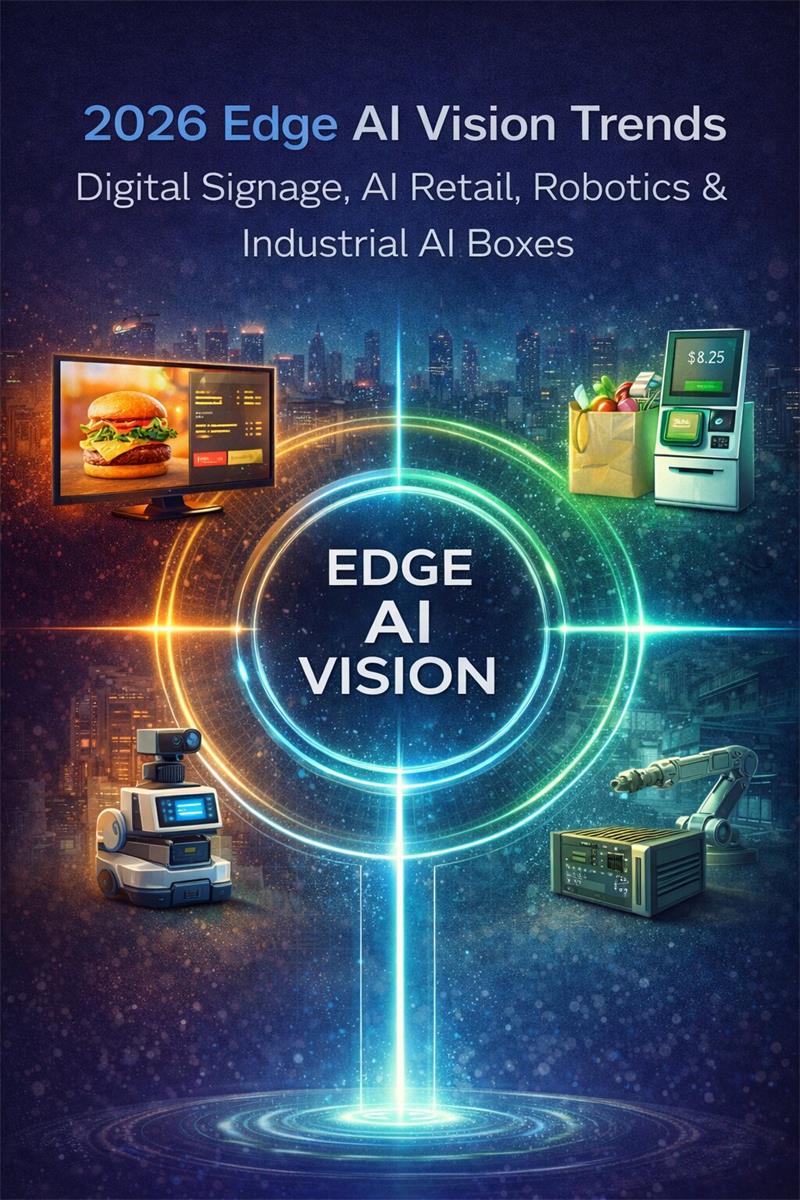
This article(part 2) explores how Edge AI vision requirements evolve in real-world deployments across AI signage players, AI retail systems, mobile robotics, and industrial AI boxes in 2026. Rather than focusing on algorithms, it analyzes how camera architecture, sensor sensitivity, optics, latency tolerance, and system integration constraints differ by industry.
More >>A 2026 edge AI vision outlook grounded in 2025 data, covering Digital Signage, AI Retail terminals, Robotics, and Industrial Edge AI. It explains why growth is shifting from algorithms to deployable infrastructure and highlights emerging “dark horse” endpoints likely to accelerate demand in 2026
More >>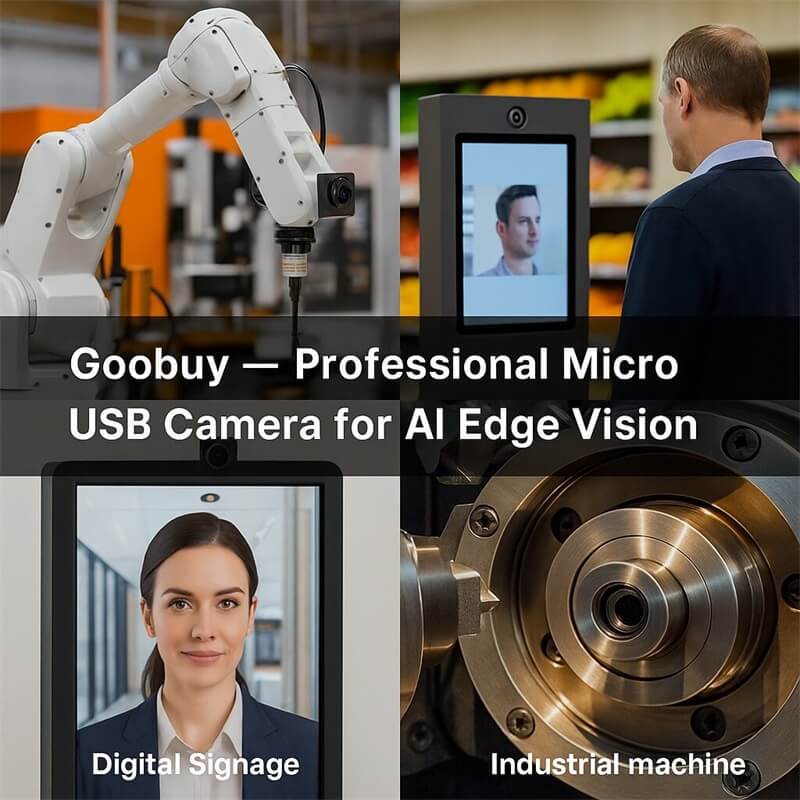
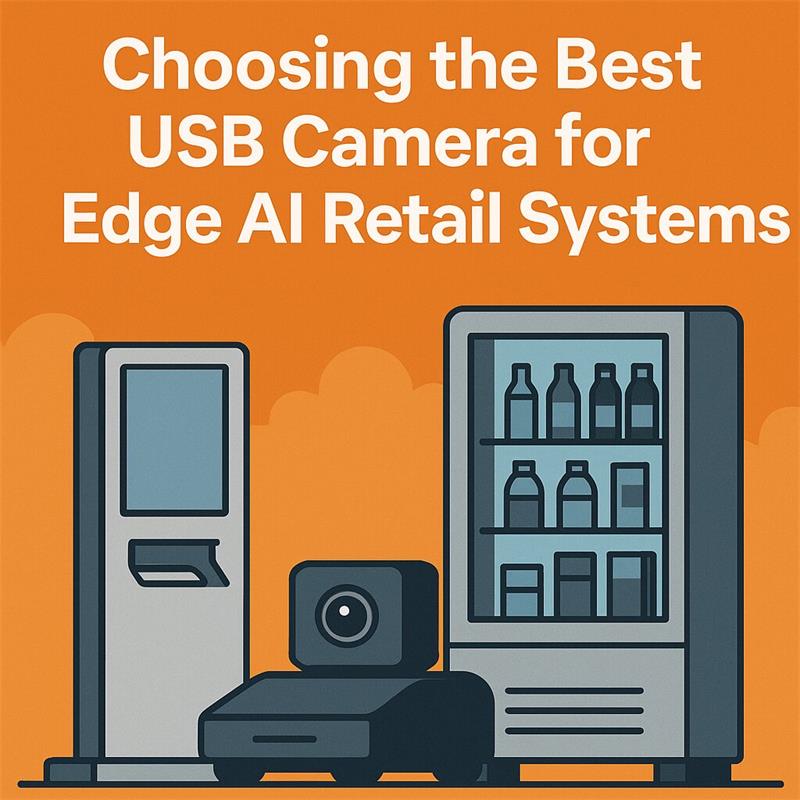
Core value: A practical framework to match USB camera specs to edge-AI retail boxes, reducing integration risk and time-to-market. Details: scenarios, sensor tips, FOV, UVC.
More >>
Follow Me
Address:3A05 Floor 4, Plant 8, No31 Jiaan Road, 41 District, Xinan Street, Baoan, Shenzhen, China 518101