
In 2025, the U.S. robotics industry continues to expand at an unprecedented pace, driven by advanced manufacturing, logistics automation, and human-machine collaboration. For companies designing collaborative robots (cobots), automated guided vehicles (AGVs), and autonomous mobile robots (AMRs), the demand for compact, high-performance vision systems is more pressing than ever.
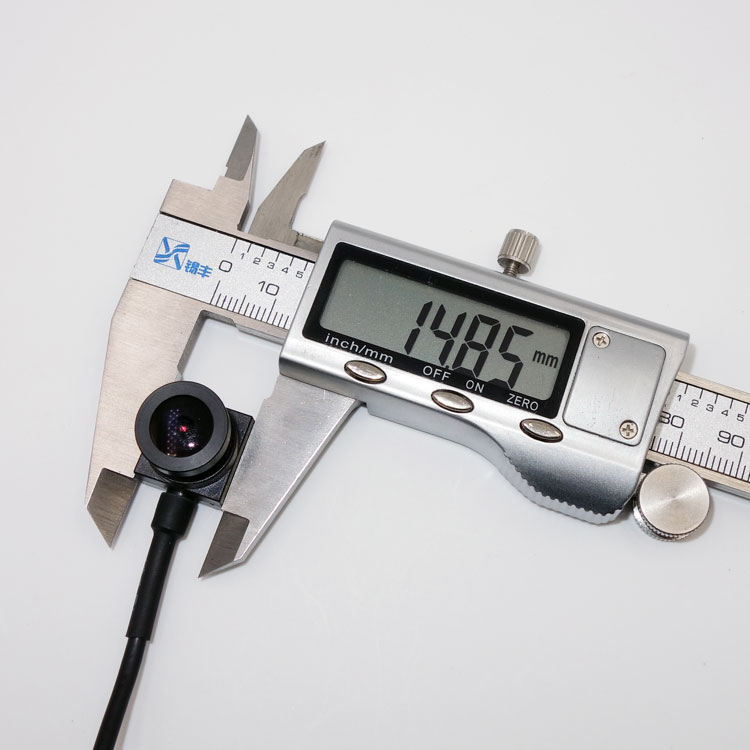
At Shenzhen Novel Electronics Limited, we provide a powerful and efficient solution: our 15×15mm 2MP Compact Mini USB Camera. Engineered for precision, durability, and ease of integration, this camera is transforming how U.S. robotics innovators implement vision systems—particularly in regions where robotics innovation thrives.
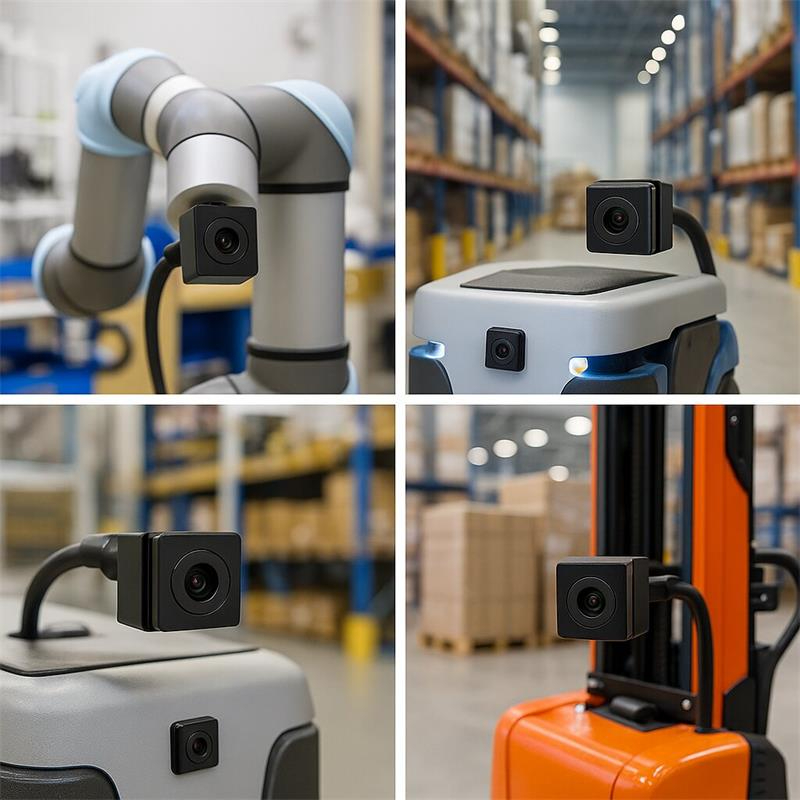
As the hub of cutting-edge robotics and AI companies, California’s robotics sector requires compact vision modules with plug-and-play flexibility. Our camera’s USB2.0 / Type-C / Micro USB interface, combined with low-light performance and M12 lens options, makes it ideal for rapid prototyping and scalable deployment in cobots and robotic arms.
Application example: Startups building smart manufacturing or warehouse robots for Amazon, Apple, or Tesla ecosystems.
Known for robotics R&D and universities like MIT, this region focuses heavily on human-robot collaboration and surgical or micro-robotics. Engineers here appreciate miniaturized components with low latency and precision optics—perfect for our 15×15mm camera.
Ideal for: Research prototypes, medical robots, precision robotic inspection.
With a strong automotive background, Michigan robotics companies are increasingly deploying AGVs and AMRs in warehouses and production lines. Our USB camera offers wide compatibility with embedded systems (Raspberry Pi, Jetson Nano, etc.), ideal for cost-effective factory integration.
Texas hosts many logistics and energy-related automation companies. The harsh environments and high operational tempo require robust, reliable, and modular vision systems, a role our camera fills well thanks to its wide operating temperature range and metal housing options.
Use case: Oil field inspection AGVs, warehouse automation in e-commerce hubs.
A manufacturing and logistics hub, this state supports various mobile robot startups and system integrators. Integrators love our camera’s low-distortion lens options and wide FOV support, crucial for indoor navigation and object detection.
Washington is seeing growth in both aerospace and logistics robotics. Our mini USB camera is compatible with many UAV/UGV-based robotic systems, offering lightweight design (under 4g) and support for modular customization.
With a surge in robotics startups and advanced manufacturing, Ohio is ideal for our vision solution. The cost-efficiency and plug-and-play design of our USB camera suits early-stage prototyping and university partnerships.
|
Feature |
Benefit for Robotics Users |
|
Compact size (15×15mm) |
Fits easily into space-constrained robots like AMRs and end-effectors. |
|
2MP GC2053 Sensor |
Delivers sharp images in low-light factory settings. |
|
Multiple USB Interfaces |
Seamlessly integrates into varied control boards. |
|
M12 Lens Support |
Customizable FOV from 90°–170° for different applications. |
|
Low Power Consumption |
Ideal for battery-powered mobile robots. |
|
Plug-and-play UVC compliance |
Rapid development with no driver hassles. |
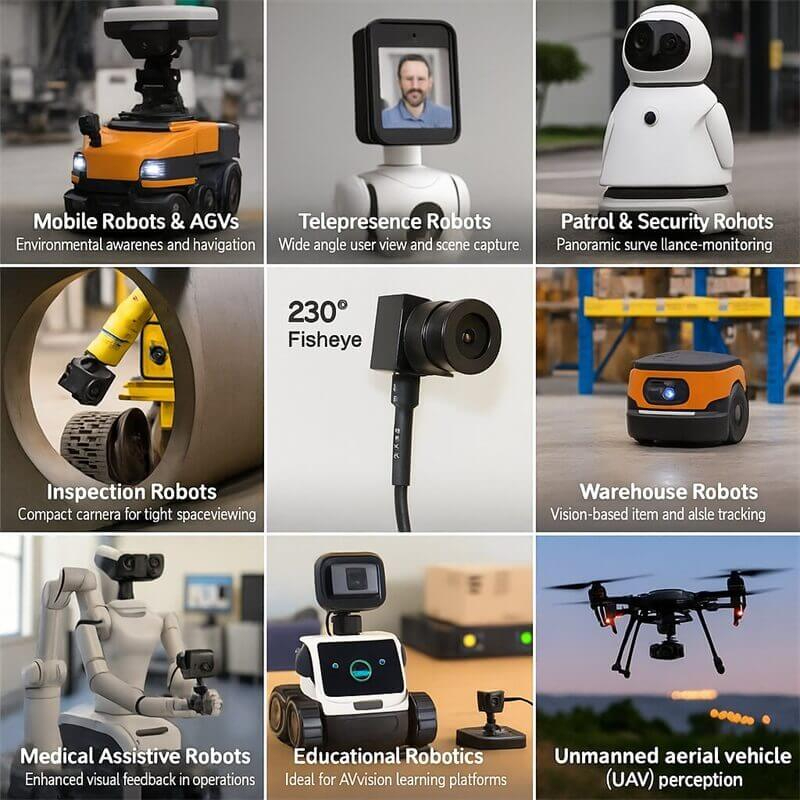
Shenzhen Novel Electronics Limited is a professional manufacturer and exporter of USB, AHD, CVBS, and night vision camera modules. With more than 12 years of experience, we supply high-quality and cost-effective vision modules for industrial applications.
The demand for compact, high-performance vision systems in robotics is accelerating across the U.S.—especially in cobots, AGVs, and AMRs. With our 15×15mm 2MP USB camera, robotics engineers and project managers can build smarter, smaller, and more efficient machines tailored to their industrial needs.
If you're a robotics startup, system integrator, or automation engineer in the U.S., we invite you to contact us today and explore how our miniature USB cameras can elevate your next-generation robotics solutions.
Follow Me
Address:A615, 6F, Huachuangda Building, No107 Xinghua 1st Road, 43 District, Xinan street, Baoan, shenzhen, China 518101