Why the 2MP 15×15mm Micro USB Camera is the Ideal Choice for Cobots
The 2MP micro 15×15mm USB camera is an ideal choice for collaborative robots (cobots) because its size, performance, and interface align perfectly with the core requirements of cobots. Collaborative robots must operate in dynamic, human-shared environments while performing safe, flexible, and cost-effective lightweight vision tasks such as object grasping, obstacle avoidance, and basic recognition. The unique characteristics of this camera directly address these challenges. This can be analyzed from five key dimensions:
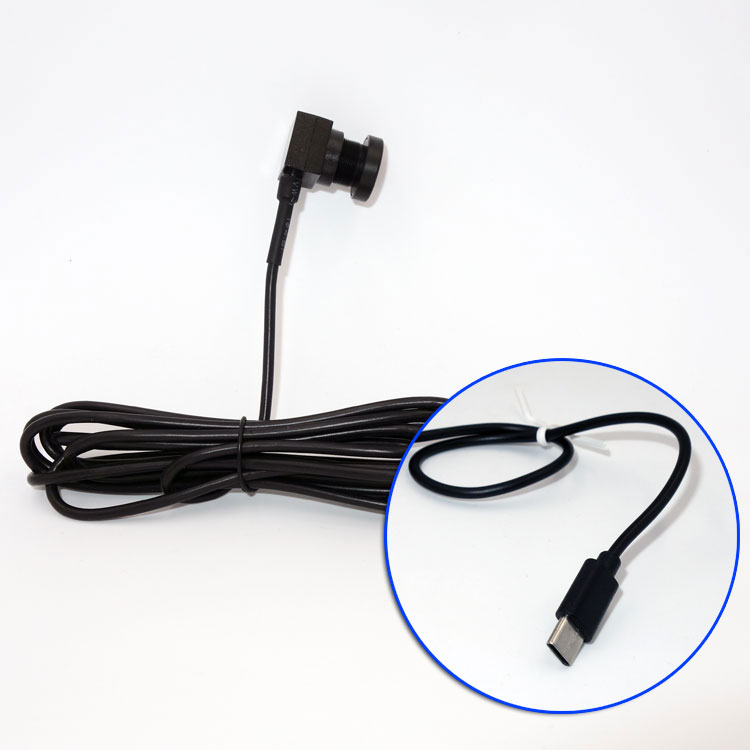
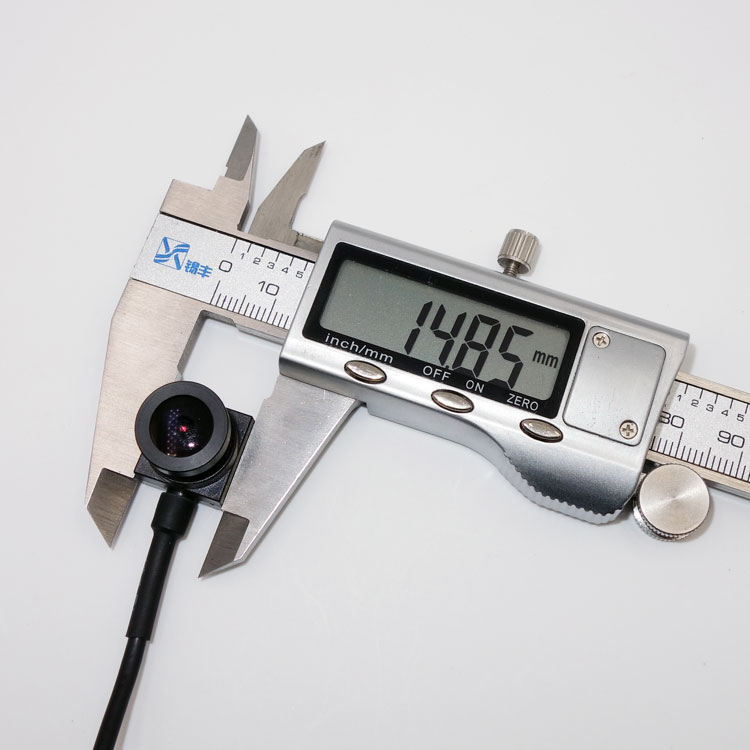
1. 15×15mm Miniaturized Design: Adapting to Cobots’ Space and Safety Requirements
One of the core features of cobots is their compact structure and flexible movement, with the need to work in close proximity to humans (safe distance typically <50 cm). This imposes strict requirements on the size and weight of onboard devices:
- Space compatibility – The end effector, joints, or body surfaces of cobots often have very limited space (e.g., the UR5e flange diameter is only 50 mm). The 15×15mm form factor can be embedded into these locations without occupying extra motion space, avoiding collision risks that could injure humans or damage workpieces.
- Lightweight and low inertia – Typically weighing less than 10g (far lighter than conventional industrial cameras at 50g+), it does not add load or inertia to the robotic arm. This ensures precise performance (±0.1mm) even at high speeds (e.g., 3 m/s end effector speed) without vibration or positioning errors caused by extra weight.
- Human–robot safety compliance – Cobots must meet ISO/TS 15066 safety standards (collision force <150 N). The rounded edges and small size of the camera reduce impact risk in physical contact, whereas large cameras can become safety hazards.
2. 2MP Resolution: Balancing Performance and Cost for Cobot Vision Tasks
Cobot vision requirements are often medium- to low-resolution tasks—grasping regular objects, reading QR codes, or obstacle avoidance—without the need for ultra-high resolutions like 8MP or 12MP. A 2MP resolution strikes the ideal balance:
- Sufficient detail recognition – 2MP (1920×1080) clearly captures object features at 50–300 mm distance, such as screw hole positions (>0.5 mm diameter) on phone housings in electronics manufacturing, 2×2 cm QR codes on logistics labels, or hand gesture outlines (“grab” or “stop”) in human–robot interaction.
- Low data load with real-time performance – A 2MP frame is around 6MB (1080P@30fps), easily handled over USB 2.0 (bandwidth <200 Mbps). This avoids overloading embedded boards like NVIDIA Jetson Nano or Intel NUC, ensuring end-to-end algorithm latency (e.g., OpenCV-based object positioning) under 50 ms—fast enough for dynamic grasping.
- Cost advantage – 2MP sensors (e.g., OV2710, IMX290) cost only 1/3–1/2 of 8MP sensors, reducing overall vision hardware costs (from ~20% to under 10% of the cobot BOM), meeting the cost-efficiency needs of small and mid-sized enterprises.
3. USB Interface: Lowering Integration Barriers for “Lightweight” Development
Cobot control systems often use open-source frameworks (e.g., ROS) or embedded platforms, emphasizing fast deployment and low-complexity integration. The USB interface fits perfectly:
- Plug-and-play compatibility – No complex hardware adaptation (as with MIPI pinouts or GigE Vision network setups). Standard UVC drivers allow direct integration with Linux, Windows, or ROS. Developers can acquire images using libuvc or OpenCV in hours rather than weeks.
- Power and data over a single cable – USB delivers both data and power (5V/500mA) in one cable, avoiding separate power designs and simplifying internal wiring—especially important for small cobots where messy cables can impede joint movement.
- Cross-platform universality – Whether for domestic brands (e.g., JAKA, Estun ER series) or global names (e.g., Universal Robots UR series), control boards come standard with USB ports, making the camera interchangeable between brands with minimal cost.
4. Technical Maturity: Ensuring Stability and Adaptability in Diverse Environments
Cobots often operate for long hours (>8 hours/day) in diverse environments such as workshops, warehouses, and offices. The 2MP micro USB camera’s maturity supports this:
- Environmental robustness – Supports WDR, AE, and IR compatibility for clear imaging in varying lighting—from strong factory light to dim warehouse conditions (maintaining >35dB SNR at 5 lux through gain control). This prevents grasp failures due to blurry images.
- Low failure rate – USB interfaces and 2MP sensors are mass-produced, with annual shipments exceeding tens of millions of units and MTBF over 50,000 hours—outlasting the typical 8–10 year cobot lifespan and reducing maintenance costs.
- EMI resistance – Metal shielding protects against electromagnetic interference from cobot motors and drivers, keeping error rates below 10⁻⁶ and preventing task interruptions from data loss.
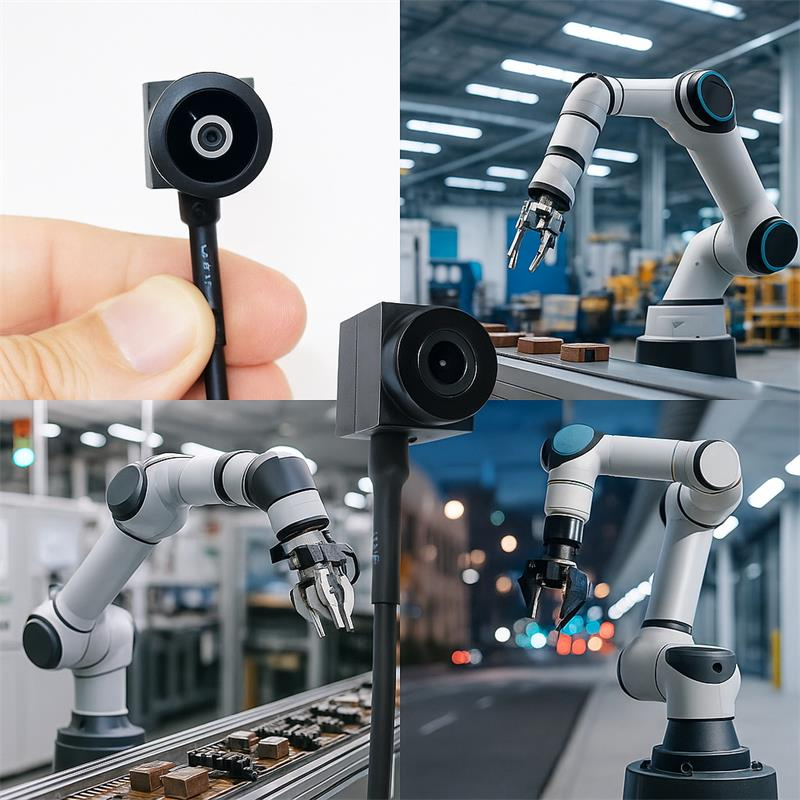
5. Application Fit: Covering Cobot Core Vision Scenarios
Cobot vision tasks center on lightweight interaction, and the 2MP micro USB camera matches perfectly:
- Vision-guided picking – In the 3C industry, cobots locate PCB components (e.g., resistors, capacitors) with <1 mm positional error at 2MP, enabling effective “eye-in-hand” setups at the arm’s end, achieving over 99% grasp success.
- Human–robot interaction – Service cobots (e.g., in restaurants) detect gestures (wave to call) or face orientation, with 2MP resolution capturing hand outlines and facial landmarks. USB real-time transfer ensures <300 ms response latency, creating natural interactions.
- Safety-based obstacle avoidance – In shared human–robot zones, 2MP imagery detects moving people or obstacles. Even with simple algorithms like background subtraction, the cobot can trigger avoidance within 1 meter (e.g., emergency stop), complying with ISO safety standards.
Conclusion
The 2MP 15×15mm micro USB camera, through its compact size for space-limited designs, resolution balance for performance and cost, USB interface for easy integration, and proven technology for stability, fully meets cobots’ needs for safety, flexibility, low cost, and ease of deployment—making it an ideal vision system choice.