Sony Starvis USB Camera Review: Low-Light Imaging for Industrial & Energy Monitoring
Introduction: Setting the Standard in Industrial Vision
In the competitive world of industrial inspection camera systems, clarity, low-light performance, and reliability are critical. For manufacturers, security teams, and energy operators in the Great Lakes Region, Florida, and Texas, these features directly affect operational efficiency and safety.
Our Sony STARVIS USB3 camera modules — including the 1/2" IMX385 STARVIS Night Vision USB Camera (32×32mm), IMX335 No Distortion USB3.0 Camera, and IMX335 Starlight Autofocus USB Camera — deliver unmatched image quality for industrial, energy, and security monitoring in harsh and low-light environments.
The Sony STARVIS Sensor Lineup
Sony’s STARVIS technology sets the benchmark for back-illuminated CMOS imaging, offering full-color night vision and high dynamic range (HDR). Popular models currently in production include:
- IMX178 – 6MP, high sensitivity, compact pixel size for detailed inspection.
- IMX290 / IMX291 – 2.13MP, affordable night vision.
- IMX327 / IMX307 – Low-noise improvement over IMX290.
- IMX335 – 5MP, HDR-ready, excellent for industrial automation.
- IMX385 – 2MP, large 3.75μm pixels, ultra-low-light performance.
- IMX462 / IMX464 – NIR-enhanced, ideal for infrared illumination.
- IMX678 / IMX676 – STARVIS 2 sensors with advanced HDR.
- IMX415 – 8MP 4K resolution for ultra-detailed monitoring.
From IMX385 night vision cameras to IMX335 industrial inspection cameras, Sony’s range offers the best sensor platforms for today’s demanding environments.
Product Profiles
Sony 1/2" IMX385 STARVIS Night Vision USB Camera (32×32mm)
- Resolution: 2MP (1920×1080)
- Best For: Energy plants, marine ports, factory night monitoring.
- Key Strength: Captures true-color video in 0.001 Lux conditions without heavy external lighting — essential for industrial security camera module deployments.
Sony STARVIS IMX335 No Distortion USB3.0 Camera
- Resolution: 5MP (2592×1944)
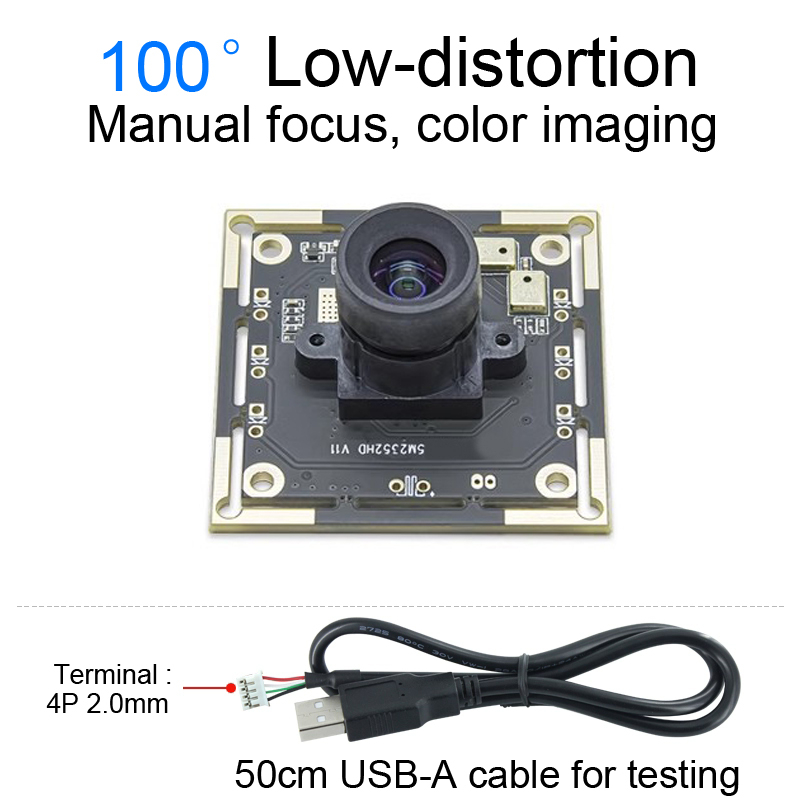
- Best For: PCB inspection, robotics, and non-distortion machine vision camera applications where geometric accuracy is critical.
- Key Strength: Perfect for Great Lakes manufacturing quality control camera module integrations.
Sony STARVIS IMX335 Starlight Autofocus USB Camera
- Resolution: 5MP (2592×1944)
- Best For: Oil & gas plants, refinery security camera modules Texas, and any scenario where objects vary between near and far.
- Key Strength: Autofocus ensures quick adaptation to dynamic scenes — ideal for UAV and drone industrial monitoring.
Core Competitive Advantages
- Full-Color Night Vision — The IMX385 night vision camera captures accurate detail even at 0.001 Lux, outperforming traditional IR black-and-white feeds.
- High Dynamic Range (HDR) — Handles high-contrast environments such as solar plant monitoring in Texas or maritime port security camera applications in Florida.
- USB 3.0 High-Speed Output — Ensures low-latency HDMI output for real-time industrial visual inspection (AOI).
- Compact, Modular Form Factor — 32×32mm board size makes it ideal for OEM integration into kiosks, robotic vision systems, and industrial security camera modules.
- Customization — Lens, housing, and firmware adjustments for specific industrial automation camera module needs.
- Industrial Durability — Works reliably in high-heat, high-humidity, or high-EMI conditions found in oil refineries, wind farms, and steel mills.
Five Great Lakes Region Case Studies
1. Michigan – Turbine Inspection in Power Plants
Our IMX385 STARVIS industrial night vision camera is mounted inside turbine housings for live, color inspection during low-speed rotations, reducing downtime without adding external lighting.
2. Indiana – Steel Mill Surface Inspection
A non-distortion inspection camera based on the IMX335 monitors hot-rolled sheet steel in Gary, detecting scratches and micro-defects before shipment.
3. Ohio – Port & Cargo Surveillance
At the Port of Cleveland, the IMX335 starlight autofocus camera monitors both close-range crane operations and distant perimeter fencing, cutting the number of cameras needed by 40%.
4. Wisconsin – Water Treatment Security
A Milwaukee facility uses IMX385 USB3.0 industrial security camera modules to cover its perimeter in low-light conditions, ensuring 24/7 safety.
5. Illinois – Wind Turbine Maintenance
Inside nacelles near Rockford, IMX335 autofocus cameras provide detailed gearbox close-ups and long-distance blade inspections without lens changes.
Opportunities in Florida and Texas
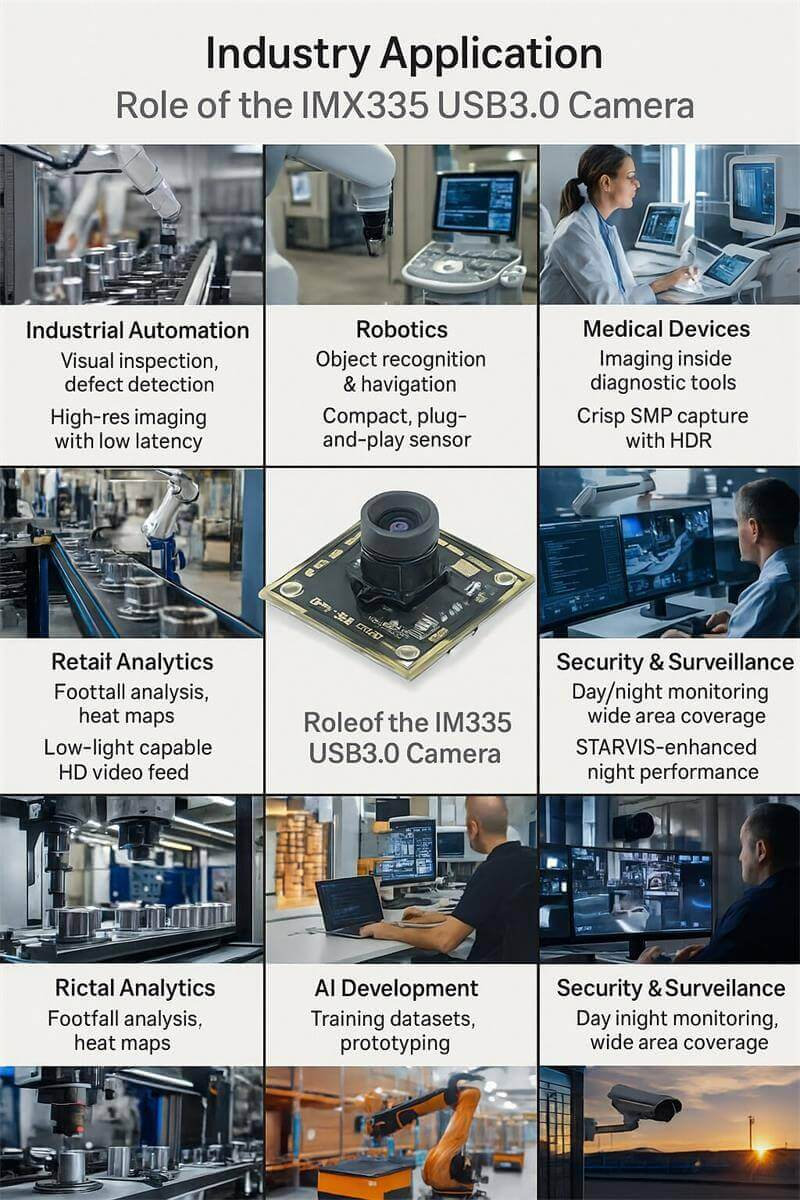
Florida — Coastal ports, aerospace plants, and hurricane-resilient facilities require corrosion-resistant, low-light-capable industrial USB3 cameras. The IMX385 is ideal for marine port security camera modules and storm-proof industrial monitoring cameras.
Texas — Refineries, pipelines, and solar farms need high dynamic range industrial cameras capable of continuous operation in high temperatures. The IMX335 autofocus model suits oil and gas inspection USB cameras Texas and pipeline inspection camera modules.
Why Shenzhen Novel Electronics Limited?
We don’t just sell camera modules — we engineer complete solutions.
- OEM & ODM Expertise — Custom firmware, optics, and housings for factory quality control camera modules and industrial inspection systems.
- ISO-Certified Production — Cleanroom assembly and 100% QC before shipment.
- Global Reach — Proven success delivering industrial automation camera modules to North America and Europe.
- Rapid Engineering Support — Direct communication with our technical team during integration.
- High-CPC Industry Fit — Our products match search terms like "USB3.0 low-light inspection camera", "Sony STARVIS IMX385 USB3 camera", and "OEM USB camera module manufacturer" — the exact phrases industrial buyers use.
Call to Action
If your business operates in Great Lakes manufacturing, Florida port security, or Texas energy infrastructure, you can’t afford to compromise on imaging performance.
Our Sony STARVIS IMX385 and IMX335 USB3.0 camera modules deliver industrial-grade, low-light clarity with the customization your projects demand.
Email us now for:
- Free technical consultation
- Sample requests
- Custom OEM/ODM STARVIS USB camera development
Shenzhen Novel Electronics Limited — your partner for high-performance industrial camera modules that see more, in every condition.