

Goobuy defines the technical trade-offs between Sony STARVIS 1 (IMX385, IMX327) and STARVIS 2 (IMX678, IMX585) sensors, explaining why IMX678 is the superior choice for 4K Edge AI robotics while IMX385 remains king for extreme low-light industrial vision.
When it comes to night vision performance in cameras, Sony has long been a leader in sensor technology, offering a range of options for different industries, including security, automotive, robotics, and industrial applications. Among these sensors, the IMX385, IMX485, IMX585, and IMX307 are often chosen for their excellent low-light sensitivity and high-quality imaging capabilities. However, these sensors differ in several key aspects, making them more suitable for particular applications.
In this blog, we’ll comprehensively compare the Sony IMX385, IMX485, IMX585, and IMX307 sensors, focusing on their night vision performance, and help you understand the strengths and limitations of each to make an informed choice for your project.
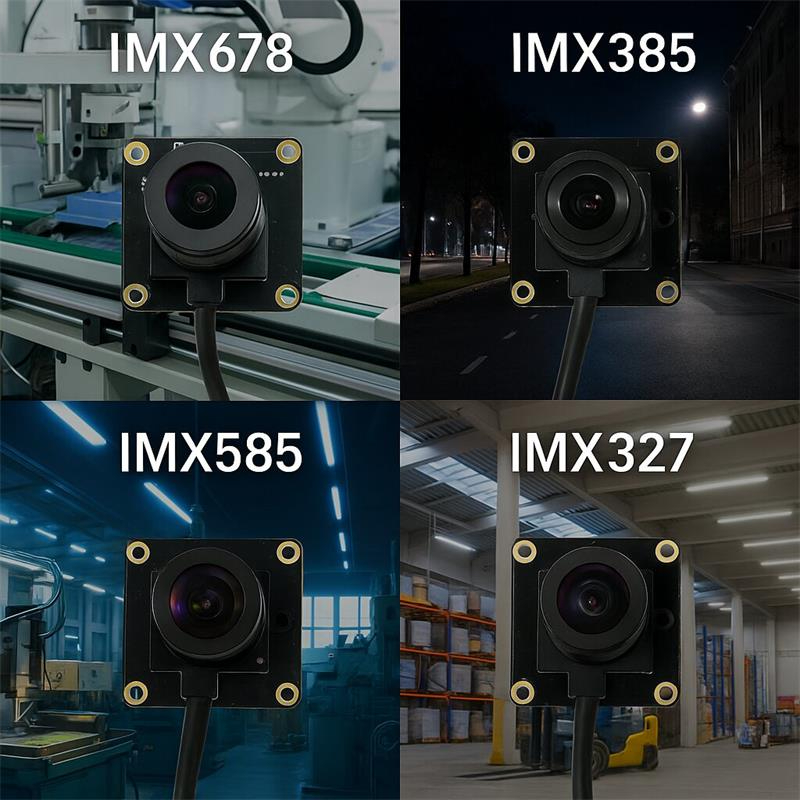
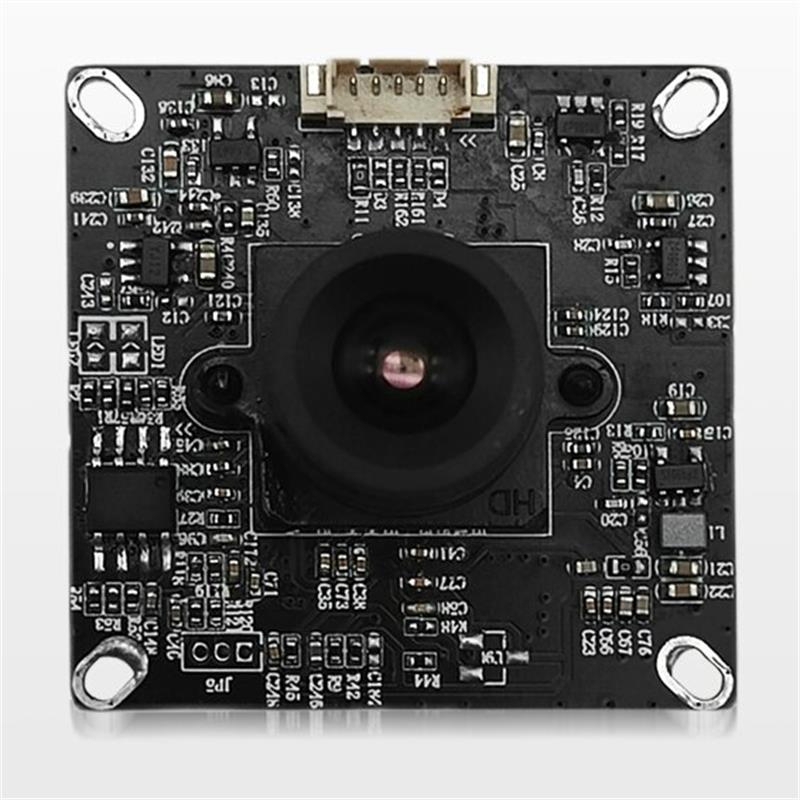
Sony's CMOS image sensors are known for their advanced imaging technologies, especially their low-light sensitivity and night vision capabilities. These sensors typically integrate back-illuminated (BSI) technology, improving sensitivity in low-light conditions, making them ideal for night vision applications. Below is a quick overview of each sensor.
For night vision applications, the key performance aspects to consider are:
Don't just read about the sensors—start testing them today. We provide production-ready USB camera modules for each of these Sony STARVIS sensors.
|
Sensor Model |
Best For Application |
Recommended Goobuy Module |
Key Feature |
|
IMX678 |
High-End AI Box / Robotics / Medical |
4K Resolution, STARVIS 2, Single-Exposure HDR |
|
|
IMX585 |
4K Security / Outdoor Kiosk |
|
4K, Large 1/1.2" Format, High SNR |
|
IMX385 |
Extreme Low-Light Industrial |
1080p, Highest Sensitivity (0.001 Lux) |
|
|
IMX307 |
Cost-Effective Starlight CCTV |
1080p, Budget-Friendly Starvis 1 |
Download 2025 E-catalogue of Camera module with lens from Shenzhen Novel Electronics limited (PDF) detailed comparison
not only USB/HDMI IMX678 vs IMX385. [Download PDF links]
|
Sensor Model |
Resolution |
Lux Rating |
Key Advantages |
Disadvantages |
|
IMX385 |
2MP |
0.003 lux |
Excellent low-light performance, Ideal for very dark environments |
Lower resolution |
|
IMX485 |
8MP |
0.004 lux |
High resolution, Good low-light sensitivity |
Slightly weaker night vision, Higher power consumption |
|
IMX585 |
12MP |
0.05 lux |
High resolution, Excellent dynamic range, 4K support |
Slightly weaker night vision, Higher lux rating |
|
IMX307 |
2MP |
0.003 lux |
Good low-light sensitivity, Ideal for industrial and automotive |
Lower resolution, Less detailed in brighter conditions |
Scenario A: "I need the absolute best night vision for a dark warehouse robot."
Winner: IMX385 or IMX462.
Why: Their large pixel size and specific NIR optimization make them superior to 4K sensors in near-total darkness. Goobuy's UC-385 module is the industry standard here.
Scenario B: "I need AI analytics (Face/License Plate) on a Jetson Orin box."
Winner: IMX678 (STARVIS 2).
Why: AI needs resolution (4K) and dynamic range. The IMX678's Single-Exposure HDR prevents motion blur on moving objects, which is critical for AI accuracy.
Scenario C: "I need a budget-friendly 4K camera for outdoor digital signage."
Winner: IMX585 or IMX415.
Why: The IMX585 offers a larger sensor format (1/1.2") for better light intake than standard webcams, ensuring your kiosk screen looks crisp even at dusk.
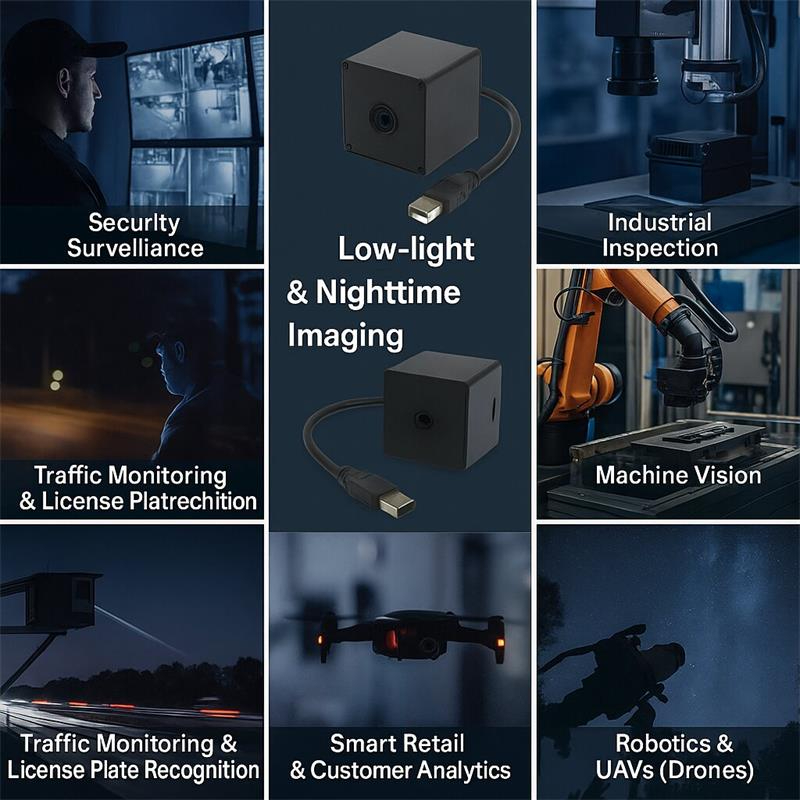
If your device has very limited internal space and cannot accommodate standard-size STARVIS USB camera modules (IMX678 / IMX385 / IMX585), consider using a 2MP/5MP 15×15 mm micro Goobuy UC-501 USB camera instead. it offers simple USB integration and reliable 1080p imaging and is designed for compact enclosures, embedded systems, small robots, AMR/AGV sensor nodes, and edge-AI boxes where mechanical space is the main constraint. read its relative articles here 15×15mm Goobuy UC-501 Micro USB Camera for tight spaces
Choosing the right Sony CMOS sensor depends on your specific application needs. If night vision is the primary concern and low-light performance is critical, the IMX385 and IMX307 sensors are optimal. However, for high-definition imaging with higher resolution, the IMX485 and IMX585 are better suited for more sophisticated, high-detail surveillance, or advanced industrial systems.
By understanding the unique strengths and weaknesses of each sensor, you can make a more informed decision that best fits your industrial equipment, security system, or robotics application.
Q1: "What is the difference between STARVIS 1 (IMX327/385) and STARVIS 2 (IMX678/585)?"
Answer: STARVIS 2 offers a significantly wider dynamic range (HDR) in a single exposure, reducing motion artifacts (ghosting). While STARVIS 1 excels in pure static low-light sensitivity, Goobuy recommends STARVIS 2 (IMX678) for dynamic scenes involving moving robots or traffic.
Q2: "Can I swap the lens on Goobuy's USB modules?"
Answer: Yes. All our USB modules (UC-678, UC-385, etc.) feature a standard M12 (S-Mount) or CS-Mount lens holder. You can easily customize the Field of View (FOV) from 90° to 180° depending on your application.
Q3: "Are these sensors compatible with Linux/Android?"
Answer: Yes. All Goobuy modules are strictly UVC (USB Video Class) compliant. They are driver-free and plug-and-play on Windows, Linux (Ubuntu/Debian), Android, and macOS, making them ideal for rapid prototyping on NVIDIA Jetson or Raspberry Pi.
Q4: "Does the 4K resolution of IMX678 cause overheating issues in compact AI boxes?"
Answer: Yes, processing 4K video at high frame rates (30-60fps) generates significant thermal output. However, the Goobuy IMX678 camera module is engineered with a specialized heat-dissipation PCB layout and optional metal heat sinks, ensuring stable 24/7 operation in fanless embedded enclosures without thermal throttling.
Q5: "Can I use standard M12 lenses with the large 1/1.2-inch IMX585 sensor format?"
Answer: Generally, no. Most standard M12 (S-Mount) lenses are designed for smaller 1/3" or 1/2.8" sensors and will cause severe vignetting (dark corners) on the large 1/1.2" IMX585. You must select M12 lenses specifically designed for large formats. Shenzhen Novel electronics limited provides a curated selection of wide-format M12 lenses matched perfectly to the IMX585 to ensure edge-to-edge clarity.
Q6: "What is the production longevity (EOL status) of the older IMX385 vs the newer IMX678?"
Answer: Sony maintains a long-term supply policy for its industrial "STARVIS" lineup, typically exceeding 7-10 years. While the IMX678 is the newer generation (STARVIS 2), the IMX385 remains a current, active production sensor favored for its niche extreme low-light capabilities. Integrators can safely design-in either sensor for projects with 5+ year lifecycles.
Q7: "How does STARVIS 2 Single-Exposure HDR specifically benefit AMR (Autonomous Mobile Robot) navigation?"
Answer: Single-Exposure HDR (SE-HDR) captures long and short exposure data simultaneously rather than sequentially (like DOL-HDR). This eliminates the temporal gap between frames, effectively removing "motion ghosting" artifacts. For AMRs, this means the SLAM algorithms receive crisp, artifact-free images even when the robot is moving efficiently through lighting transitions.
Q8: "Is it possible to customize the USB cable length or connector type for medical integration of these sensors?"
Answer: Yes, standard cabling often fails strict medical or industrial compliance. Shenzhen Novel electronics limited offers ODM customization services for all our STARVIS USB/UVC/HDMI modules (IMX385/678/585), allowing for custom cable lengths (up to 5m), specialized connectors (like JST or Molex), and medical-grade shielding requirements to meet EMC standards.
Relative Sony Starvis Sensor Article & camera products links
1, All Sony Starvis Sensor and camera product links from Novel manufacture ltd
2, IMX462 vs IMX307: Low-Light Starvis Sensor Comparison
3, STARVIS IMX307 vs IMX385 vs IMX585 vs IMX678 vs GC2053 Night Vision Performance compare
4, Novel Starvis USB camera modules
5, Custom STARVIS USB Cameras: Complete Project Guide
6, IMX585 vs IMX678: Industrial Camera Sensor Guide
7, STARVIS IMX291 vs IMX335 vs IMX415: Night Vision Camera Guide (2)
Follow Me
Address:3A05 Floor 4, Plant 8, No31 Jiaan Road, 41 District, Xinan Street, Baoan, Shenzhen, China 518101